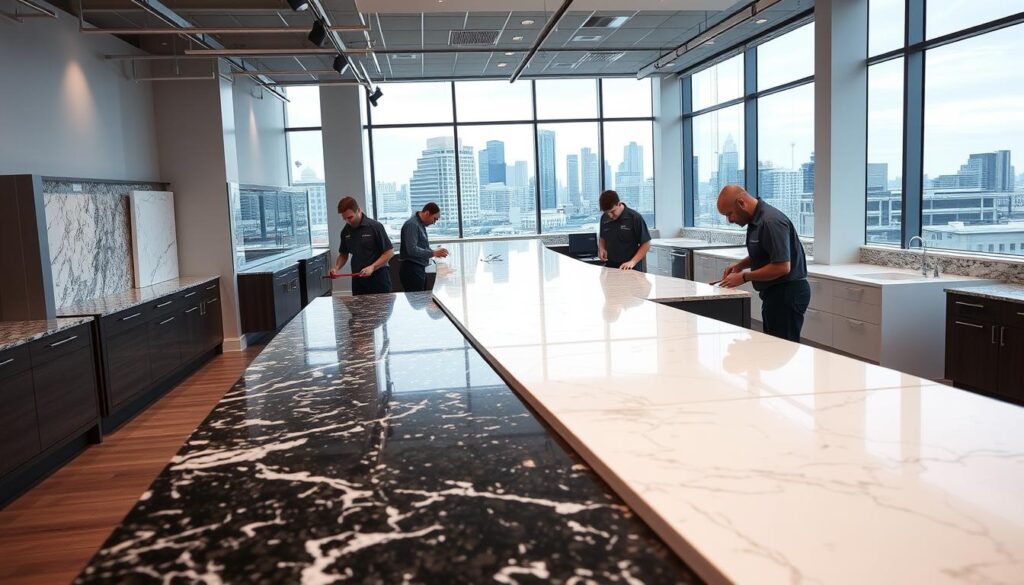
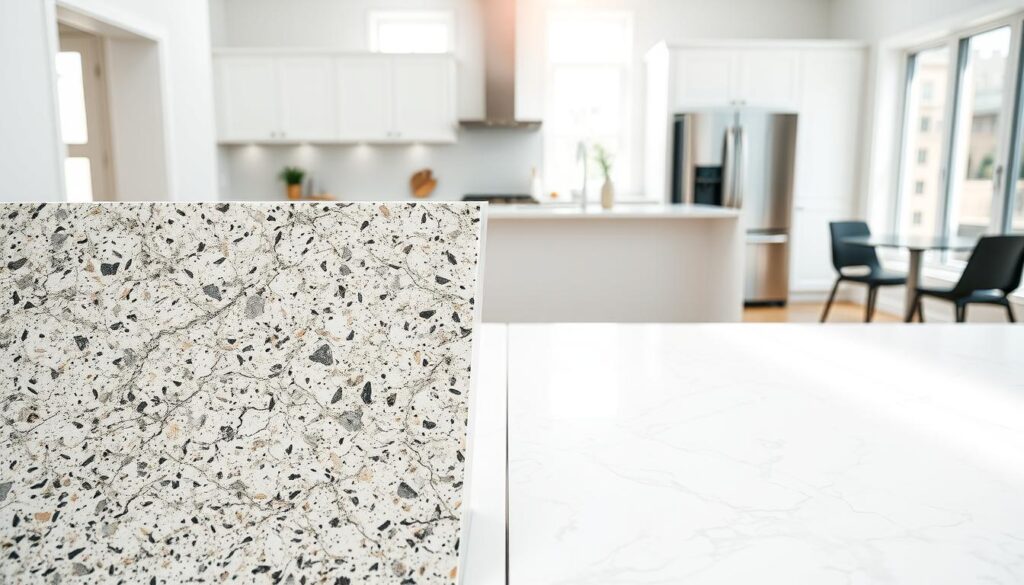
When planning a kitchen or bathroom remodel, many wonder: Are granite countertops better than quartz? This debate covers looks, durability, upkeep, cost, and environmental effects. Each material has its own benefits and drawbacks, leading to a detailed comparison of granite and quartz.
Granite is known for its natural beauty, while quartz is valued for its even look and easy care. What should you consider when choosing? This article aims to guide you through the world of granite and quartz. It will help you decide which countertop is right for you.
Key Takeaways
- Granite countertops can enhance property value by 10-15% upon resale.
- Quartz countertops do not require sealing, saving approximately $50-$100 annually on maintenance.
- Granite is about 30% harder than quartz on the Mohs scale, providing exceptional durability.
- Around 75% of homeowners prefer quartz for its consistent appearance compared to granite’s natural variations.
- Quartz typically consists of 15% resins and pigments, while granite is 100% natural stone.
- Energy consumption during the manufacturing process of quartz is markedly higher than that of granite.
- Both materials are heavy and require professional installation due to their weight and complexity.
Understanding the Basics of Granite and Quartz Countertops
When comparing granite vs quartz countertops, it’s key to know their basics. This info helps homeowners pick the best countertop for their needs.
What is Granite?
Granite is a natural stone, formed from the earth’s magma. It’s extracted from quarries around the world. Each slab has unique colors due to its mineral mix, making every piece special.
Granite is very durable and can last decades with the right care. It needs regular sealing because it’s porous. Without it, stains can easily get in. Despite this, granite can last up to 100 years, making it a great long-term choice.
What is Quartz?
Quartz, on the other hand, is made from about 93% crushed quartz crystals, resins, and pigments. This mix creates a surface that’s non-porous and resists stains, bacteria, and moisture. You don’t need to seal it every year.
Quartz is also very durable, even more so than granite. It comes in a wide range of colors and designs, fitting many tastes.
Composition and Manufacturing Differences
The way granite and quartz are made affects how they perform. Granite is a real stone, showing nature’s beauty. Quartz, being engineered, offers consistent colors and finishes.
This difference changes how they look and how they’re maintained. Knowing the difference between granite and quartz is important for those planning to remodel their kitchens or bathrooms. It affects both their look and practicality over time.
Aesthetic Appeal: Granite vs. Quartz
The choice of countertop material greatly affects a space’s vibe. Homeowners consider the beauty of granite and quartz when deciding. It’s key to know how each material’s features add to its beauty.
Color and Design Options
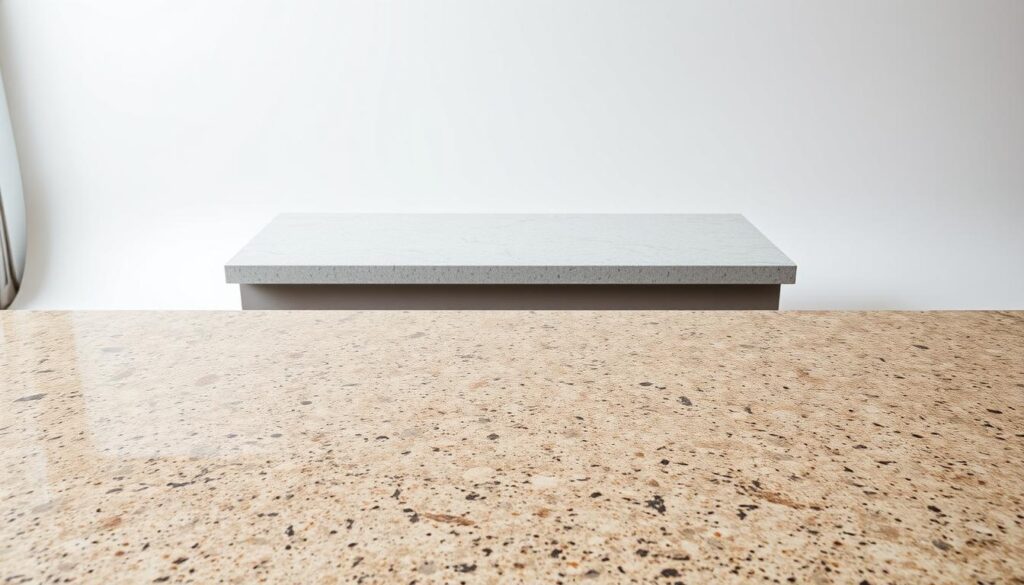
Granite countertops have deep earth tones and unique patterns. Each slab is special, showing the earth’s natural beauty. On the other hand, quartz offers uniform looks in many colors and patterns.
Those who love unique visuals might choose granite. Others might prefer quartz for a cohesive look.
Textures and Finishes
Granite often has a polished finish that highlights its colors. This finish makes the veining stand out. Quartz, with its matte finish, appeals to modern tastes and looks sleek.
Both options have their own charm. Homeowners can pick based on their style.
Natural vs. Engineered
The difference between natural and engineered materials is important. Granite is natural, with varied textures and colors. Quartz, engineered, offers consistent looks but can be customized.
Understanding these differences helps homeowners choose the right countertop for their space.
Durability and Maintenance Comparisons
When looking at granite vs quartz, knowing how durable they are is key. Each has its own strengths and weaknesses when it comes to lasting long and staying clean. We’ll dive into scratch, heat, and stain resistance, showing the good and bad of each.
Scratch Resistance
Quartz countertops are made with about 90% ground quartz and 10% resins. This mix makes them very resistant to scratches. They’re perfect for places that get a lot of use, like busy kitchens. Granite is tough too, but it can chip if hit hard. So, granite needs regular care to stay looking good.
Heat Resistance
Granite countertops can handle high heat without getting damaged. This makes them great for kitchens where you cook a lot. On the other hand, quartz can change color or warp if it gets too hot. So, it’s best to avoid putting hot things directly on quartz.
Stain Resistance
Quartz is special because it’s not porous, which means it doesn’t stain or grow bacteria easily. Unlike granite, which needs to be sealed to avoid stains, quartz is easy to clean with just soap and water. This makes quartz a more low-maintenance choice, saving you money in the long run.
Cost Considerations: Granite and Quartz
When planning a kitchen or bathroom update, knowing the cost of granite or quartz countertops is key. A comparison shows big price differences and long-term values. Homeowners need to think about these when deciding.
Price Per Square Foot
Granite countertops cost between $30.00 and $175.00 per square foot. The lower end is $30.00 to $55.00, and the high-end is over $60.00. On the other hand, quartz starts at $34.00 per square foot, 30-50% more than granite. Solid color quartz can go up to $225.00 per square foot, showing the range in quality and price.
Installation Costs
Adding installation, both granite and quartz cost an extra $10 to $30 per square foot. The time needed to set up both materials is similar. So, while material costs vary, installation costs don’t make a big difference in total cost.
Long-term Value
Looking at long-term value means considering both initial cost and upkeep. Granite is beautiful but needs sealing every 12 months because it’s porous. Quartz, being non-porous, doesn’t need sealing and is easier to maintain. Even though quartz might cost more upfront, its durability and low upkeep could make it a better long-term choice.
Environmental Impact of Granite and Quartz
Choosing between granite and quartz countertops is more than just about looks and durability. It’s also about the environment. Knowing how these materials are sourced and if they’re sustainable is key for those who care about the planet. These points are important in the debate over which countertop is better for the environment.
Sourcing and Sustainability
Granite is a natural stone that comes from local quarries. This can help reduce its environmental impact if mined carefully. But, quarrying can harm the environment. On the other hand, quartz countertops are made from 90-95% crushed natural quartz and 5-10% resin. Even though quartz is man-made, its eco-friendliness depends on where the materials come from and how it’s made.
Many brands are now focusing on being more sustainable. They use recycled materials and local sources to cut down on carbon emissions from transportation.
Energy Consumption in Manufacturing
Quartz needs a lot of energy to make, mainly because of the heat and electricity used in its production. This makes quartz have a bigger environmental impact than granite. Granite, on the other hand, only needs to be sealed to keep it looking good for years.
Even though granite uses less energy to make, it needs regular maintenance. This makes it less sustainable in the long run. Both materials have their own environmental pros and cons. Homeowners need to think carefully about these before deciding.
Performance in Different Settings
Granite and quartz are top picks for countertops, each shining in different places. It’s key to look at how well they do in homes and businesses. We also need to think about what industries like best.
Residential Uses
Homeowners love granite and quartz for kitchens and bathrooms. They admire their looks and how long they last. Granite’s natural beauty adds charm to any home, while quartz offers a consistent look in many colors and patterns.
Both materials can last over 50 years with the right care. Quartz doesn’t need sealing, making it easy for busy people to keep up.
Commercial Applications
Granite is a top choice for commercial spaces because it’s very durable. Restaurants, bars, and hotels choose it for its heat resistance and beauty. It’s perfect for areas where temperatures change a lot and get a lot of use.
Quartz is also durable but is picked for places that need easy-to-clean surfaces. It’s great for commercial areas where keeping things clean is a big deal.
Specific Industry Preferences
Different industries have their own favorites when it comes to countertops. In the kitchen world, granite is popular for its toughness and heat resistance. But in healthcare, quartz is preferred because it’s non-porous and helps prevent bacteria.
Granite and quartz are both versatile, making them good choices for many settings.
Choosing the Right Countertop for Your Project
Choosing the perfect countertop is key for a beautiful and useful kitchen or bathroom. Homeowners need to think about what they want, deciding between granite or quartz. These choices depend on what you value most: durability, upkeep, or style.
Assessing Your Needs
First, think about what matters most to you in a countertop. Do you want something that can handle a lot of use without getting damaged? Granite is great because it’s tough and can take heat and scratches.
If you prefer something easier to care for, quartz might be better. It’s not porous, so you don’t have to seal it, making cleaning simpler.
How to Determine Your Style
Your style preferences are also important. Granite has unique patterns that make it stand out, perfect for those who love natural stone. On the other hand, quartz offers a consistent look in many colors and patterns.
When deciding between granite or quartz, think about what you want your space to look like. Choose the style that fits your dream.
Personalized Consultation with Rock Solid Tops
Getting personalized advice can really help. Rock Solid Tops has lots of experience and can guide you through the granite vs quartz decision. They help you find the perfect match for your style and needs.
Rock Solid Tops: Your Local Countertop Experts
Rock Solid Tops is a top choice for countertop installation. They have over 30 years of experience with granite, quartz, and marble. Homeowners in Minneapolis trust them for quality and service.
Over 30 Years of Experience
Rock Solid Tops is known for reliable countertop installation in Minneapolis. Their long experience helps them guide clients on the best choices. They offer advice on everything from quartz to granite, based on your needs.
Commitment to Quality and Service
The team at Rock Solid Tops focuses on craftsmanship. They know how to make each material look and work its best. They also offer personalized service, making sure you’re happy with your choice.
Areas We Serve: Minneapolis and Beyond
Rock Solid Tops serves the Minneapolis area and beyond. They’re known for their top-notch work in both homes and businesses. For more info, visit Rock Solid Tops experts.
Contact Us Today for a Consultation
Thinking about new countertops for your home or business? Reach out to us for expert advice. At Rock Solid Tops, we aim to help you find the perfect fit for your style and needs. A consultation with us means getting personalized advice based on your specific wants and design preferences.
Request a Quote
Ready to change your space? Start by requesting a quote for countertops. Our team is ready to give you an estimate that fits your budget. We know how important it is to stay within your budget while getting quality. We’ll help you find options that work for you financially.
Call Rock Solid Tops: (612) 270-4239
Want to talk about your project? Call us at (612) 270-4239. Our team is here to answer any questions about materials, installation, and care. You can also email us at info@rocksolidtops.com for questions or to schedule a consultation.