
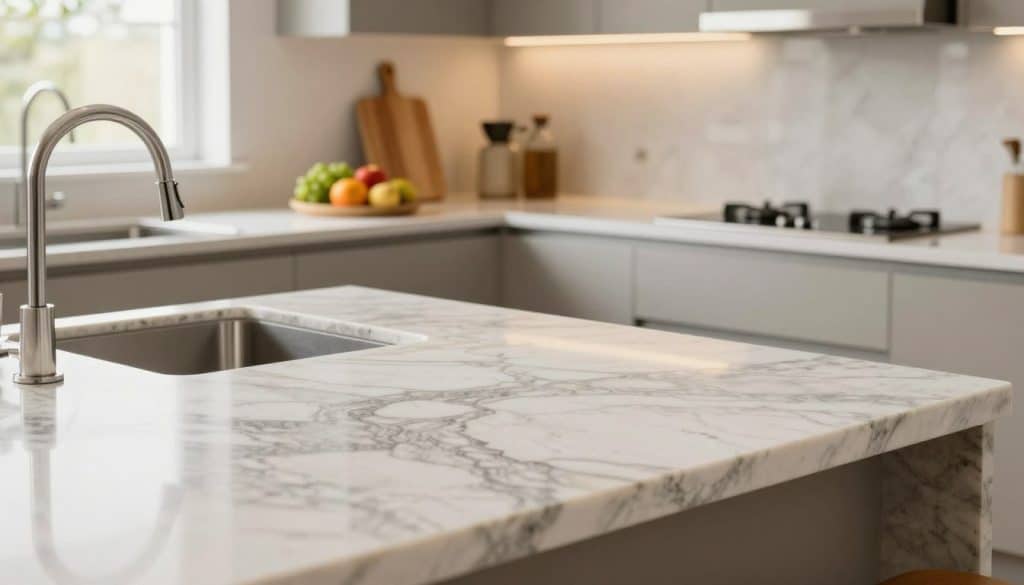
We’ll walk you through the facts so you can decide with confidence. Quartz is a popular engineered stone that solves many issues found in natural stone. It offers a consistent look, easy care, and everyday toughness for busy homes. But it has limits, too.
We explain what this product really is, why homeowners choose it, and the real-world drawbacks that surprise people later—like heat sensitivity and visible seams. You’ll get a clear pros-versus-cons frame that matches Minneapolis-area remodel timelines and budgets.
Rock Solid Tops brings 30+ years fabricating and installing stone. Our Craftmanship, Your Vision guides every step. We offer free estimates, design help on site, and installs in as little as one week after measuring. Call (612) 270-4239 or email info@rocksolidtops.com to start.
Key Takeaways
- We clarify what engineered quartz means versus natural stone.
- Expect easy maintenance and consistent appearance.
- Know the common limitations before you buy.
- We offer fast, local service with free estimates.
- Our experience helps match material to your budget and use.
What Quartz Countertops Are and Why They’re So Popular in Today’s Kitchens and Bathrooms
Looking for a durable, low-fuss surface that fits busy kitchens and wet bathrooms? We’ll explain what this engineered stone is and why homeowners pick it so often.
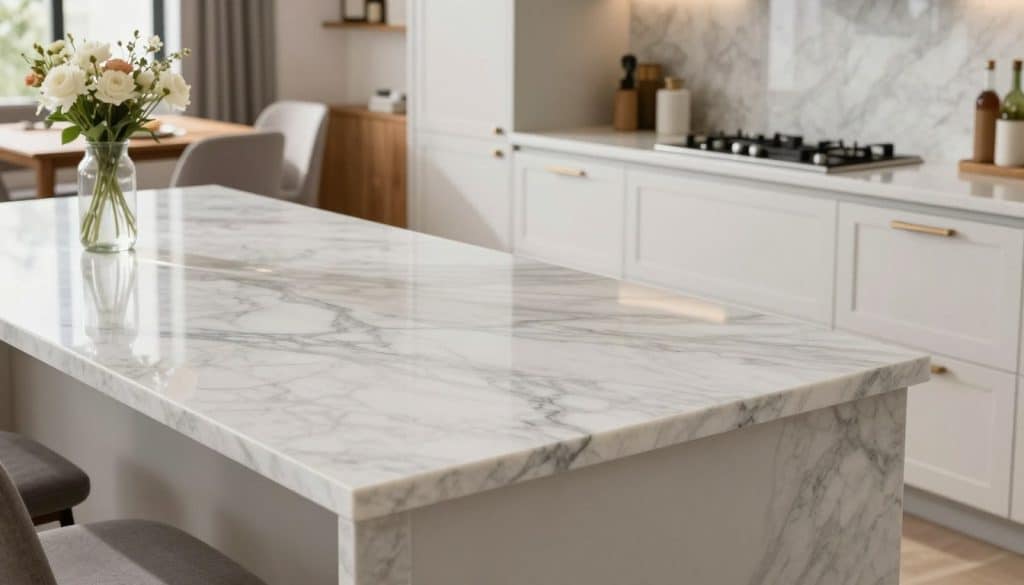
Engineered stone explained
Engineered stone mixes about 90% ground mineral quartz with roughly 10% resin and pigments. The result is a slab made from real crystals bound into a uniform surface. That gives consistent color and pattern across a full run.
What non-porous really means for daily use
A non-porous surface keeps spills on top longer, so wipes and mild cleaners remove most messes. Routine moisture near sinks is less stressful than with many natural stone options. No frequent sealing is needed.
Where this material fits best
- Kitchen countertops for busy families who want easy upkeep.
- Bathroom vanities that face daily moisture and quick cleanups.
- Commercial spaces where a consistent look and durability matter.
We come to Minneapolis-area homes and builds, help you compare materials, and guide design choices. Rock Solid Tops helps match color, pattern, and finish to how you use the space—so the installed look matches what you choose in the showroom.
Quartz countertops pros and cons: The Advantages Homeowners and Businesses Love
We see the same benefits on job sites again and again. Engineered slabs deliver real durability for busy kitchens and high-traffic commercial spaces.
Durability: these surfaces resist scratches, chips, and cracks in everyday use. We still recommend simple habits—cutting boards and pads—to avoid damage and keep the finish looking new.
Stain resistance and water protection: spills like wine, coffee, and oils sit on top instead of soaking in. Around sinks and vanities, the non-porous surface saves you from a sealing routine most natural stone needs.
Low upkeep, consistent look, and flexible design
Maintenance is easy—warm water, mild soap, and a soft cloth. No regular sealing. Just avoid harsh abrasives to prevent dulling.
- Consistent colors and patterns mean the showroom choice matches the installed surface.
- Design flexibility gives marble-look options and modern palettes without marble’s upkeep.
- Non-porous surfaces reduce bacteria buildup—great for food prep and busy bathrooms.
Long-term value: in the U.S. market, these surfaces often boost resale appeal. With 30+ years fabricating and installing, Rock Solid Tops guides homeowners and commercial clients to the best material and fast install timelines.
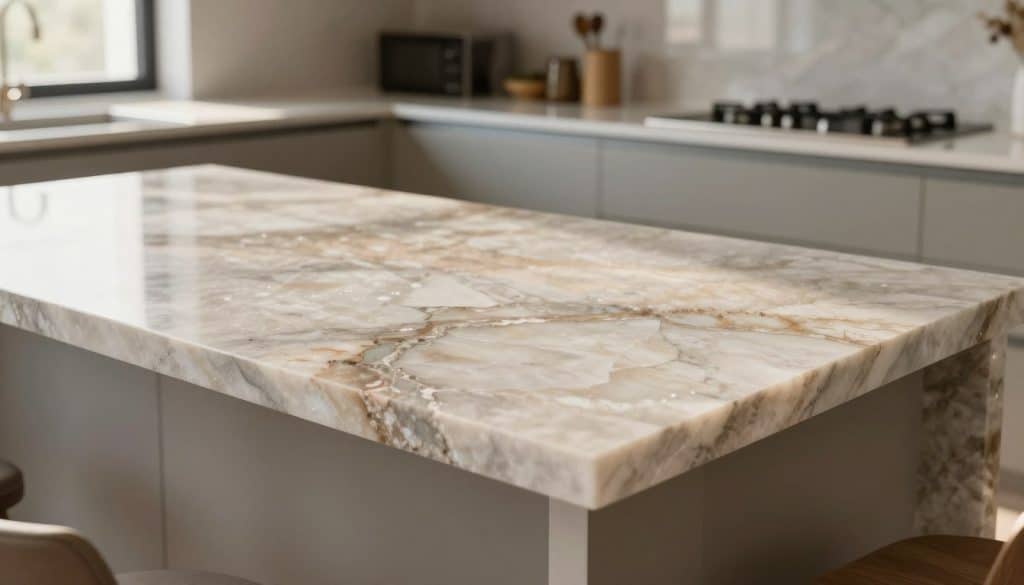
The Drawbacks of Quartz Countertops to Consider Before You Buy
A beautiful slab can still create surprises; knowing common drawbacks keeps your project on track. We want you to plan for budget, use, and long-term performance.
Cost per square foot: Expect roughly $40–$100 per square foot for the slab itself. Premium patterns, complex edge profiles, sink cutouts, and brand choice push pricing higher. Add installation and cutouts for a full project estimate.
Heat and indoor use
High heat is a real limit. Hot pans straight from the stove can scorch the resin and cause discoloration or damage. Trivets and hot pads are not optional if you want a flawless surface.
Outdoor, weight, seams, and style
We don’t recommend outdoor kitchens; UV can fade or shift color over time. The material is heavy—about 20–25 pounds per square foot—so professional installation matters for safety and fit.
Seams may show depending on slab size, layout, and color choice. Darker tones often hide joins better. If you prefer one-of-a-kind movement, natural stone countertops like granite or marble offer unique variation that a consistent engineered look won’t replicate.
- Installation matters: precise templating and seam placement keep water out and performance high.
- Daily habits help: use pads for heat and avoid abrasive cleaners to prevent stains or dulling.
- We’ll help: Rock Solid Tops plans layout, seam strategy, and fast Minneapolis-area installation to avoid costly surprises.
Conclusion
Deciding on the right surface comes down to daily use, budget, and how long you want the finish to last. For many homeowners, quartz and similar engineered slabs deliver a low-fuss, consistent look that suits busy kitchens and baths.
Practical takeaway: expect durable wear and easy maintenance, but plan for heat protection, visible seams, and accurate budgeting. Consider granite or other stone when you want more natural variation.
Make the right choice by comparing materials to how you live—cooking habits, cleanup, kids or tenants, and the design you want. A side-by-side conversation about options helps pick what fits your project, not just trends.
We’ve fabricated and installed for 30+ years across Minneapolis, St. Paul, and nearby towns. Schedule a free estimate—call (612) 270-4239 or email info@rocksolidtops.com. Ask how we can install in as little as one week after measuring.
Our Craftmanship, Your Vision. Your countertop project is in good hands with Rock Solid Tops.