
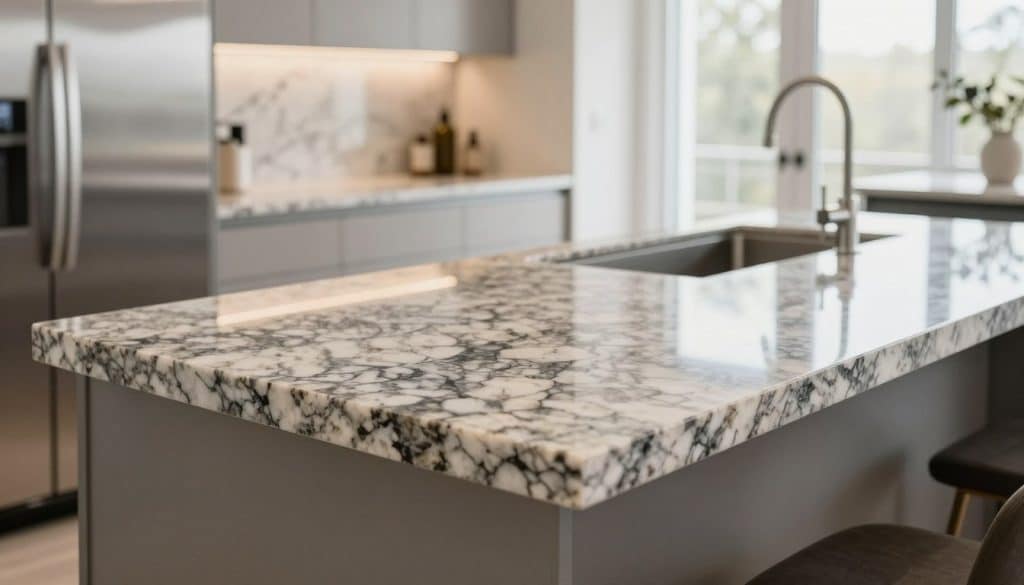
Looking for a real number before you fall for a slab? How much granite countertops cost? We’ll answer that question directly so you can budget with confidence.
We’re Rock Solid Tops — Minneapolis fabricators with 30+ years of experience in fabrication and installation. Our tagline says it best: Our Craftmanship, Your Vision. We serve Minneapolis–St. Paul and towns within an hour of the Twin Cities.
Project totals vary widely based on stone selection, square footage, fabrication detail, and installation complexity. We’ll preview national ranges and explain the common “per square foot installed” logic the industry uses. Expect clear breakdowns of what’s usually included — templating, fabrication, delivery, and installation — and what’s extra.
Want a free estimate? Call (612) 270-4239 or email info@rocksolidtops.com. GET YOUR NEW COUNTERTOPS INSTALLED IN AS LITTLE AS ONE WEEK AFTER MEASURING.
Key Takeaways
- We’ll show typical ranges so you can budget before choosing a slab.
- Quotes reflect real project items: templating, fabrication, delivery, installation.
- Two similar slabs can have very different price drivers — we’ll explain why.
- Rock Solid Tops helps pick materials, designs on-site, and installs fast.
- Free estimates are available across Minneapolis, St. Paul, and nearby areas.
Granite countertop cost: national averages and what Minneapolis homeowners can expect
We’ll show the national averages and translate them into local Minneapolis expectations. That gives you a sensible starting point for budgeting and design decisions.
Typical total project range for an average kitchen and why prices swing
National data commonly shows total projects between $2,000 and $4,000 for an average kitchen, with many homeowners near $3,250. That total is a practical benchmark for Minneapolis jobs.
Final figures swing because layout complexity, number of seams, and cutouts increase labor. Color and rare movement in a stone can raise prices too. We guide you through choices so you get value that matches daily use.
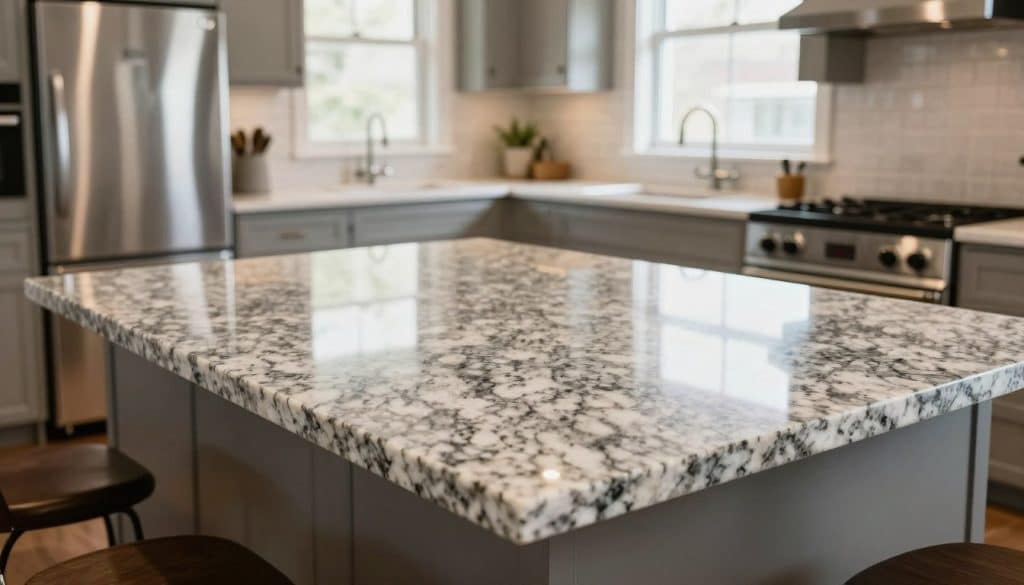
Understanding “per square foot installed” vs material-only pricing
Most pros quote per square foot installed. That number usually covers templating, fabrication, delivery, installation, and basic edging. Material-only rates look low until cutouts, labor, and sealing are added back in.
- We visit your kitchen, help pick the right slab, and give a clear quote.
- Free estimates across Minneapolis–St. Paul and nearby towns.
- Fast scheduling—install in as little as one week after measuring.
How much granite countertops cost per square foot installed
We break down realistic per-square pricing so you can pick a stone that fits your budget and design. Below are clear tiers we see on Minneapolis projects and what each typically includes.
Entry-level: Often about $35–$60 per square foot installed. This covers common slabs, basic edge, templating, and standard installation for straightforward layouts.
Mid-range: Most homeowners land in the $50–$75 per square foot installed band. You get wider slab choices, better patterning, and reliable availability.
Premium & exotic: Expect $75–$100+ per square foot installed. Dramatic movement, rarity, or limited supply push prices higher. Some exotic stones reach beyond this range.
Is “100 per square” realistic? Yes — at that level you usually get fabrication, installation, a standard edge, and basic sealing. Extras like special edges, full backsplash, extra cutouts, and removal are typically extra.
- Tip: Small changes in square footage or seam placement can move totals more than you think.
- We help: Rock Solid Tops fabricates and installs both granite and quartz, guiding slab choice to match budget and quality goals.
What determines your granite countertops cost: the biggest pricing factors
Most price swings come down to a handful of predictable choices during the selection and install process. We’ll walk through the items that move prices so you can decide where to invest.
Grade vs level and stone selection
Grade A/B/C or Level 1/2/3 describe rarity, flaws, and pattern. Grade C or Level 1 runs lower per square foot, while Grade A or Level 3 can reach the top ranges.
Layout, square footage, and seam planning
Large islands, U-shapes, and tight corners add labor. Fewer seams look cleaner but may use more slab and change the final cost.
Thickness, edge, cutouts, and finishes
2cm is lighter and often cheaper. 3cm adds durability and cost. Decorative edges add about $10–$30 per foot.
Undermount sinks, faucet holes, and polished cutouts increase fabrication time. Honed or leathered finishes can add roughly $10+ per square foot.
- Labor covers templating, cutting, polishing, delivery, sealing, and safe installation.
- We handle in-house fabrication and safe slab handling for predictable results in Minneapolis.
Budgeting beyond the slab: common add-ons that change the final price
Beyond the slab, a few choices change the total more than you might expect. Those costs add up fast if you don’t plan for them.
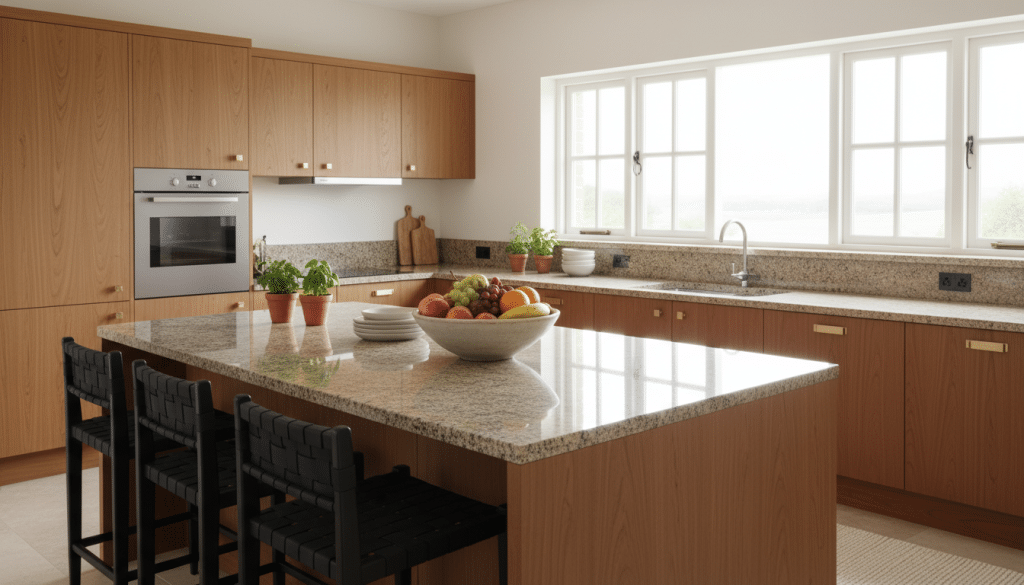
Old countertop removal typically runs about $200–$500 or roughly $5–$10 per square foot. Tight spaces, glued installations, or heavy stone raise labor and disposal fees. DIY removal can save money but must be done safely.
Backsplash choices and price impact
A simple 4-inch stone splash gives protection on a budget. A full-height backsplash often adds up to ~50% to the total price because of extra material and labor. We’ll show you the value of each option so you pick what fits your kitchen and budget.
Sink and plumbing coordination
Undermount sinks add about $200–$400 for polished cutouts and mounting. Extra faucet holes or accessory cutouts increase fabrication time and tooling costs. We coordinate plumbers and schedule work so install day goes smoothly.
- We line-item each add-on in the quote.
- Smart scheduling keeps your project moving fast.
- Free estimate and easy booking—call to get started.
Granite vs quartz vs marble: material costs, durability, and maintenance requirements
Different stones and mixes deliver very different performance — let’s compare practical trade-offs. Every surface has different benefits. We’ll help you choose the best material for your needs.
Granite and quartz: price and care differences
Quartz installed usually ranges about $55–$120 per square foot. It’s non-porous and does not need sealing. That lowers long‑term maintenance and makes it easy to clean.
Granite installed typically spans $40–$100+ per square foot and usually needs sealing every 1–2 years. It resists heat and gives one-of-a-kind natural stone character.
Marble: why the price and upkeep climb
Marble often starts near $65–$125+ installed. It’s softer and more porous. Stains and etching are real risks in busy kitchens, so cleaning and care add to lifetime cost.
Budget alternatives and real trade-offs
- Laminate: ~$20–$50 installed — low price, lower resale value.
- Butcher block: ~$40–$100 — warm look, needs oiling.
- Concrete: ~$65–$135 — customizable but may crack and needs sealing.
We guide Minneapolis homeowners through cost, durability, and resale value so you pick the right countertop materials and countertop options for daily life and budget.
Choosing the right granite for your kitchen: color, pattern, and quality that fit your goals
Start with the slab, not the sample — the full piece tells the real story. Big patterns and vein lines read differently on a full slab than on a small swatch. We come to your project, review options, and point out the areas you’ll want featured.
Popular looks and color pattern trends
Light and white stones remain top choices for bright kitchens. Bold movement and high‑contrast pairings are growing too. Textured and leathered finishes add depth and hide wear.
Rarity, movement, and price effects
Dramatic veining raises prices and limits availability. Rarer slabs often cost more per square foot because supply is small and shipping adds time.
Why the actual slab matters
- Real pattern flow: full slabs show seams and focal areas.
- Color match: see how the stone pairs with cabinets and flooring.
- Finish choice: polished vs leathered affects cleaning and daily wear.
We guide selection with design-first advice and in‑home consultation. That way your finished countertop looks intentional and lasts through daily life.
Saving money on granite countertops without sacrificing quality
You don’t need a luxury budget to get a durable, beautiful surface—there are smart savings. We focus on practical moves that lower your cost while keeping professional finish and long‑term quality.
Using remnant pieces for vanities and small surfaces
Remnants are great for vanities, small islands, and bar tops. They cut material cost per square foot and speed fabrication.
They’re not ideal for large, continuous runs where matching flow matters. We’ll check fit on site and recommend when a remnant makes sense.
Choose common colors and simpler edges
Common colors lower lead time and reduce rarity premiums. A standard polish pairs with simple edge profiles to keep the per square pricing down.
Pre-fabricated options for straightforward layouts
Standard sizes and pre-cut edges cut fabrication time and installation time. For simple kitchens, this is a smart, lower‑cost option.
DIY prep that helps—without risky installs
Do the safe prep work you can: disconnect plumbing and remove old laminate tops if comfortable. That trims labor hours.
Don’t lift slabs yourself. Slabs are heavy and dangerous. We handle installation so your project stays safe and flawless.
- We recommend the best savings path for your layout and goals.
- Get a free estimate from Rock Solid Tops and we’ll map cost, timeline, and material options.
Installation timeline and what to expect from measurement to finished countertops
From measuring tape to final seal, we map every step so you can plan with confidence. Our clear timeline removes surprises and keeps your kitchen project on track in Minneapolis–St. Paul.
Template creation, fabrication, and scheduling your install window
We start with an on-site template. Accurate measurement is the foundation for tight seams, correct overhangs, and clean appliance fits.
Fabrication follows: cutting, edge work, polishing, and sink or cooktop cutouts. We dry-fit pieces to ensure a smooth installation day.
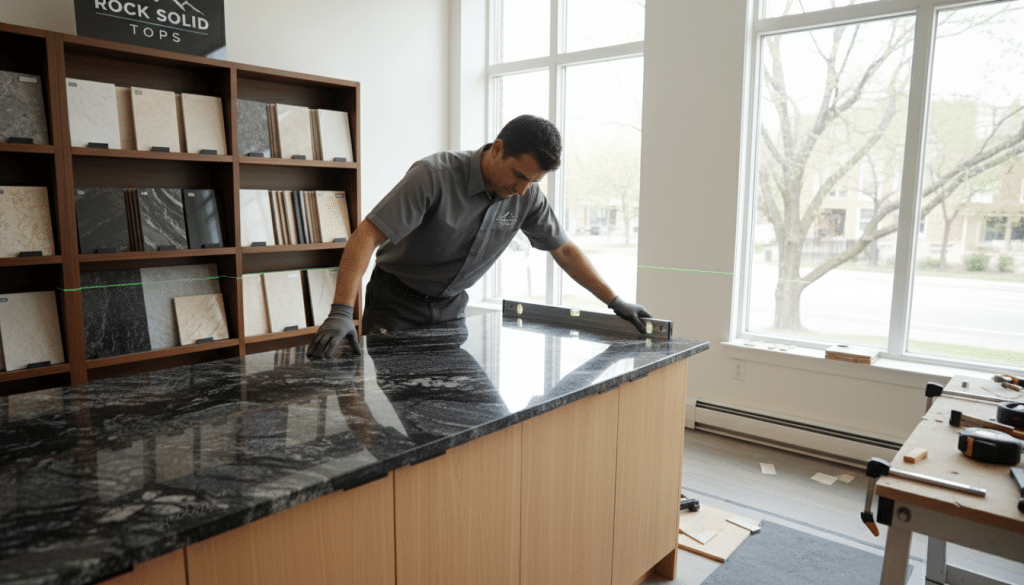
How Rock Solid Tops can install new countertops in as little as one week after measuring
GET YOUR NEW COUNTERTOPS INSTALLED IN AS LITTLE AS ONE WEEK AFTER MEASURING. Many jobs finish in 1–2 weeks from measurement to install depending on slab choice and project complexity.
- We map the full installation process so you know every step.
- Scheduling depends on slab availability, special finishes, and cutouts.
- Our team coordinates delivery, trades, sealing, and cleanup for fast results.
We respect your home, communicate clearly, and finish with tight seams and a sealed surface that performs from day one. Call to book a free estimate across Minneapolis and St. Paul.
Why professional fabrication matters for natural stone countertops in Minneapolis
Trusted fabrication protects your home and makes sure the surface performs for years. With heavy slabs and tight spaces, the visible finish is only part of the story.
Handling heavy slabs safely and protecting cabinets, flooring, and walls
Natural stone slabs are very heavy—often 15–20 lbs per square foot. Moving them without equipment risks injury and damage.
We use lifts, padding, and routed paths to shield cabinets and floors during delivery and set. That care avoids costly repairs in finished Minneapolis homes.
Seam quality, polished cutouts, and long-term performance
Seam placement, vein matching, and polishing make seams nearly invisible. Poor seams show right away and can worsen over time.
Undermount sinks and exposed openings need precise polishing. Proper support, adhesive choices, and level installation prevent stress cracks and keep long-term durability high.
- Safety: pro handling protects people and property.
- Quality: tight seams, matched veins, polished cutouts.
- Durability: correct support and sealing extend life.
Rock Solid Tops brings 30+ years of fabrication and installation experience. Our promise—Our Craftmanship, Your Vision—means we turn your idea into a lasting, beautiful countertop with care and skill.
Conclusion
Here’s a concise roadmap to lock in price, quality, and timing.
Installed pricing hinges on stone grade, square footage, edge work, cutouts, finish, and add‑ons. Quick ranges help—but per square foot estimates change with seams and special edges.
Compare materials: quartz needs less maintenance and no regular sealing, while granite usually requires periodic sealing. Marble costs more and asks for gentler care.
Long‑term value comes from tight seams, correct support, and pro installation. That protects your kitchen and keeps resale value strong.
GET YOUR NEW COUNTERTOPS INSTALLED IN AS LITTLE AS ONE WEEK AFTER MEASURING. For a free estimate, call (612) 270-4239 or email info@rocksolidtops.com. We serve Minneapolis, St. Paul, and towns within an hour—30+ years of Rock Solid trust.