
Have you ever wondered if the routine you use with a quartzite countertops cleaner is actually harming your stone and dulling the finish?
We help you answer that clearly. With 30+ years fabricating and installing stone in Minneapolis, MN, and surrounding areas, we know what works. Our Craftmanship, Your Vision — we pair fast installs (often in as little as one week after measuring) with simple, proven care steps.
In this short guide we explain how to pick the right product, build a daily routine, and handle spills or stains without guesswork. You’ll learn safe cleaning, when to deep clean, and why sealing matters for long-term protection.
Rock Solid Tops offers free estimates and fast answers. If you’re planning a remodel or a new install, we can help you pick the best stone and get it fabricated quickly. Call (612) 688-7781 or email info@rocksolidtops.com for questions or to schedule a visit.
Key Takeaways
- Simple, pH-balanced cleaning keeps surfaces bright without damage.
- Avoid acidic or abrasive products that strip the finish.
- Daily wipe-downs plus periodic sealing protect long term.
- We offer expert help in Minneapolis, MN—fast fabrication and install.
- Free estimate available; contact us at (612) 688-7781 or info@rocksolidtops.com.
Understanding Quartzite Countertops as Natural Stone
When sandstone meets intense heat and pressure, it becomes a tougher, denser material you can use in the home. This metamorphic natural stone offers the strength and grain you see in high-end installs.
How it forms and why it’s different from quartz
We dig quarried stone from the earth. Heat and pressure fuse grains into a hard slab. That makes it more rugged than engineered quartz, which is mixed in a factory.
Benefits in kitchens and baths
- Durability: It stands up to daily use and heavy traffic.
- Heat tolerance: Hot pans and brief contact pose less risk than on many surfaces.
- Timeless looks: Natural veining gives a marble-like aesthetic that elevates a kitchen or bath.
What can still go wrong over years
Even tough stone can stain from oils or pigments. Acidic liquids can cause etching—a dull mark that changes the finish. Scratches happen from grit or dragged items.
Etching is surface damage from acid. Staining is color left by a spill. Match your products and sealing to the material, and your surface will stay beautiful for years.
Choosing a Quartzite Countertops Cleaner That’s Safe and Effective
Picking the right product keeps your stone looking great and saves you repair headaches later. We recommend a simple everyday lineup: a pH-balanced stone cleaner, a few drops of mild dish soap, and warm water.
Why pH matters: Natural stone reacts to acids and abrasives. A truly pH-neutral stone cleaner protects the finish and prevents dulling or etching. Use warm water to lift soils and dilute soap for safe, regular use.
What to avoid
- Avoid acidic abrasive cleaners and abrasive cleaners—these can etch and weaken the finish.
- Skip vinegar, bleach, ammonia, oven sprays, and scouring powders; they’re common under-sink hazards.
- Watch for products that hide harsh chemicals behind vague labels.
Shopping checklist
Look for pH-neutral language, “non-abrasive” directions, and explicit compatibility with quartzite and natural stone. “Stone-safe” is marketing unless the label shows ingredients and use steps.
Test any new product on a hidden spot first. Once the right cleaners are in place, daily care becomes fast and predictable—wipe, rinse with warm water, and dry!
Daily Cleaning Routine for Quartzite Countertops
A few simple steps each day prevent buildup and keep your surface ready for anything the kitchen throws at it. We recommend a fast, repeatable approach that takes less than two minutes.
Quick wipe-down method
Use soft microfiber or a gentle cloth with warm water and a drop of mild soap. Light pressure lifts crumbs, films, and fingerprints without scratching.
Rinse and dry to prevent water spots
Rinse the area with clean water and dry right away. Leftover soap or standing water causes water spots and can dull the finish over time.
Handle spills immediately without spreading the mess
Blot — don’t smear. For colored or acidic spills, act fast to avoid stains or etching. We tell customers to blot first, then wipe spills with soapy water and rinse.
Common kitchen spills needing fast attention
- Coffee and wine
- Citrus and vinegar-based acids
- Oils and sauces
Simple habit: keep a microfiber cloth handy and make daily cleaning part of your end-of-meal reset. Quartzite handles heat well, but use trivets to reduce thermal shock and protect your countertops.
Deep Cleaning Quartzite Without Damaging the Surface
Heavy use demands a stronger approach—deep cleaning that’s safe and simple. Depending usage and traffic, buildup shows faster in busy kitchens, rentals, or commercial break rooms.
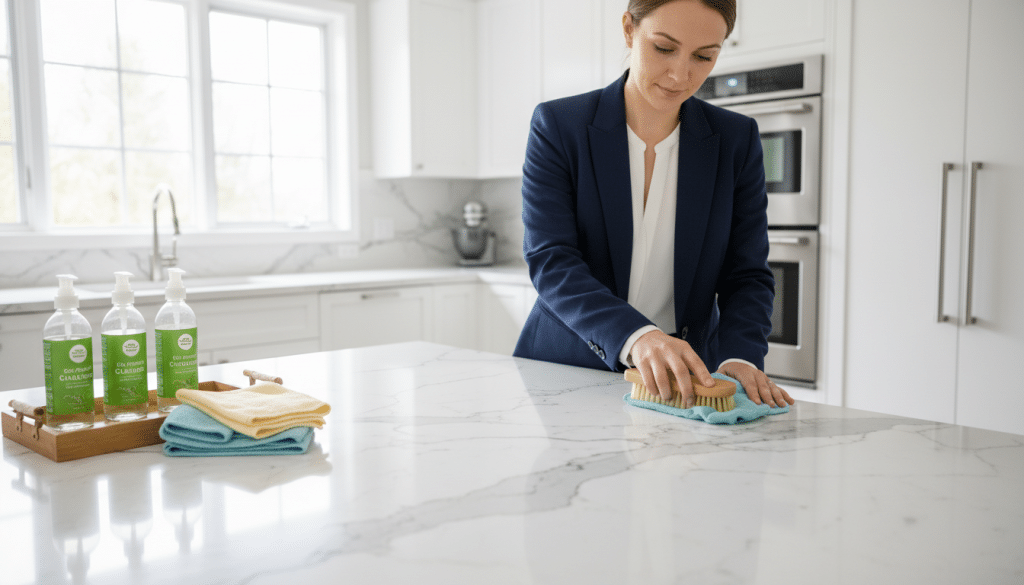
Plan a deep clean every few months for most homes. For high-traffic areas, increase frequency. We recommend a set cadence so grime never sets.
Right tools to protect your finish
- Cloth sponge or soft microfiber pad — lifts soils without abrasion.
- Soft pads used with gentle circular motions prevent grooves and scratches.
- A single stone-safe product kept for regular use avoids conflicting products.
Deep-clean workflow
- Apply a pH-neutral stone cleaner as directed; let it sit briefly if the label allows.
- Work with a cloth sponge in soft circles to lift oily haze and dried splash marks.
- Rinse thoroughly with clean water, then dry completely to avoid spots.
Deep cleaning removes cooking films, oily haze near the stove, and cloudy residue from other cleaners. The biggest mistake is using abrasive scrubbers — they leave tiny scratches that trap dirt later. Keep one trusted product and the right tools on hand, and you’ll save time and repairs down the road.
Stain, Scratch, and Etch Care for Quartzite Countertops
Stains, scratches, and etching each tell a different story about what happened to your stone. We start by diagnosing the mark so you treat the cause—not just the color.
Diagnose before you act
Oil-based stains look darker and may feel a little tacky. Organic spots from coffee or wine often dye the surface. Mystery discoloration needs a cautious approach—test in a hidden spot first.
Safe poultice for stubborn stains
Mix baking soda and water into a thick paste. Apply over the stain, cover with plastic wrap, and tape the edges.
- Leave in place about 24 hours.
- Remove, rinse with water, and dry.
- Repeat if needed; some tough stains take more than one round.
Avoid harsh chemicals while you troubleshoot. Treating the wrong way can lock a stain in or spread it.
Minimizing light scratches
For shallow scratches, use a stone-safe polishing product designed for natural stone. Work gently and follow product directions so the sheen stays even.
When to call a pro
Deep scratches you can feel, widespread staining, or etched marks that look dull rather than discolored are restoration jobs. We can help you decide—don’t risk a focal surface by guessing.
Rock Solid Tops is here to guide you through fixes and, when needed, professional restoration.
Cleaning Leathered Quartzite and Other Textured Finishes
Textured stone needs a gentler, more deliberate approach than smooth finishes. Leathered and textured surfaces trap crumbs and dust in low spots. Wiping alone can miss grit that grinds the finish over time.
Remove debris without harsh scrubbing pads
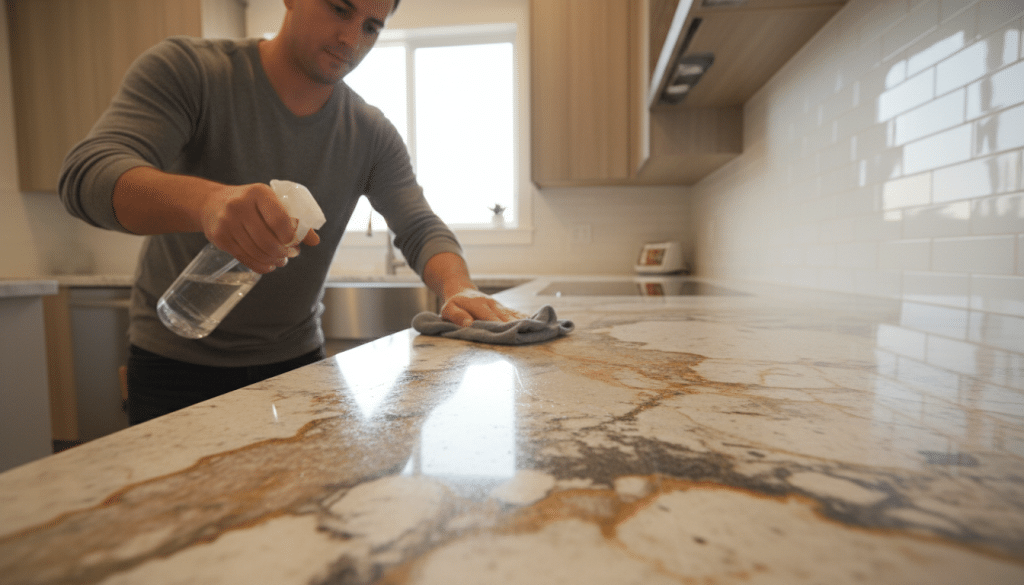
Start dry. Use a soft cloth or a soft brush to sweep loose particles away. A vacuum with a soft-brush attachment works well for deep grooves.
Soap-and-water wash for grooves and low spots
Mix warm water with a few drops of mild soap or a pH-neutral product. Use a soft-bristled brush and gentle strokes to work the soap into textured areas. Don’t scrub hard — you want to lift, not abrade.
- Do this first: dry brush or vacuum to avoid rubbing grit into the surface.
- Wash safely: warm water + mild soap, soft-bristled brush, gentle motion.
- What to avoid: abrasive cleaners and harsh chemicals that catch edges and wear finishes unevenly.
Rinse thoroughly, then dry the surface with a clean cloth. Texture holds water, so drying keeps the finish even and prevents spots.
Busy kitchen tip: if you prep a lot, give leathered tops a quick brush-out nightly. It’s fast and stops buildup before it sets!
Sealing and Long-Term Maintenance for Quartzite Countertops
A proper sealant acts like a shield, stopping liquids from sinking into the stone.
Why sealing matters: A good sealant improves stain resistance, makes cleaning faster, and helps preserve an even shine. It won’t replace daily maintenance, but it makes mistakes less costly and spills easier to manage.
How often to reseal
Most surfaces do well with resealing every 1-2 years, depending usage. Heavy kitchens or commercial spaces need checks more often. Mark a calendar reminder so it doesn’t get forgotten.
Water drop test
Place a few drops of water on the surface. If the stone darkens or absorbs the drops within a minute, it’s time to reseal. This quick check saves time and avoids surprise stains.
How to apply sealer correctly
- Prep: clean and let the surface dry fully.
- Apply the sealer evenly per label directions.
- Allow the recommended dwell time (often 15–20 minutes).
- Wipe off excess before it skins over, then respect cure time (commonly 24–48 hours).
Tips: Seal when you can leave the area unused during cure time. Keep a simple log for future maintenance. If you’re still in the material choice phase for your home, we’ll help you pick a finish that fits your lifestyle and maintenance comfort level!
Conclusion
Small habits make a big difference in how your surfaces look and perform over years. Daily cleaning with a drop of dish soap and warm water, a soft cloth, then a quick rinse-and-dry keeps your quartzite and other stone bright. Blot spills fast—coffee, wine, citrus, and oils need immediate attention.
Skip acidic or abrasive products; the right cleaner and technique matter. Seal on schedule (about every 1–2 years) to ease maintenance and protect against stains. For deep etching or large repairs, call a pro instead of guessing.
Protective tips: use trivets for heat and cutting boards to avoid scratches. Need new countertops or a remodel? Rock Solid Tops has 30+ years of experience. Get your new countertops installed in as little as one week after measuring. Call (612) 688-7781 or email info@rocksolidtops.com for a free estimate—Our Craftmanship, Your Vision in Minneapolis, MN and surrounding areas!