
We’re Rock Solid Tops, serving Minneapolis, MN, St. Paul, and nearby communities. With 30+ years of stone fabrication, we pair skill with your vision. Call (612) 270-4239 or email info@rocksolidtops.com for a free estimate.
Typical industry pricing runs about $80–$200 per square foot installed. That range reflects slab selection, edge profiles, cutouts, and how complex the install is. Remember: “installed” pricing covers fabrication and labor, not just the slab price.
We can measure and have new tops installed in as little as one week. We fabricate and fit granite, quartz, and other stone surfaces. You’ll learn price ranges, how estimates are calculated, which add-ons matter, and ways to save without cutting corners.
Key Takeaways
- Installed pricing includes fabrication and labor—this is what matters most.
- Industry range: roughly $80–$200 per sq ft installed.
- Rock Solid Tops serves the Twin Cities area and offers free estimates.
- We fabricate granite and quartz with 30+ years of experience.
- We can often install within one week after measuring.
What You’ll Pay for Granite Countertops
We’ll show typical national numbers and what to expect locally. Use these figures to plan and compare quotes apples-to-apples.
Typical total price for an average kitchen
Most average-kitchen projects land between $2,000 and $4,000. Many homeowners pay about $3,250 for a straightforward remodel.
Installed price ranges per square foot in the United States
National installed ranges commonly fall around $80–$200 per square foot. When people say “$100 per square,” they mean per square foot installed—fabrication and labor included.
Why quotes vary so much from home to home
Quotes change based on simple math and real choices:
- Total square footage and number of seams.
- Sink and cooktop cutouts, edge profile, and slab grade.
- Site access, removal of old tops, and special finishes.
Practical tip: Simple layouts and common slabs keep you near the low end. Rarer material, complex edges, and lots of cutouts push the price higher.
If you’re in Minneapolis or within an hour of the Twin Cities, we’ll come measure and give you a clear installed quote you can trust. Schedule a free estimate to get a precise number for your kitchen or bathroom!
How Granite Countertop Installation Cost Is Calculated
Let’s walk through how measurements and shop work translate into a real number.
Material price vs. installed price: Shops often quote a slab or material number per square foot, but the installed price includes fabrication, labor, and final setting. We break this down so you won’t see surprise line items later.
Measuring: square footage vs. linear footage
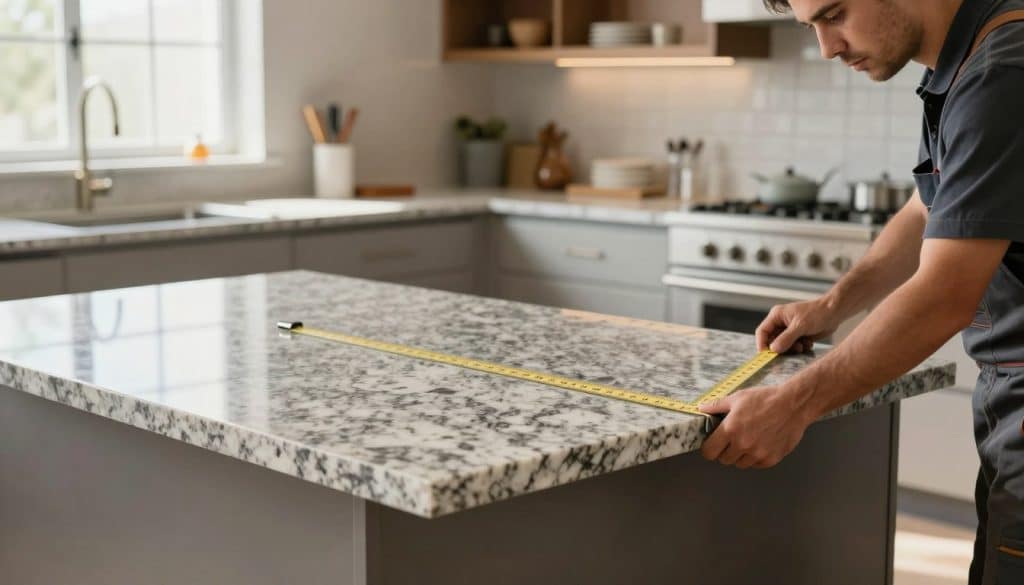
We usually start with linear footage — the lengths of runs in feet. Then we multiply by a standard depth (about 25–26 inches) to estimate square foot totals. That gives a quick cost per square foot estimate before we template.
Why some quotes use linear foot pricing
Linear foot pricing can simplify straight runs. You can translate linear pricing to per square foot by factoring depth. We’ll show both methods so you can compare quotes apples-to-apples.
What a professional estimate includes
- Measuring and templating
- Fabrication, edging, and cutouts
- Seaming, transport, setting, and initial sealing
Where costs shift: Late design changes, extra cutouts, edge upgrades, or thickness swaps can change final numbers. We provide clear guidance at each step so your quote is buildable and trustworthy!
Granite Pricing by Grade, Level, Color, and Rarity
Not all slabs are created equal — grade and pattern matter for long-term performance. We break down how grade, level, and color affect pricing and everyday use so you can choose with confidence.
Grade A, B, and C: density, porosity, and everyday durability
Grade A slabs are dense and less porous. They offer higher durability and need sealing less often. Typical installed range: about $75–$100+ per sq ft.
Grade B is a solid middle ground. It balances looks and durability with a price near $60–$75 per sq ft.
Grade C is more porous and suited to low-traffic spots. Expect roughly $40–$60 per sq ft and more frequent sealing.
Level 1–3: pattern movement and rarity
Levels reflect visual complexity. Level 1 is subtle and common; Level 2 shows more movement. Level 3 has dramatic veins or rare hues and raises pricing.
- Level 1: $40–$50 per sq ft.
- Level 2: $50–$65 per sq ft.
- Level 3: $65–$100+ per sq ft depending on rarity.
Common colors versus exotic stones
Common colors are easier to source and match, so the price stays stable. Exotic stones with unique color or movement push prices up.
When comparing slabs, look for consistent pattern direction, check for fissures vs. cracks, and preview seam placement for real-world use.
We’ll help you pick the right slab and surface—granite, quartz, or other stones—based on how you live or run your business.
Kitchen and Bathroom Measurements That Change the Price
A quick sketch and a few rough lengths help us give a realistic ballpark fast. You don’t need perfect numbers—bring a sketch, lengths in feet, and we’ll handle the rest with professional templating.
How to estimate square footage from length and depth
Measure linear runs in feet, then multiply by a standard depth (~25–26 inches) to approximate square foot. That gives a simple ballpark before we template.
Islands, peninsulas, and corners that increase fabrication time
Islands, angled runs, and tight corners add layout time. More cuts mean more polishing and often extra seams.
Cutouts for sinks, cooktops, and faucets
Each sink, cooktop, or faucet cutout raises complexity. Cutouts require precise routing and increase labor risk and time.
- We show an easy way to get a quick budget using length and depth.
- We inspect cabinets for level and reinforcement—this affects long-term performance.
- We work on both kitchen and bathroom projects and commercial spaces in Minneapolis and nearby areas.
Practical tip: Bring rough measurements and we’ll take over with on-site support and accurate templating so your final quote is reliable.
Labor, Fabrication, and Installation Costs to Plan For
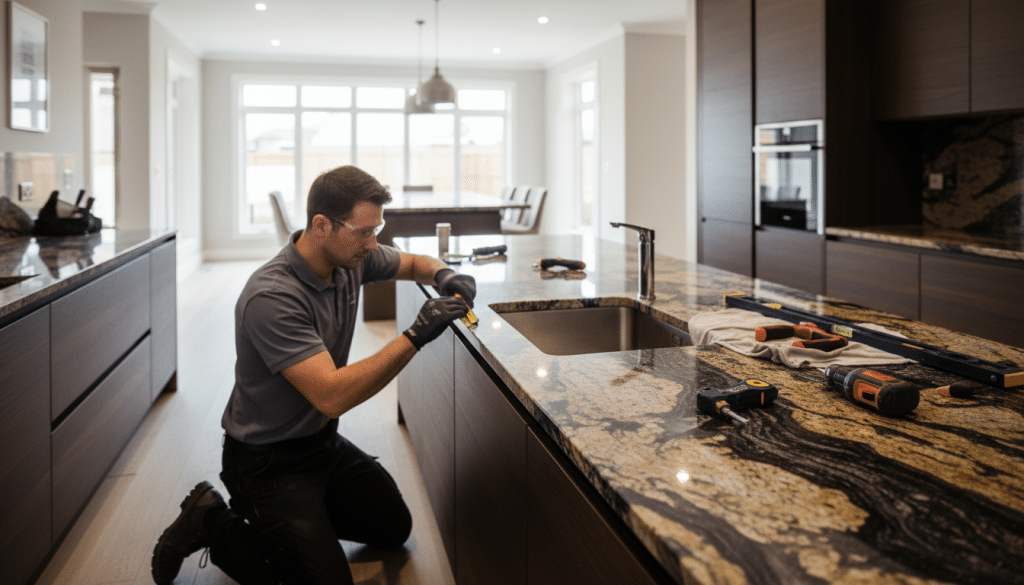
Skilled hands and careful planning are what drive a smooth labor and fabrication phase. We start with a precise template, then move to cutting, polishing, and thoughtful seaming so the final fit looks finished the first time.
Template creation, cutting, polishing, and seaming
Templating sets seam placement and cutout accuracy. Good seams hide joins and add strength.
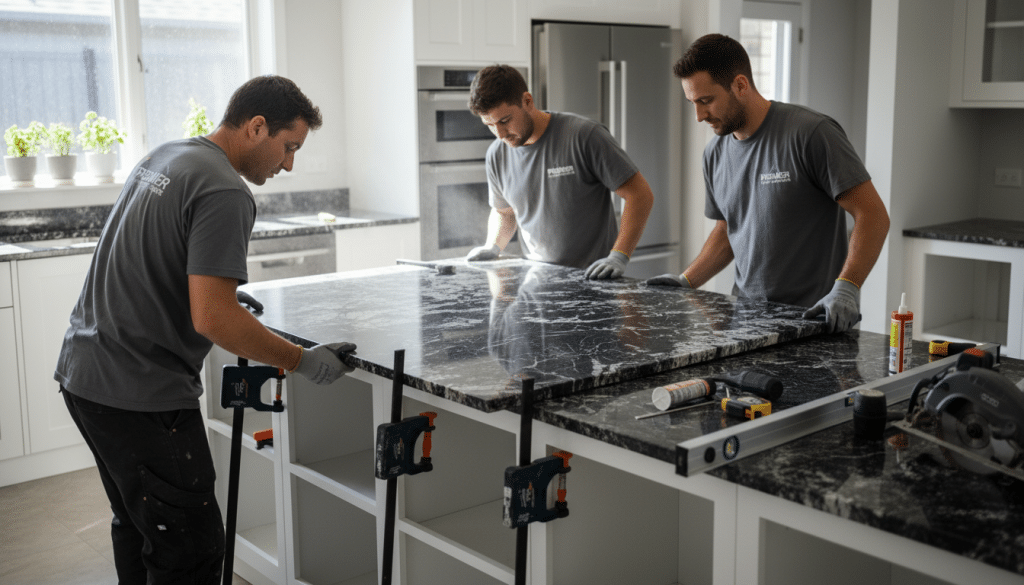
Transporting and setting heavy slabs safely
Slabs are heavy. Proper rigging, transport, and lifting gear prevent damage and keep your space clean.
Complex layouts, long runs, and structural support needs
Islands, long spans, and extra cutouts add labor and may require added support. These items raise overall costs and extend the timeline.
- What you pay for labor: expert templating, accurate cuts, polished edges, and clean seams.
- Seaming realities: seam placement matters for looks and strength.
- Safety & logistics: correct handling of slabs keeps projects damage-free.
- Support needs: overhangs and long runs can change scope and costs.
With 30+ years fabricating and installing, Rock Solid Tops combines speed and quality for remodels, multi-unit projects, and commercial buildouts. We handle the full process so your countertop installation is prompt and built to last.
Edge Profiles, Thickness, and Finish Options That Affect Cost
Design details matter: pick smart edges and finishes to match your lifestyle and budget. We help you choose so the final look feels intentional and performs well.
Popular edge styles and typical upcharges per linear foot
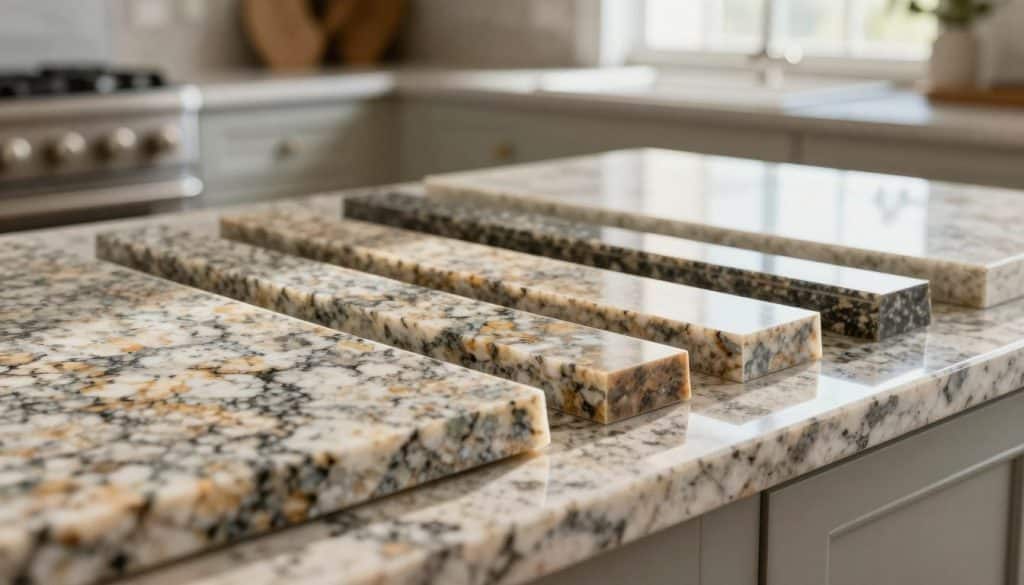
Simple square or eased edges are fast and affordable. Decorative profiles (bevels, ogee, waterfall) add time. Expect an upcharge roughly $10–$30 per linear foot depending on complexity.
2 cm vs. 3 cm thickness and where each makes sense
2 cm slabs suit bathrooms and tight budgets. They need backing or extra support on long spans.
3 cm is standard for busy kitchens and long runs. It improves strength and durability around sinks and corners.
Polished vs. honed vs. leathered finishes and pricing impact
Polished is most common and reflects light. Honed mutes shine and may cost slightly more. Leathered textures add processing time and usually carry a higher price per square foot.
- We explain edges so you know what looks modern or traditional.
- We match thickness to use and support needs.
- We advise finishes based on fingerprints, water marks, and light reflection.
Practical promise: We’ll tell you when an upgrade is worth it — and when a simple edge and standard finish give the best value. Fast fabrication, careful fitting, premium results.
Countertop Removal, Disposal Fees, and Other Add-Ons
We start by flagging removal needs and access limits before fabrication begins. That upfront walk-through keeps your project smooth and on schedule.
Old surface removal and what drives the price
Old countertop removal commonly runs about $200–$500+. The exact cost depends on material, how it’s glued down, and the risk of cabinet damage.
We plan for jobsite protection and cleanup. That lowers surprises and keeps final fees predictable.
Backsplashes, sink work, and plumbing coordination
Backsplash scope changes fabrication and time. Short splash pieces are quick. Full-height or matching materials add edges and seams.
Sink installation often adds roughly $200–$400 for undermount or special mounting. We coordinate plumbers so you don’t lose sink access longer than needed.
Delivery, access, and other logistics
- Delivery & fees: stairs, narrow halls, and parking distance affect scheduling and fees.
- Site risks: tight access or elevators on commercial jobs can add handling time.
- Predictability: we flag constraints early so your quote covers real needs, not surprises.
We set expectations up front. Rock Solid Tops will walk your kitchen or bathroom, note constraints, and coordinate the details so you’re not juggling multiple moving parts alone.
Granite vs. Quartz, Marble, and Laminate: Cost and Value Comparison
We help you pick the surface that suits your daily routine and long-term goals. Below is a clear, local-minded comparison to guide your decision for the kitchen or bathroom.
Granite vs. quartz: price and maintenance
Typical price ranges: natural stone often runs about $80–$200 per sq ft installed. Engineered quartz commonly sits around $80–$120 per sq ft.
Maintenance: natural stone needs periodic sealing. Quartz is non-porous and lower maintenance, though it requires care with high heat.
Granite vs. marble for kitchens and bathrooms
Marble ranges roughly $70–$200 per sq ft installed. It’s prized for beauty but is softer and more prone to etching.
We usually recommend marble for bathrooms or low-abuse areas. For busy kitchens, natural stone or quartz offers better everyday durability.
Granite vs. laminate for budget remodels and resale
Laminate runs about $20–$50 per sq ft. It’s a smart short-term budget move and quick to replace.
However, laminate won’t match stone for longevity or resale value. Think of laminate as a practical interim solution.
- Practical takeaway: quartz = low maintenance; marble = high beauty; laminate = low upfront price.
- Investment view: stone surfaces typically add more resale value and can last 20+ years with care.
- Local help: we fabricate and set natural and engineered surfaces. Tell us your vision and constraints—we’ll recommend the best fit for Minneapolis homes and businesses.
Ways to Save on Granite Countertops Without Sacrificing Quality
Small design swaps often deliver the biggest savings with zero compromise on quality. We help you pick smart options that lower the price per square without risking seams, cracks, or heavy upkeep.
Choosing common colors and simpler edges
Common colors usually sell closer to a “100 per” benchmark. Simpler edges cut fabrication time and keep final pricing near typical per square foot ranges.
Using remnants and prefabricated choices
Remnants make great vanities, bars, and laundry tops. Prefabricated pieces suit straight runs and standard depths, saving labor and time.
Compare quotes and time your project
- Compare inclusions: seams, cutouts, sealing, removal, and delivery.
- Schedule during slower seasons for better availability and rates.
- We offer design help and fast turnaround—often installed in as little as one week after measuring.
Practical promise: We show homeowners how to trim unnecessary complexity so you get real value and lasting performance. Call (612) 270-4239 or email info@rocksolidtops.com for a free estimate and friendly design guidance.
Conclusion
Here’s a short summary to help you decide with confidence and speed.
Many average kitchen projects land around a few thousand dollars when measured, fabricated, and set per square foot. Final pricing depends on square footage, slab selection, edges, cutouts, removal, and site conditions.
Keep costs controlled by choosing simpler layouts and common materials. Remember: professional measuring, quality fabrication, and expert labor protect your long-term investment and durability. With proper sealing and basic maintenance, stone surfaces stay beautiful for decades.
Call Rock Solid Tops at (612) 270-4239 or email info@rocksolidtops.com to book a free estimate in Minneapolis, St. Paul, or anywhere within an hour of the Twin Cities. Our Craftmanship, Your Vision — 30+ years and often installed in as little as one week.