
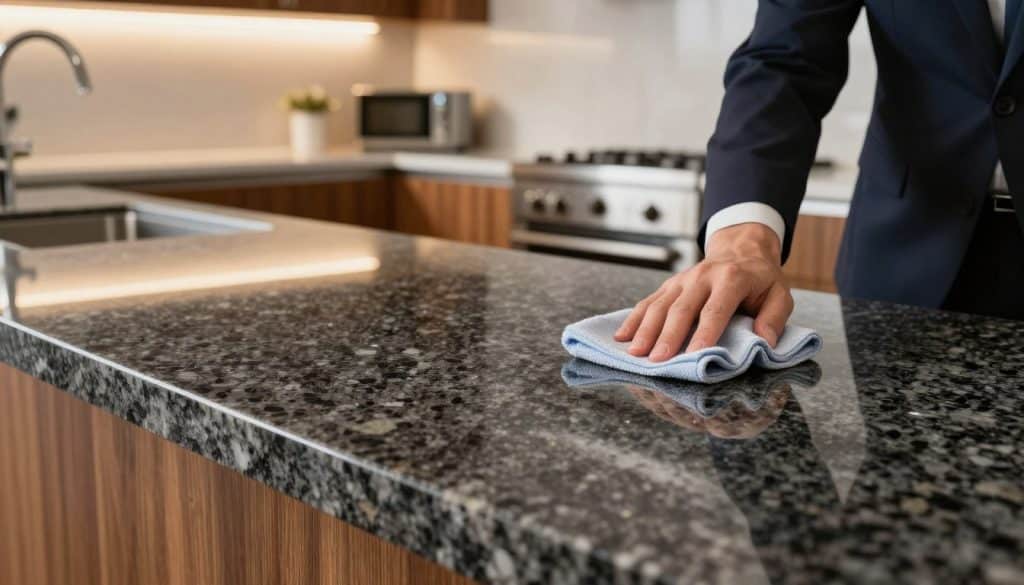
Curious why some stone surfaces keep a showroom shine while others fade fast? How to clean granite countertops?
We’re Rock Solid Tops, Minneapolis stone experts with 30+ years of experience. Our Craftmanship, Your Vision. We fabricate and install granite, quartz, and other stone surfaces across Minneapolis–St. Paul and nearby towns.
Granite is a natural, porous stone often guarded by a sealer. Daily care is simple: warm water, mild dish soap, and a microfiber cloth. Drying prevents water spots and keeps the finish glossy.
We’ll share a homeowner-friendly, pro-level routine that protects the seal and avoids harsh products that dull the stone. Expect clear steps for daily wipe-downs, safe disinfecting, stain fixes by type, what products to avoid, and when sealing matters.
Promise: With a few regular habits you can keep a consistent, showroom-style shine without harsh chemicals. If you’d like help, we measure, fabricate, and install fast—often within one week after measuring.
Call (612) 270-4239 | info@rocksolidtops.com — serving Minneapolis and the Twin Cities area. You’ve got this, and we’re here to help!
Key Takeaways
- Simple daily wipe-downs keep stone looking its best.
- A proper sealer prevents stains and keeps the finish glossy.
- Avoid harsh acids and abrasive cleaners that wear the seal.
- We offer fast measuring and installation in the Twin Cities.
- Contact Rock Solid Tops for a free estimate: (612) 270-4239.
- Small habits deliver showroom-style results without heavy chemicals.
Why Granite Countertops Need Special Care
Granite brings natural beauty, but that beauty asks for gentle attention. It’s a natural stone with tiny pores. Those pores can soak up liquids if the surface isn’t protected.
Sealing guards the colors and patterns. It buys you time to wipe spills, but it’s not a force field. If liquids sit, you can get dark spots or discoloration.
What wears a finish down
- Everyday splashes — coffee, wine, cooking drips — can stain if left.
- Harsh cleaners and acidic products can dull the finish and weaken sealing.
- Etching is a dull mark caused by acids that change the look of the stone.
We recommend a gentle routine and smart prevention. That simple way of care keeps kitchen countertops and commercial installs looking great longer. Small habits protect your investment and extend the life of the countertop.
What You’ll Need for Granite Cleaning
You don’t need a closet full of products — just a few smart picks will do. Start with basics most homeowners already have. These items lift grease, protect the seal, and keep daily maintenance quick.
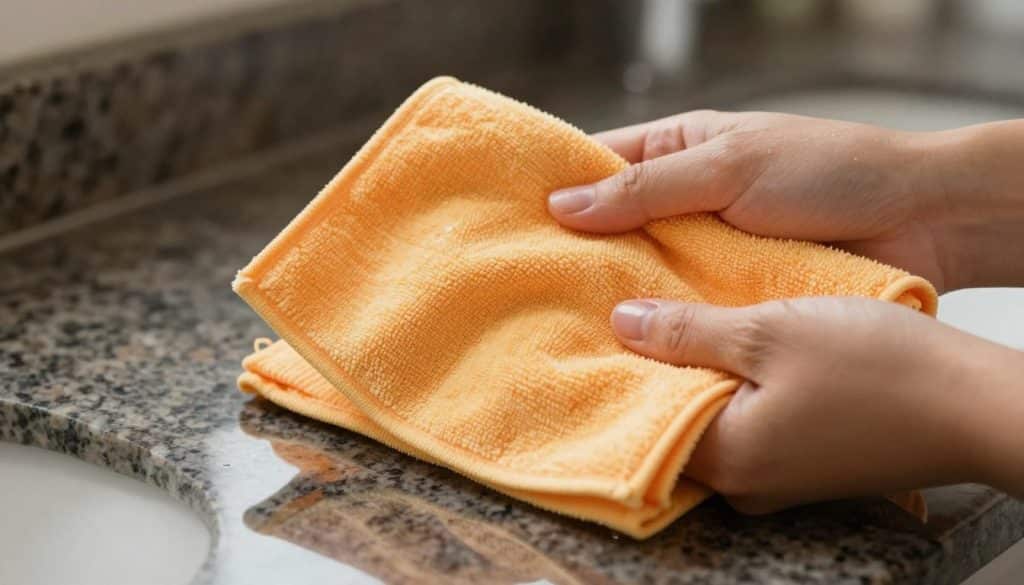
- Everyday essentials: warm water and a few drops of mild dish soap. Use a soft cloth or microfiber cloth for wiping. This gentle combo lifts grease without attacking the sealer.
- Label tip: pick a dish soap that’s non-citrus and free of acids. Read labels — citrus extracts and harsh additives can dull the finish.
- Why microfiber matters: microfiber grabs grime without scratching and buffs dry for a streak-free look. A clean microfiber cloth is your best daily tool.
- Optional products: a granite-safe commercial cleaner and a soft sponge are handy for quick touch-ups and light food splatter. A spray bottle makes a pre-mixed solution convenient.
- Tools to skip: abrasive pads, scrubby sponges, and steel wool can scratch and leave the surface cloudy. Avoid them to preserve the finish.
We keep recommendations simple and confident. With warm water, mild dish, and a good microfiber you can clean granite and keep a showroom-style finish without an arsenal of specialty products!
How to clean granite countertops for daily shine
Daily upkeep doesn’t need to be long — a few smart moves keep the shine. Follow this short routine and your kitchen will look cared for without a big time sink.
Mix a gentle solution
Step 1: stir a small amount of mild dish soap into a bowl of warm water. More soap isn’t better. A little lifts grease without stripping the seal.
Wipe using soft, circular motions
Step 2: use a soft cloth and wipe in gentle circles. That motion lifts residue and avoids abrasion that can dull a finish.
Rinse your cloth often
Step 3: dunk the cloth in clean water and wring frequently. Rinsing stops you from spreading suds, grime, and tiny food particles across the surface.
Dry immediately for a streak-free shine
Step 4: finish with a clean microfiber cloth. Drying prevents water from pooling in micro-pores and leaving visible spots or stains.
- Quick habits: use coasters, wipe spills right away, and do brief regular cleaning sessions so mess never sets in.
- Make sure you’re gentle, rinsing, and drying — these three steps do the heavy lifting.
How to Remove Stains Without Damaging Granite
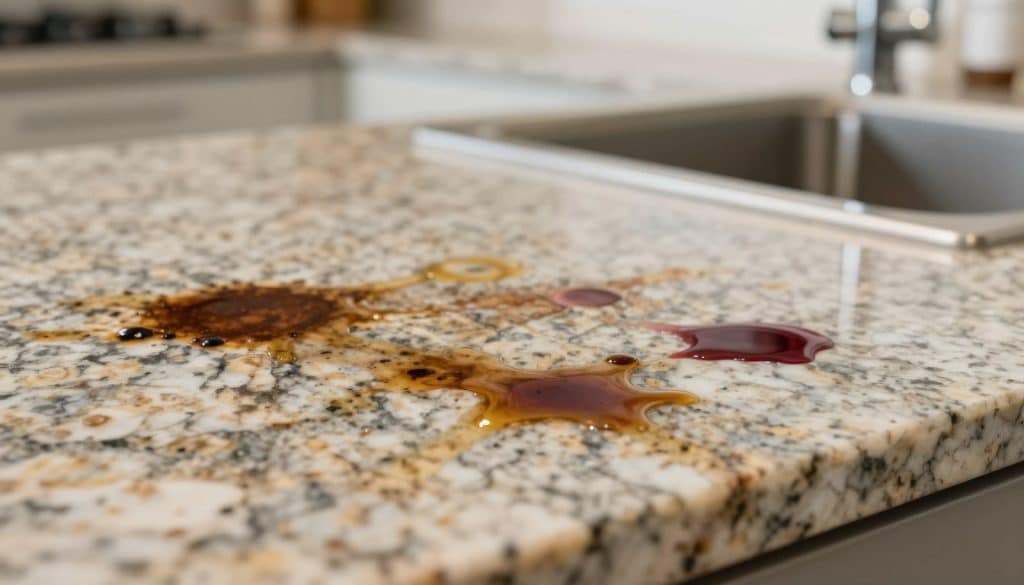
Stains look scary, but most respond well to a targeted, gentle approach. First, identify what caused the mark. Oil and water-based spots behave differently on a stone surface. That diagnosis guides a safer treatment and better results.
Identify the stain type
Common culprits include cooking oil, coffee, juice, soap residue, and ring marks from cups. Know the source before picking a remedy.
Oil-based stain method
Mix baking soda with water into a thick paste. Apply a generous layer over the stain and form a poultice.
Water-based stain method
Mix baking soda with hydrogen peroxide for a paste. Use this for coffee, tea, or other water-based marks. Use sparingly—this is a treatment, not daily cleaning.
Using a poultice
- Spread paste over the spot.
- Cover with plastic wrap and tape edges.
- Leave overnight or up to a couple days for the paste to pull the stain.
When dry, lift carefully with a plastic scraper, rinse, and wipe with a soft cloth. Repeat if needed. If the stain persists after a few rounds, switch to a commercial granite stain remover made for stone or call a pro for safe help.
Disinfecting Granite Countertops Safely
A gentle disinfecting routine protects both family health and a stone’s finish. Disinfecting is not the same as everyday cleaning. The goal is germ reduction without harming the seal or polish.
Our go-to mix: fill a spray bottle with 70% isopropyl alcohol, add an equal part warm water and a drop of dish soap. Lightly mist the surface, let it sit 30–60 seconds, then wipe with a microfiber or soft cloth and dry.
- Quick steps: mist, wait briefly, wipe, then dry.
- Tools: a clean cloth or microfiber keeps streaks away and won’t scratch.
- Why this works: isopropyl alcohol disinfects fast and evaporates, so liquids don’t pool.
Avoid bleach and ammonia-based cleaners. These products can dull finishes and weaken sealers over time. Also skip abrasive pads or steel wool — they scratch and leave the surface cloudy.
Be cautious with many disinfecting wipes; some ingredients aren’t stone-friendly. In short, pick the right mix, use a gentle cloth, and make sure you dry the surface after disinfecting. We’re here to help keep your countertops safe and showroom-ready!
Products and Practices to Avoid on Granite
Small mistakes with household cleaners can strip a seal and dull your stone fast. We want you to protect that polished look. Follow a short stop-doing list and swap in safer options.
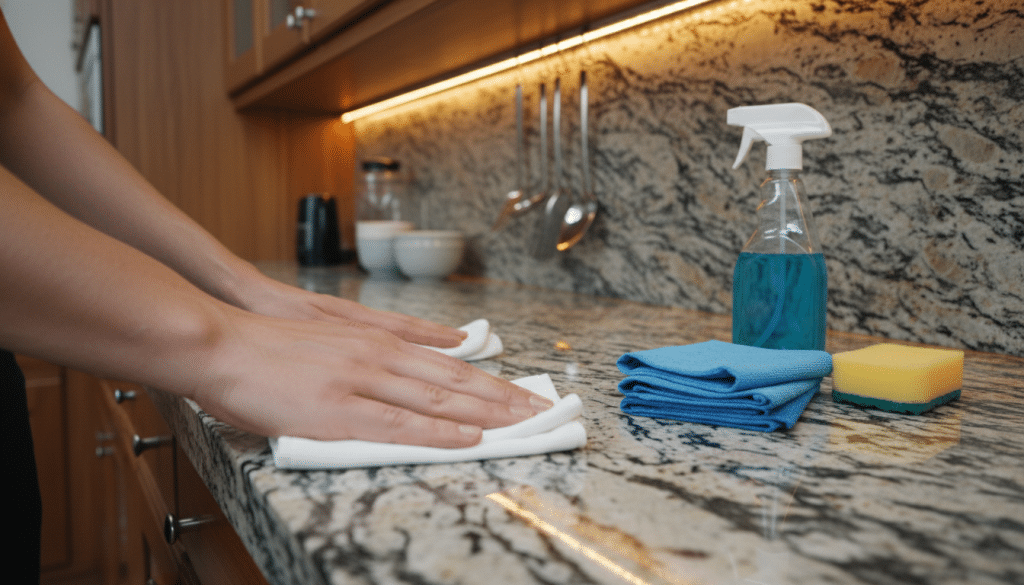
Skip acids and citrus-based sprays
Don’t use vinegar, lemon, lime, or citrus-based cleaners. These acids etch the finish and speed sealer breakdown. Repeated exposure leaves dull marks and rough patches on the surface.
Avoid bleach, ammonia, and many all-purpose cleaners
Bleach and Windex-style cleaners can fade color and damage a protective layer. Many all-purpose cleaning products are simply not formulated for natural stone.
Stop using steel wool or abrasive scrubbers
Steel wool and rough pads scratch and change how light reflects off the surface. Once scratched, the finish often needs professional polishing.
- Don’t let water pool around sinks, soap pumps, or drying racks — standing water can cause discoloration and spots.
- Safe swap: use warm water + a drop of dish soap or a granite-safe cleaner for regular cleaning.
- Make sure you dry the area after wiping to prevent puddles and spotting.
Keep these practices simple. Less chemical stress means longer-lasting care and a showroom-worthy kitchen surface for years.
Sealing and Long-Term Granite Countertop Care
A little attention at the right time extends the life and luster of your kitchen surfaces. Sealing is protection, not a polish. It keeps liquids from soaking in so everyday spills don’t become permanent spots.
Realistic schedule: many granite surfaces need sealing once or twice a year. High-use kitchens may need it more often. Low-traffic areas can wait longer.
- Simple water-drop test: place a few drops of water and wait ~15 minutes. If the water beads, your sealer is fine. If the stone darkens or absorbs the water, plan a reseal.
- Sunlight matters: bright, repeated sun can wear a sealer faster. Use blinds, UV film, or window treatments in sunny zones to protect the surface and slow wear.
- Material choice: quartz is non-porous and needs less maintenance, while granite rewards routine sealing and regular cleaning for long-term beauty.
Our promise: we help Minneapolis homeowners pick the right stone and set a simple maintenance rhythm. Regular cleaning plus timely sealing is the winning combo for lasting, showroom-ready countertops.
Conclusion
Small, consistent steps deliver big results for any kitchen surface.
Stick with gentle daily care: mild dish soap and water, a soft cloth, and quick drying. This simple pro formula keeps your granite looking sharp and cuts down long jobs later.
Avoid acidic, ammonia-based, or abrasive products that wear a seal or scratch a finish. For stains, identify the source and use the right baking soda poultice. Give it time before repeating or moving to a stone-safe remover.
Keep up with sealing. It’s the long game that keeps surfaces easier to maintain and more resistant to everyday messes.
We’ve served Minneapolis, St. Paul, and nearby areas for 30+ years on residential and commercial projects. Ready for a free estimate? We often install in as little as one week after measuring.
Rock Solid Tops — “Our Craftmanship, Your Vision.” Call (612) 270-4239 or email info@rocksolidtops.com.