
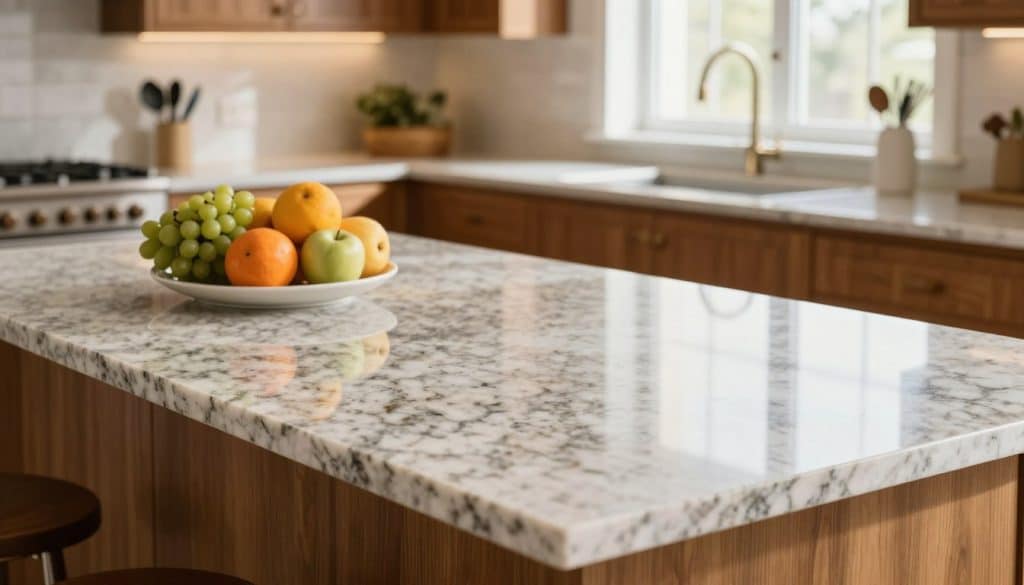
Which surface will handle family meals, spills, and Minnesota winters while still making your space look stunning?
We’ll compare granite countertops vs quartz in real-world terms. We focus on how each option performs in a busy kitchen and a moisture-prone bathroom, not just on sample boards.
Expect clear guidance on the three big factors: appearance, maintenance, and performance. We explain natural movement versus consistent pattern, sealing needs versus non-porous care, and limits for heat and UV.
With 30+ years fabricating and installing stone and other top materials, Rock Solid Tops helps Minneapolis homeowners make a practical choice. Our craft meets your vision, and we can install in as little as one week after measuring.
Ready to talk? Call for a free estimate at (612) 270-4239 or email info@rocksolidtops.com. We’re prompt, professional, and committed to your home and design decision.
Key Takeaways
- We’ll weigh appearance, upkeep, and everyday performance to help you choose.
- Both options can be great; the best pick matches how you live and clean.
- We install fast — often within one week after measuring.
- Local expertise: Minneapolis and surrounding areas get hands-on service.
- Contact Rock Solid Tops for a free estimate at (612) 270-4239 or info@rocksolidtops.com.
Granite countertops vs quartz: key differences homeowners should know
Deciding between a quarried slab and a manufactured surface starts with understanding what each is made of.
Natural stone vs engineered stone composition
One comes from the earth and the other is built in a plant. Granite is a natural stone pulled from quarries, cut into slabs, and polished. Quartz is an engineered stone made of about 90–94% ground quartz mixed with resins and pigments.
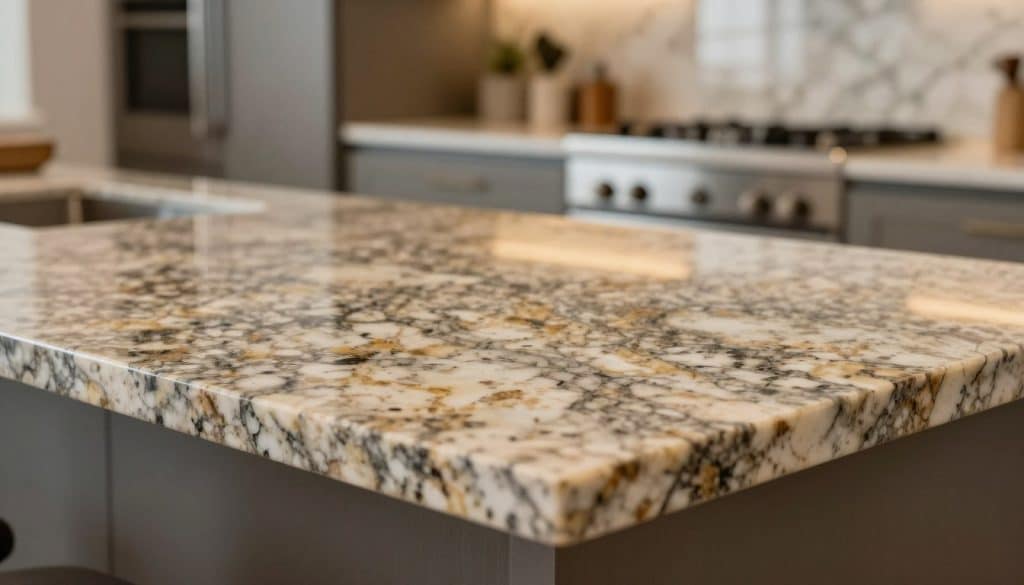
Pattern consistency, color options, and overall look
Natural slabs show unique depth and movement. Factory-made surfaces offer consistent patterns and broad color control. If you want one-of-a-kind character, choose natural. If you want repeatable designs, choose engineered.
Durability basics: scratches, chips, and everyday wear
- Both materials can scratch or chip with heavy impact.
- Minor repairs hide better in varied patterns of natural stone.
- Repair on a uniform surface may stand out more.
In daily life, pick the surface that fits how you live. Choose natural when you want heat-tolerant character. Choose engineered for a low-maintenance, non-porous option.
Granite countertops: natural stone beauty with heat resistance
From molten rock to polished slab, this material’s journey gives each piece a one-of-a-kind appearance and practical heat resilience.
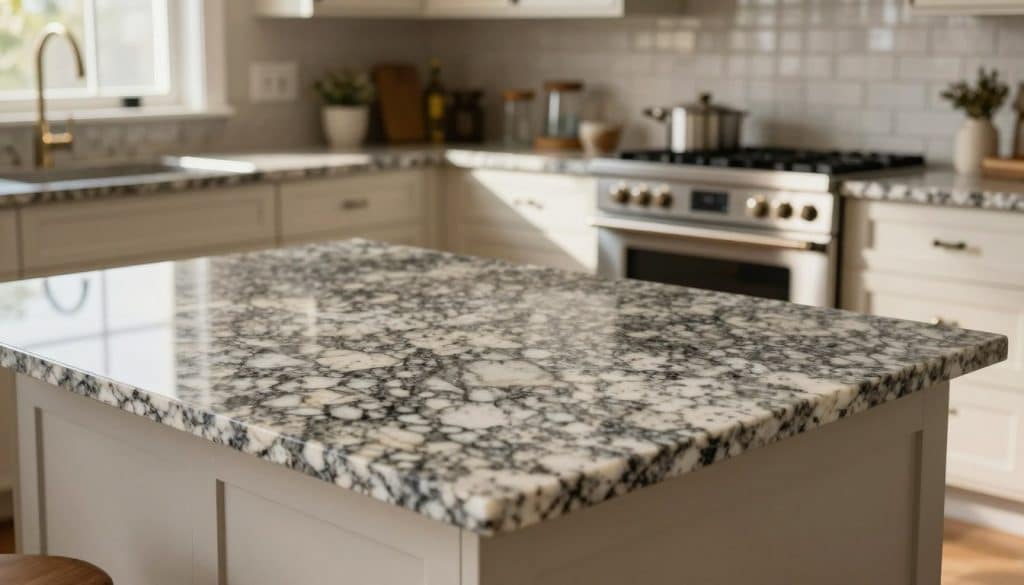
How slabs form and are fabricated
Slow cooling of magma creates dense, crystalline stone that we quarry into large slabs. Fabrication then takes over: measuring, templating, cutting, edge profiling, and polishing all shape the final result.
Why homeowners choose it
Natural depth and unique patterns make a kitchen or bathroom feel custom. The material offers strong heat resistance and solid durability for everyday use when treated right.
Trade-offs and care
Because the stone is porous, sealing is a must. We recommend yearly sealing for most homes to reduce stains and moisture penetration.
- Daily cleaning with gentle cleaners preserves the finish.
- Wipe spills quickly—oil, wine, and juice can absorb if the sealer wears off.
- Seams are unavoidable; picking a full slab helps match movement and color.
With 30+ years fabricating and installing, we guide slab selection and layout so the natural movement lands where you want it. Our craftsmanship, your vision—planning makes the difference between nice and wow!
Quartz countertops: engineered performance with low-maintenance appeal
If you want low-fuss style and predictable color, engineered stone is a smart move for busy homes. We build these slabs from roughly 90–94% ground quartz mineral blended with about 7–10% resins and pigments. That mix creates a stable, consistent surface that resists stains and doesn’t need sealing.
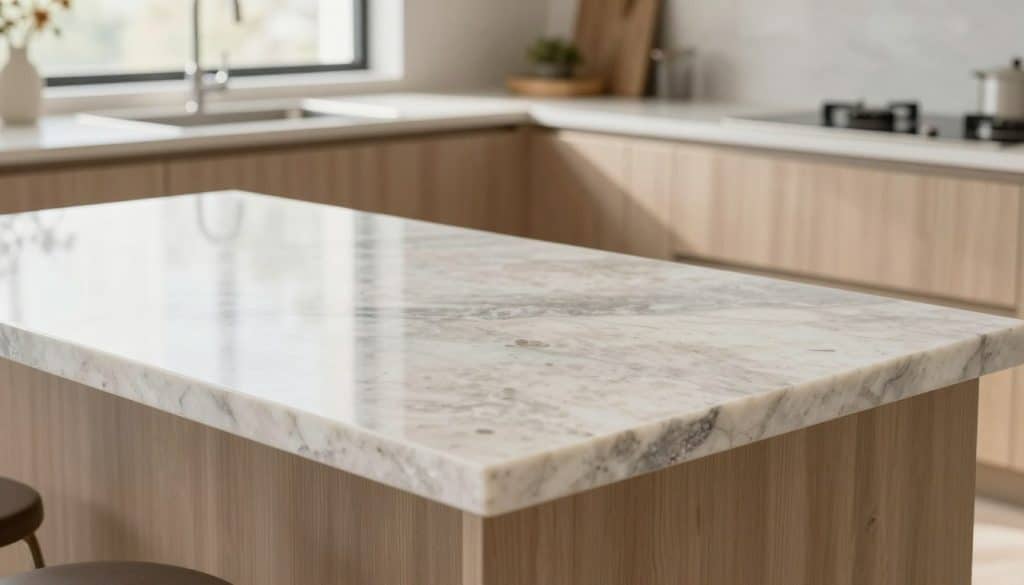
Why homeowners choose it
Non-porous hygiene is a major win. The sealed-like surface limits moisture absorption and lowers spots where bacteria, mold, or mildew hide—perfect for a busy kitchen or bathroom. Daily cleaning is simple: mild soap, water, and a soft rag do the job.
Limits and handling
Be honest: engineered stone has heat limits. Avoid hot pans directly on the surface—sustained heat or thermal shock can cause damage. UV exposure can fade lighter colors, so outdoor use needs caution.
- Pros: consistent patterns, easy maintenance, and marble-look or solid-color options.
- Cons: heat sensitivity, UV risks outside, and heavy slabs that require careful installation.
- Tip: Use trivets, avoid abrasive cleaners, and hire pros for transport and fit.
Performance comparison for kitchens and bathrooms in Minneapolis, MN
In busy Minneapolis homes, how a work surface handles heat, water, and daily knocks often decides the final pick. We’ll look at real use in a kitchen and a bathroom so you can match performance to routine.
Heat resistance: hot pans and when to use trivets
Granite generally tolerates higher temperatures than engineered slabs. Heat from oven pans usually won’t harm it.
Engineered surfaces commonly have limits near 400°F. Use trivets or hot pads near ranges and when moving pans—this avoids thermal shock and preserves finish.
Water, stains, and bacteria
Sealing makes a big difference. A well-sealed natural slab resists water and stains well, but neglected sealing lets liquids in.
Quartz is non-porous by design, so it resists stains and limits spots where bacteria hide. For busy households, that wipe-and-go ease shows up fast.
Chips and repairs: visibility and durability
Both surfaces offer strong durability, but edges and corners take the most abuse. Small chips hide better in a variegated pattern.
Uniform surfaces can show repairs more clearly. Think about where you work most—if you set hot pans or drop heavy pans often, that affects choice.
- Local note: Minneapolis kitchens see heavy meal prep; bathrooms face steady moisture—pick what matches your routine.
- Tip: Use trivets, keep a sealing schedule, and guard edges near sinks and cooktops.
Performance is only half the decision—next we’ll look at cost, value, and timelines so your remodel finishes on schedule.
Cost, value, and project timeline: making the right choice for your home
Budget, timeline, and daily habits matter more than style when picking a new surface for your kitchen or bathroom.
Price ranges to expect
As a practical guide, expect rough ranges: granite often sits near $65–$120 per square foot, while quartz commonly falls around $45–$85 (some markets show up to $100). These are references, not guarantees.
Final price varies with slab grade, edge profile, cutouts, and installation complexity. High-end patterns can cost more.
Choose by lifestyle and value
Think beyond sticker price: durability, maintenance, and design longevity shape long-term value. Pick natural stone if you want heat tolerance and unique movement. Pick engineered surfaces for consistent color and low sealing needs.
Why professional fabrication and installation matters
Slabs are heavy and fragile. A mistake can crack a slab or ruin seams. Professional installation protects your investment.
- Our process: we visit your home or commercial site to help with design choices and take precise measurements.
- We fabricate with care and can install in as little as one week after measuring.
- We serve Minneapolis, St. Paul, and any location within about an hour of the Twin Cities.
Ready to schedule a free estimate? Call (612) 270-4239 or email info@rocksolidtops.com. Rock Solid Tops — Our Craftmanship, Your Vision.
Conclusion
Choosing the right surface comes down to how you live, clean, and cook every day.
Quick takeaway: granite gives one-of-a-kind patterns and strong heat resistance, while quartz brings consistent colors and low-maintenance use. Both materials perform well when treated with care.
There’s no wrong pick—only the best match for your routine, style, and budget. Expect occasional chips or scratches if surfaces are abused. Use cutting boards, trivets, and quick wipe-ups to protect your finish.
We serve Minneapolis, St. Paul, and nearby areas, and we can install in as little as one week after measuring. For help comparing options and planning your project, schedule your free estimate with Rock Solid Tops—call (612) 270-4239 or email info@rocksolidtops.com.
Our Craftmanship, Your Vision.