
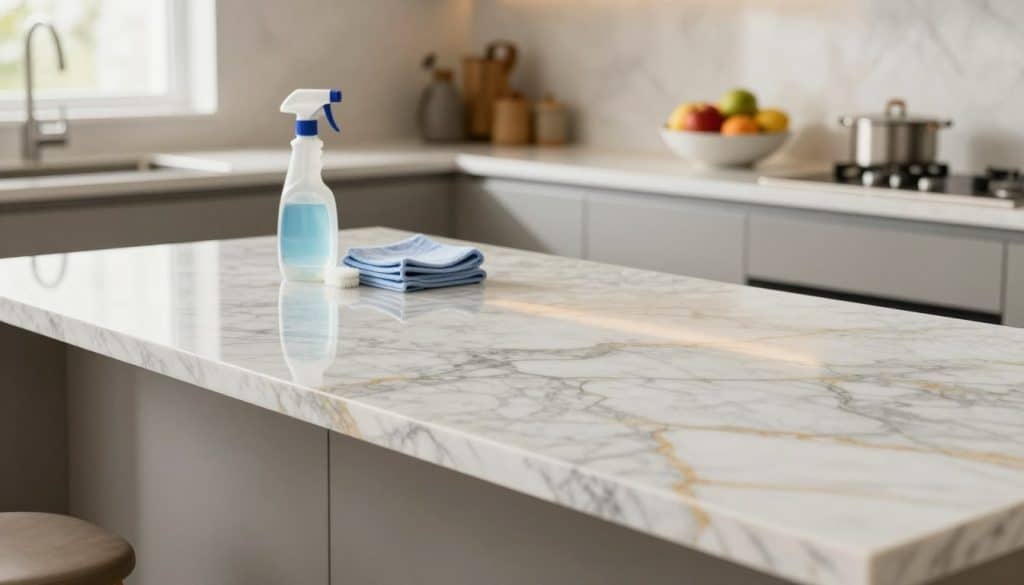
We make quartzite look effortless. With 30+ years fabricating and installing granite, quartz and other stone, we know what works in real kitchens and busy commercial spots across Minneapolis, MN and nearby towns.
Quartzite is durable and heat resistant, but it remains natural stone. The right cleaner and daily habits matter more than scrubbing harder. We’ll show simple routines that protect finish and prevent stains.
Expect clear steps for product choices, daily wipe-downs, deep treatments, stain removal and sealing. If you’re planning a remodel, call (612) 270-4239 or email info@rocksolidtops.com for a free estimate. We can get your new countertops installed in as little as one week after measuring!
Key Takeaways
- Daily gentle wipes with pH-balanced soap keep stone bright.
- Prompt spill response prevents stains and etching.
- Use the right products—less abrasion, more protection.
- Sealing adds long-term defense for heavy-use areas.
- Rock Solid Tops serves Minneapolis and offers fast installation.
Quartzite Countertops 101: What They Are and Why Care Matters
Natural stone carries stories written by heat, pressure and time. Quartzite begins as sandstone and, under intense heat and pressure, recrystallizes into a much denser rock. The result is a slab with interlocking crystals that give it real strength and durability.
Look vs. performance: quartzite often shows marble-like veining and color depth, yet it wears more like granite. That makes quartzite countertops a popular choice for busy kitchens and bathrooms where beauty must meet toughness.
People often mix up quartzite and quartz. Quartz is a manufactured surface made from ground quartz plus resins. Quartzite is mined, natural stone — so care and sealing needs differ.
- We explain the basics so you pick the right material for daily use.
- We highlight sealing and gentle care because quartzite can absorb pigments without protection.
- With 30+ years fabricating and installing in Minneapolis–St. Paul, we help match style and performance to your routine.
How to Clean Quartzite Countertops for Daily Shine
A quick, gentle wipe is the single best move for everyday care. Start with warm water and just a few drops of dish soap on a soft cloth. Wipe the surface in light passes, then rinse with plain water.
Why pH-neutral cleaners matter: A stone-safe cleaner cleans without wearing the sealant. That preserves shine and saves time on repairs later. Avoid harsh products under the sink; they can dull finish and shorten sealer life.
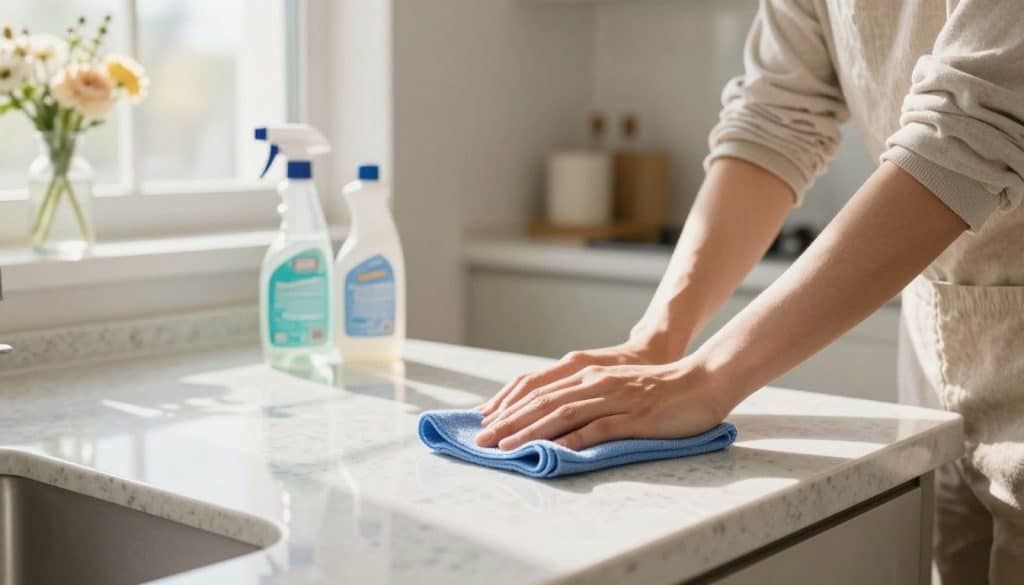
Dry and respond fast
Always dry with a clean towel. Air-drying leaves water spots and a hazy look over time.
Spill steps that save work
Blot acidic or pigmented spills—wine, tomato sauce, coffee—don’t smear. Blotting keeps a small mess from spreading into a stain.
- Warm water + dish soap on a soft cloth, wipe.
- Rinse with clean water, then dry thoroughly.
- Blot spills immediately; use a stone-safe cleaner for tougher marks.
- Daily cleaning routine we use and recommend.
- Gentle care beats aggressive scrubbing.
- Call Rock Solid Tops in Minneapolis if you want pro help or new counters fast!
Choosing Safe Cleaning Products for Quartzite
The right cleaners and simple tools make upkeep quick and safe. We recommend starting with pH-balanced options that don’t attack the sealer on your stone surface. In plain terms, pH-balanced means avoiding strong acids or alkalis that wear finish and dull color.
Stone-specific cleaners vs. soap-and-water mixes
Use mild dish soap and water for daily wipes. It’s gentle, cheap, and usually all you need.
Reserve a store-bought stone cleaner for tougher grease or when a product label says “stone-safe” or “pH-neutral.” Look for those words so you don’t guess wrong.
What to look for on labels
- Stone-safe or pH-neutral claims.
- Avoid citrus, vinegar, bleach, and harsh solvents.
- Simple ingredient lists are better than lots of additives.
Tools that won’t scratch
We recommend microfiber cloths and soft sponges. Use light, circular motions and never scrub with grit on a rag.
Use soft habits: blot spills, lift crumbs, and avoid rough pads. Small habits prevent scratches and preserve finish over years.
If you’re planning an upgrade, reach out! We’ll help pick materials and get fabrication and installation moving fast in Minneapolis.
Cleaning Mistakes That Damage Quartzite Surfaces
One wrong cleaner or a rough pad can steal the shine from your stone in short order. We’ve seen the same missteps for over 30 years, and they show up as dull patches, etching, and faster staining.
Avoid products and habits that quietly cause harm. Below are clear tips you can use today.
- Acidic sprays — Vinegar, lemon, and citrus-based products eat at sealer and cause etching. That leads to patchy finish and harder stains.
- Harsh chemicals — Bleach, ammonia, and oven cleaners break down protection and create uneven color over years.
- Abrasives — Scouring powders, steel wool, and rough pads leave micro-scratches that dull shine and invite stains.
- Risky kitchen habits — Don’t skip a cutting board or scrape dried food with a blade. Those moves nick the surface and cause visible damage.
Practical tip: re-wet stubborn residue, let it soften, then lift gently with a soft cloth. Gentle, consistent care outperforms aggressive fixes over the years.
We protect your investment. If you want advice on choice countertops or long-term care for quartzite, reach out — we’ve seen it all and we’ll help keep your surface performing like new.
Deep Cleaning Quartzite Countertops Without Dulling the Finish
Every few months, a deeper pass keeps stone looking its best in busy kitchens and shared baths. This is a quick, methodical routine you can repeat without risking the finish.
When it makes sense
Do this every few months for high-traffic counters, and more often in commercial or multi-family settings. Light daily care stays the base; periodic deep cleaning prevents buildup.
Step-by-step gentle process
- Apply a non-abrasive stone cleaner or a mild dish soap mix across the surface.
- Wipe in small circular motions with a soft cloth or non-abrasive sponge. Use light pressure—no scrubbing pads.
- Rinse thoroughly with clean water so no residue remains.
- Dry completely with a clean towel to avoid spots and hazing.
Circular motions plus light pressure preserve the seal and evenness of finish. Aggressive scrubbing creates dull patches and micro-scratches.
High-use checklist for maintenance teams
- Schedule deep cleaning every 2–4 months depending on use.
- Use only stone-safe cleaner and soft cloths.
- Always rinse and dry—skipping rinse causes streaks and haze.
This takes little time but pays off in appearance and longevity. If you want a recommended cleaner or a maintenance plan, we’ll help you set one up quickly and reliably!
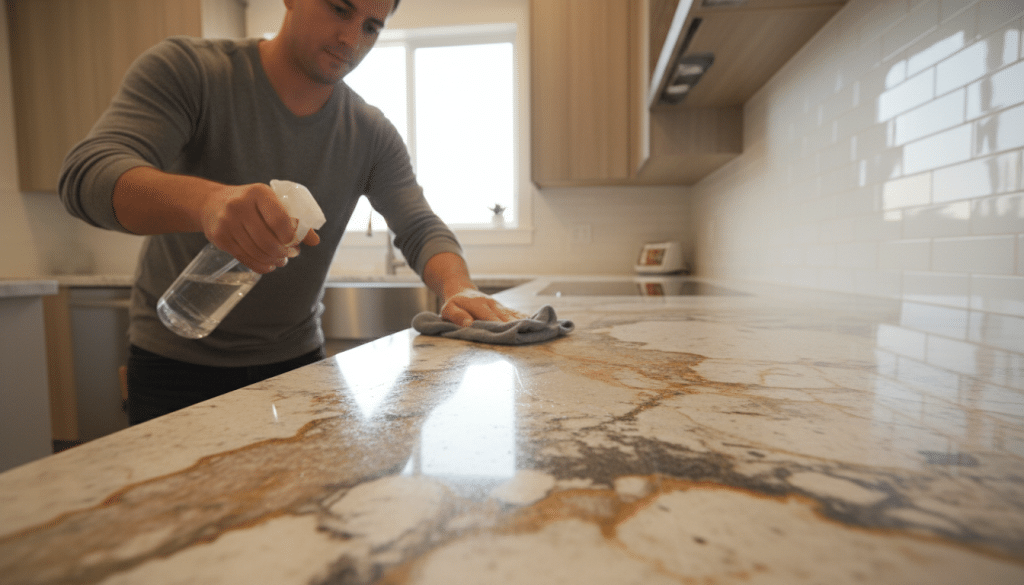
How to Remove Stains from Quartzite Countertops
Stains happen, but most can be lifted with calm, simple steps and the right poultice. Even sealed quartzite will absorb pigment when spills sit. Wine, tomato sauce and oils are the usual culprits. They soak into tiny pores and leave a visible mark on the surface.
Simple baking soda water poultice
Mix baking soda and water into a thick paste—spreadable but not runny. Apply a 1/8–1/4 inch layer over the stain and smooth it so it seals the edges.
Cover plastic wrap method
- Cover plastic wrap over the paste and press edges tight so it stays damp.
- Leave 24–48 hours, then remove and gently wipe the paste away.
- Repeat once if the stain lightens but remains visible; check progress before each new round.
When a pro is safer
A persistent stain, growing discoloration, or changes in finish are signs it’s time to call a stone professional. We’ll assess pigment depth and advise repairs that protect your investment for years.
Sealing Quartzite Countertops to Prevent Stains and Etching
Sealing adds a near-invisible shield that preserves color and resists marks. Regular sealing supports everyday maintenance and keeps countertops looking consistent and rich in tone.
Frequency depends on use. For most homes we recommend sealing every 1–2 years. High-traffic kitchens may need it more often.
Topical vs. penetrating sealers
- Topical options sit on the surface. They give a quick gloss but wear faster.
- Penetrating sealers soak in. They usually last longer and protect against stains and etching.
- Pick penetrating products when you want longer protection with less frequent maintenance.
Safe sealing steps and ventilation
- Start with a full clean using a stone-safe cleaner and fresh water; let dry.
- Apply sealer evenly per label, allow dwell time, then wipe off excess.
- Open windows and run a fan while sealing and drying for safety and proper cure.
Visual cues that it’s time: water no longer beads, spots appear, or surfaces stop looking vibrant. Proper sealing prevents many common problems and keeps countertops looking their best for years.
Want help? We’ll guide product choice or provide pro sealing and installation across Minneapolis–St. Paul. Call Rock Solid Tops and keep your investment protected!
Protecting Quartzite in Kitchens and Bathrooms: Heat, Wear, and Long-Term Care
Protecting high-use stone surfaces starts with small, consistent habits that add years of beauty. Quartzite stands up to heat, but extreme temperature spikes and repeated impact will shorten its life. Use trivets and pads to reduce risk of thermal shock and slow discoloration over time.
Busy homes and multi-unit properties need extra care. Don’t drop heavy cookware, avoid hitting edges, and sweep grit away before wiping. These simple moves prevent chips and worn spots that dull the beauty of your counters.
Practical protection checklist
- Keep trivets and cutting boards handy.
- Use stone-safe products and microfiber cloths.
- Remove abrasive debris before wiping.
When to call a specialist
Watch for persistent dull patches, chips at corners, hairline cracks, or areas that keep staining. Those signs mean DIY care isn’t enough.
We repair, hone, polish, and restore. Rock Solid Tops builds and cares for your surfaces with 30+ years of experience. Protecting countertops protects the look and value of your home. Call us when you want solutions that last.
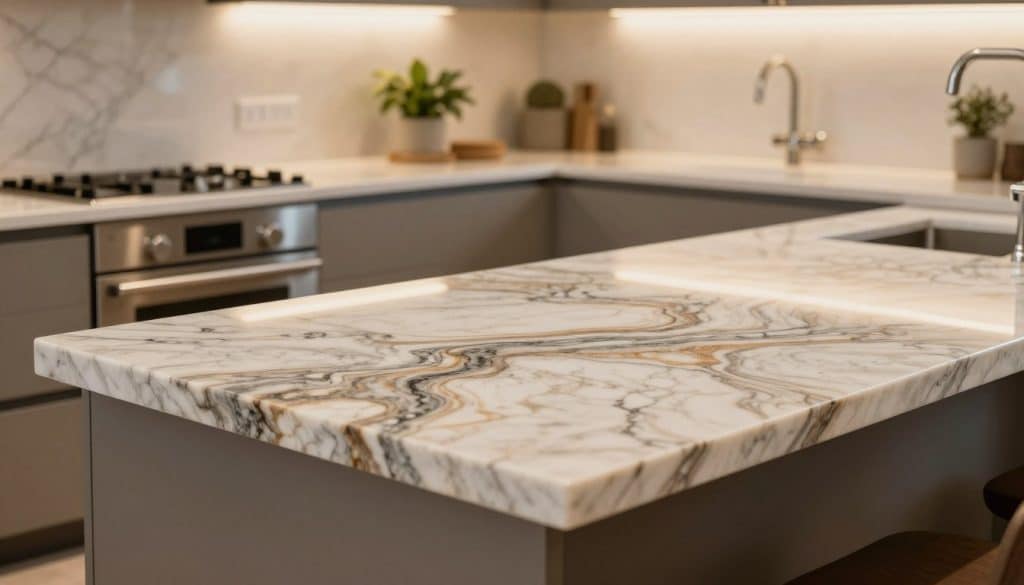
Conclusion
A few small habits keep stone looking like new for years. Gentle daily cleaning, quick spill response, and scheduled deep care prevent most problems without harming the finish.
Avoid acids, harsh chemicals, and abrasives. Those are the easy mistakes that cost time and money. Regular sealing adds long-term stain resistance and preserves natural color.
Ready to protect or replace your quartzite and countertops? Partner with Rock Solid Tops — Our Craftmanship, Your Vision. We serve Minneapolis, MN and surrounding areas. With 30+ years of experience, we offer free estimates and fast installs. Get new counters in as little as one week after measuring.
Call (612) 270-4239 or email info@rocksolidtops.com to schedule your free estimate today!