
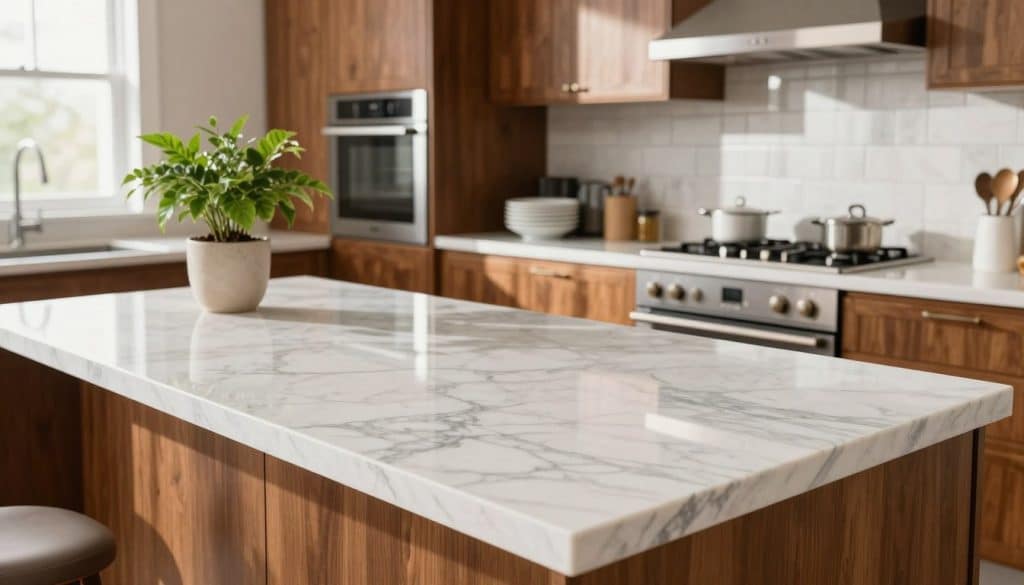
Could a single daily habit keep your kitchen looking like a new install? We ask because using the right cleaner for quartz countertops helps maintain its shine and protect the surface.
At Rock Solid Tops we serve Minneapolis-St. Paul and nearby areas, and we’ve fabricated and installed stone for over 30 years. Our Craftmanship, Your Vision is more than a tagline — it’s how we help you pick materials and maintain them.
Daily cleaning prevents residue buildup that dulls finish and makes stains harder to remove later. A mild soap, water, and a microfiber cloth are usually enough. Wiping dry helps prevent streaks and long-term dullness.
This guide focuses on the safest, simplest routine you can actually stick with. We’ll show quick wipe-down steps, what products to avoid, and how to tackle common stains without damage.
If you’re planning a remodel, schedule a free estimate. In many cases, you can get your new countertops installed in as little as one week after measuring. Call (612) 270-4239 or email info@rocksolidtops.com.
Key Takeaways
- Daily wipe-downs stop buildup and keep the finish bright.
- Use mild soap, water, and microfiber for safe routine cleaning.
- Avoid abrasives, acids, bleach, and ammonia to prevent damage.
- We serve Minneapolis and nearby communities with fast, skilled installs.
- Contact Rock Solid Tops for a free estimate: (612) 270-4239 or info@rocksolidtops.com.
Why quartz countertops need the right cleaning approach
Quartz surfaces need a cleaning plan that protects the stone and keeps shine consistent. What you use matters because this is engineered material, not slab marble.
What it’s made of: Engineered stone is roughly 90–95% quartz crystals mixed with 5–10% polymer resin and pigments. That resin holds the surface together and gives the finish its look.
Why product choice matters: Harsh acids or extreme pH in some cleaning products can slowly break down the binder. Over time that causes dull spots, discoloration, or a film that never quite rinses away.
Hard water minerals and leftover soap add to haze. Missed spills—especially pigmented foods and drinks—set and need tougher treatment later. That’s why prompt care saves work and protects your investment for years!
Keep it simple: mild solution, soft cloth, rinse well, and dry. Gentle wins when you want an even, long-lasting shine across the whole surface.
- Engineered makeup means resin matters.
- Avoid extreme pH from cleaning products.
- Prompt wipe-ups stop haze and stubborn stains.
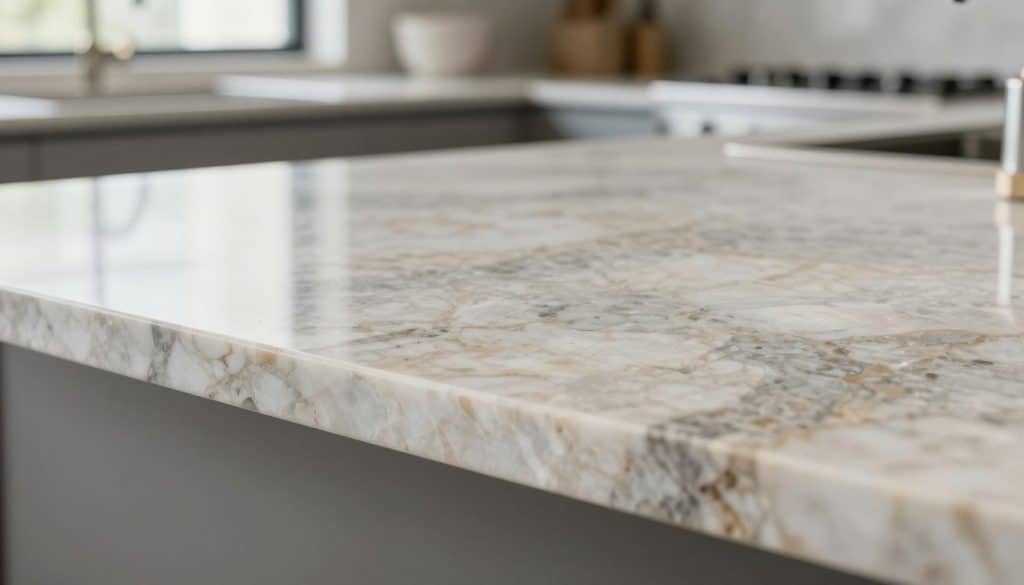
How to clean quartz countertops daily without streaks
A short, repeatable routine after cooking will protect your investment and save time. Start by clearing the surface of dishes and loose crumbs. Use a dry microfiber cloth to lift grit so you don’t grind it into the finish.
Prep: remove crumbs with a dry cloth
Grab a clean microfiber cloth and sweep the whole area. This tiny step prevents micro-scratches and makes the next pass easier.
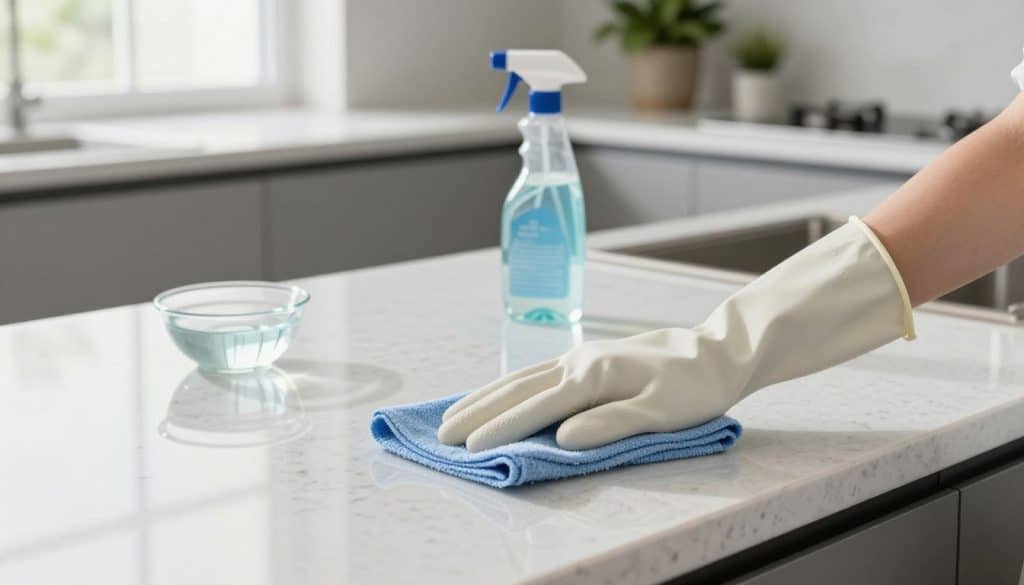
Main wipe-down: mild dish soap + warm water
Mix a few drops of mild dish soap in a bowl of warm water. Dampen a soft cloth and wipe the surface in overlapping passes so you catch edges and corners.
Rinse, dry, and buff
Rinse the soap off with clean warm water. Never skip rinsing — leftover film causes haze under bright kitchen lights. Finish by drying and buffing with a fresh microfiber cloth to restore shine and stop water spots.
- Quick habits: use coasters, wipe oil splatter fast, and keep sticky spills away from seams.
- Avoid dragging heavy items; use cutting boards to prevent scratches.
- Most everyday stains lift with this simple system. If one lingers, we’ll show targeted removal next.
Cleaner for quartz countertops: what to use and what to avoid
Simple, pH-balanced options do the heavy lifting without risking long-term harm. We recommend mild, non-abrasive solutions made for engineered stone and everyday soap and water for routine cleaning.
Use pH-neutral, non-abrasive cleaners labeled safe for stone. They lift spills and grease without harming the finish. Rinse well, then buff dry with a microfiber cloth for streak-free results.
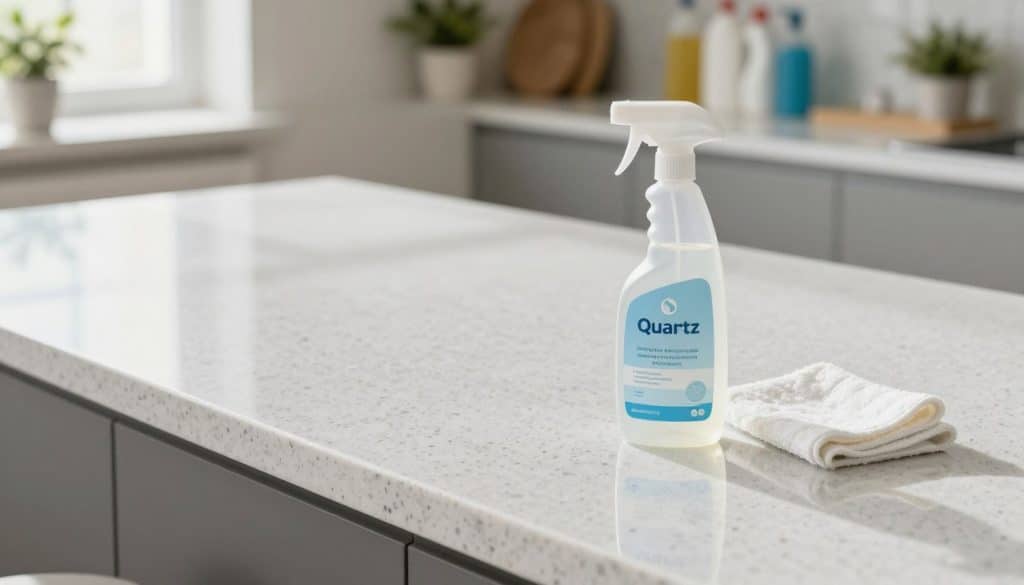
- Do use: pH-neutral sprays, gentle stone products, or mild dish soap and warm water.
- Don’t use: abrasive cleaners, scouring pads, steel wool, or gritty pastes—these scratch the finish.
- Avoid acids: vinegar, lemon, and citrus cleaners can attack the resin and dull the look over time.
- Skip harsh chemicals: bleach, oven cleaners, and strong degreasers risk discoloration and haze.
- Watch ammonia: glass cleaners with ammonia may seem handy but can leave dull spots; try better rinsing and drying instead.
Read labels: avoid heavy-duty, abrasive, or acidic products. Test any new product on a hidden spot first. In Minneapolis homes with hard water, gentle + rinse + dry prevents film and keeps your surface bright.
How to remove common stains on quartz countertops
Acting fast and using the right gentle methods saves time and preserves finish. We classify spots so you pick the lightest-touch solution that works.
Food and drink pigments
Blot spilled coffee, wine, berries, curry, or food coloring right away. Then wash the area with mild dish soap and warm water. Rinse and dry to avoid a lingering film.
Grease and oil
Use a few drops of degreasing dish solution in warm water. Let it sit a minute, wipe with a soft cloth, rinse, and buff dry. Grease usually lifts quickly without harsh effort.
Adhesive, ink, and scuffs
Apply rubbing alcohol to a cloth—don’t pour it onto the surface. Rub gently, then rinse and dry. For scuffs, repeat gently rather than increasing force.
Discoloration and dried-on messes
Mix equal parts hydrogen peroxide and water. Apply briefly, wipe with a microfiber cloth, then rinse thoroughly. Use a plastic putty knife flat to lift dried food; pry gently, then clean the area with dish soap and water.
- Most spots improve in minutes; stop if you must scrub hard.
- Repeat gentle cycles instead of jumping to strong chemicals.
- Always rinse and dry so the treatment doesn’t leave haze.
Deep cleaning and restoring shine when quartz looks hazy
When a once-bright surface starts to look cloudy under lights, it’s time for a focused deep clean. This haze often comes from product buildup or mineral deposits left by hard water.
How to spot the problem: If the top looks cloudy, feels slightly grabby, or shows streaks after it dries, you’re likely seeing a film of residue.
Why hard water matters: Minerals can bind with residue and form a dull layer. Regular wiping may not remove this buildup, so deeper cleaning is needed now and then.
- When to deep clean: after heavy cooking, post-entertaining, during turnovers, or whenever the reflection fades.
- Step-by-step: clear items, dry-dust with a microfiber, spray a quartz-specific solution in small sections (don’t let it dry), wipe and then rinse well with clean water.
- Finish: buff-dry immediately with a fresh microfiber to restore shine and avoid water spots.
Less is more: Using too much spray can leave more film. Controlled application, full rinsing, and quick buffing are the real keys to long-term maintenance. Quartz is durable, and gentle deep cleaning keeps the surface looking like new.
Long-term quartz countertop care tips that protect beauty for years
Protecting your investment starts with habits you can keep every day. Small steps prevent major repairs and keep the surface uniform across heavy-use zones.
Heat and thermal shock: why trivets and hot pads still matter
Hot pans and sudden temp changes can stress engineered stone. Use trivets or hot pads under warm cookware to reduce risk. This is simple and effective.
Cutting, sliding, and everyday wear
Never cut directly on the top. Use cutting boards. Lift heavy items instead of sliding them. These moves cut down on scratches and dull spots.
Safe DIY spray and what not to add
Mix warm water with a few drops of mild dish and a splash of rubbing alcohol in a spray bottle. Use it for quick wipe-downs. Do not add vinegar, lemon, abrasive powders, or harsh degreasers.
Brand guidance and warranties
Resin blends and finishes vary. Manufacturer care notes can differ and may affect warranties. Check your brand guide, or ask us—we’ll help match cleaning steps to your slab.
- Daily habits: wipe spills, rinse, and buff dry.
- Prevent damage: trivets, boards, and gentle lifts.
- When unsure: contact Rock Solid Tops for tailored advice!
Conclusion
Small, everyday habits make the biggest difference in preserving surface beauty. Use mild soap, warm water, and a microfiber cloth for quick daily cleaning. Rinse well and buff dry to avoid streaks and film.
Avoid abrasive pads, acidic sprays like vinegar or lemon, bleach, and ammonia-heavy products. Most haze is residue or mineral buildup and clears with a proper deep clean using a quartz-safe cleaner, then a full rinse and a quick buff-dry.
We’ve fabricated and installed stone for 30+ years. Trust Rock Solid Tops to help you choose and care for your new quartz countertops. Our Craftmanship, Your Vision — fast and reliable in Minneapolis, St. Paul, and nearby communities. Schedule a free estimate: call (612) 270-4239 or email info@rocksolidtops.com. New installs often finish in as little as one week after measuring.