
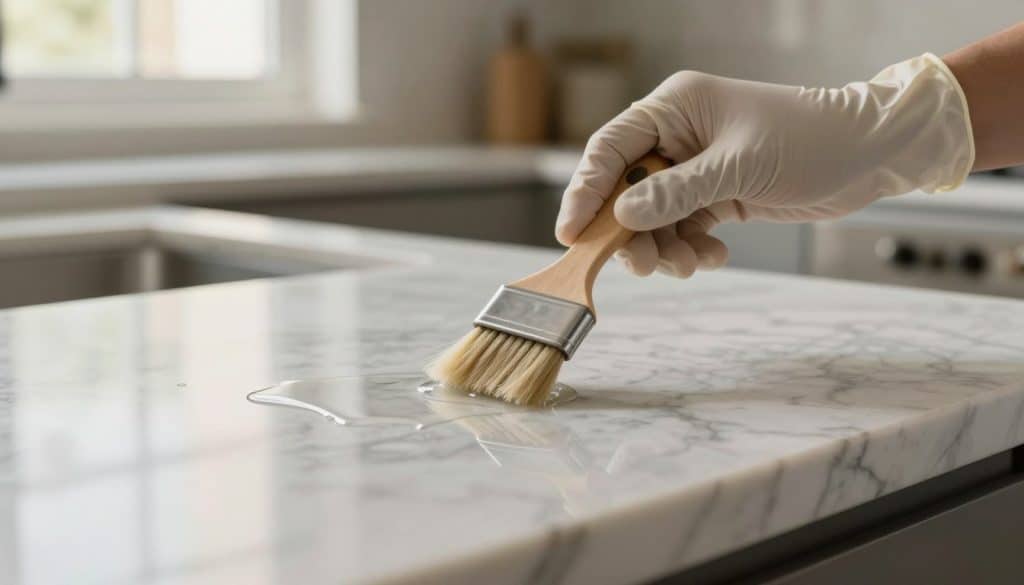
Can learning how to seal marble countertops really buy you time against stains while still leaving your surface vulnerable to lemon and vinegar? We ask that because sealing mainly slows liquid absorption into pores; it does not stop etching from acids.
We’re Rock Solid Tops, your Minneapolis, MN countertop partner with 30+ years fabricating and installing stone. Our Craftmanship, Your Vision—fast, local, and professional. We can install new surfaces in as little as one week after measuring.
In this short guide we’ll explain what sealing does for your day-to-day kitchen life and what it won’t fix. You’ll get a clear preview of testing current protection, choosing a sealer, proper prep, sectioned application, and curing. We’ll also tell you when a DIY makes sense and when it’s smarter to call a pro.
For a free estimate, callt (612) 270-4239or email info@rocksolidtops.com. We serve Minneapolis–St. Paul and nearby areas within an hour of the Twin Cities.
Key Takeaways
- Sealing slows absorption and gives you time to wipe spills before stains set.
- Sealers do not prevent etching from acidic liquids like lemon or vinegar.
- We’ll walk you through testing, prepping, applying, and curing the surface.
- DIY works for small, healthy surfaces; call us for large jobs or existing damage.
- Rock Solid Tops offers 30+ years of experience and quick installation—call or email for a free estimate.
Why sealing marble countertops matters for stain protection and long-term care
Protecting a natural stone surface means managing two different threats: color stains and chemical dulling. We’ll keep this practical and clear so you can make smart maintenance choices for your kitchen.
Staining is when spills soak into tiny pores and leave color behind. Etching is a different issue — acids dull the finish and sealing usually won’t stop that.
Staining versus etching
Marble and other natural stone are hard but porous. Those microscopic capillaries act like tiny pathways for spills.
How sealers slow absorption
A quality sealer lines those pores and slows liquid absorption. That gives you time to wipe up coffee, oil, or water before a permanent stain forms.
- Common trouble spots: rings near sinks, oil by the stove, coffee around the brewer.
- Sealers reduce cleanup stress and help preserve long-term beauty.
- Pro tip: Etches can be fixed separately, but sealing is worth it—stains cause the bigger visual problem over years.
We’ve worked with natural stone across Minneapolis–St Paul for decades. Count on Rock Solid Tops for practical, lasting protection and maintenance advice that fits real kitchens.
How to tell if your marble countertop needs sealing or resealing
A quick spot test tells you far more than a calendar reminder when it comes to surface protection. We’ll show two simple checks that take only a few minutes and give a clear read on absorption.
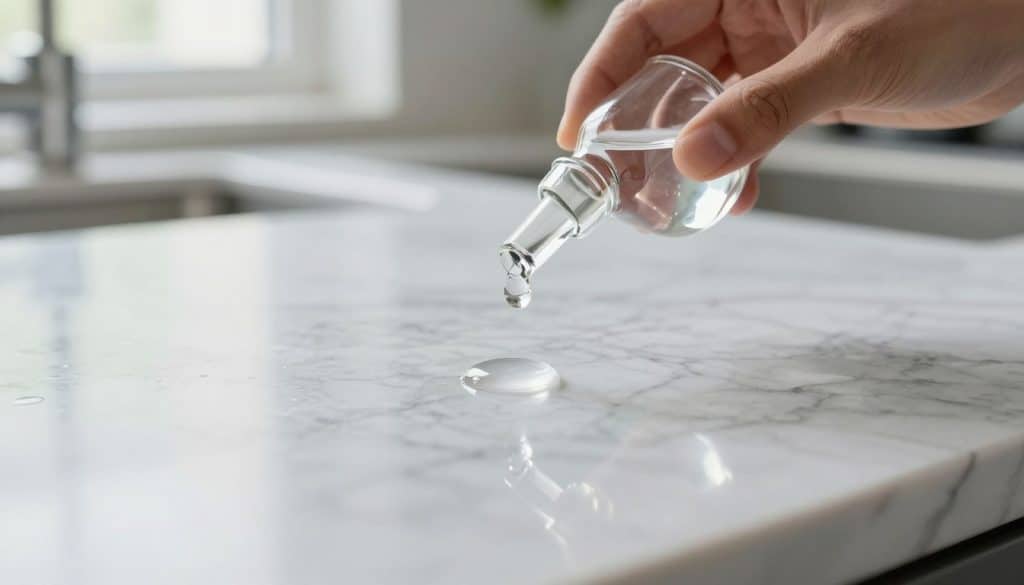
The water drop test
Place a small drop of water on an out-of-the-way area, like near a backsplash or corner. Set a phone timer for 10 minutes and watch for darkening.
If the water darkens the stone within 10 minutes, the finish is absorbing moisture and it’s time for action. If it beads or sits, your surface is likely still protected.
The mineral oil test
Apply a few drops of mineral oil and wait about 10 minutes. Wipe the oil away. A temporary dark spot that fades means the oil evaporated; a lasting mark signals weak protection.
- Test discreet spots so you don’t worry about appearance.
- Use minutes and a timer for an objective result.
- If both tests show fast absorption, schedule a reseal. If results are mixed, use the oil test as confirmation.
Prefer expert eyes? Rock Solid Tops can evaluate your stone countertops and recommend the right care and maintenance across Minneapolis–St Paul.
Choosing the right marble sealer for your kitchen surface
Not every sealer works the same on natural stone; choosing the correct type saves time and grief later. We’ll keep this simple and practical for homeowners and managers.
Penetrating sealers vs surface coatings
Penetrating or impregnating products soak below the finish and slow absorption without forming a film. They work best for daily wear in a busy kitchen.
Surface coatings sit on top. They can chip, peel, or haze in real use. For cooking areas we usually avoid them.
Water-based, solvent-based, and food-safe notes
Water-based sealant has low odor and easy cleanup. Solvent-based options often penetrate deeper but have stronger fumes.
Food-safe matters: most modern products are safe after full cure. Read the label and follow the instructions.
Finish, porosity, and a quick checklist
Honed marble often needs extra coats. Polished stone absorbs less but still benefits from protection.
- Confirm dwell time and recommended coats.
- Check wipe-off timing to avoid haze or sticky residue.
- Match product choice to your cooking habits and sink use.
We help Minneapolis clients match material and finish with the right product. Follow the directions and you’ll get lasting, invisible protection.
Prep work that makes the sealing process last
Good prep beats luck: cleaning and inspection set the stage for a long-lasting finish. We treat the area like a craft job and move deliberately so the product performs as promised.
Cleaning and degreasing without locking in stains
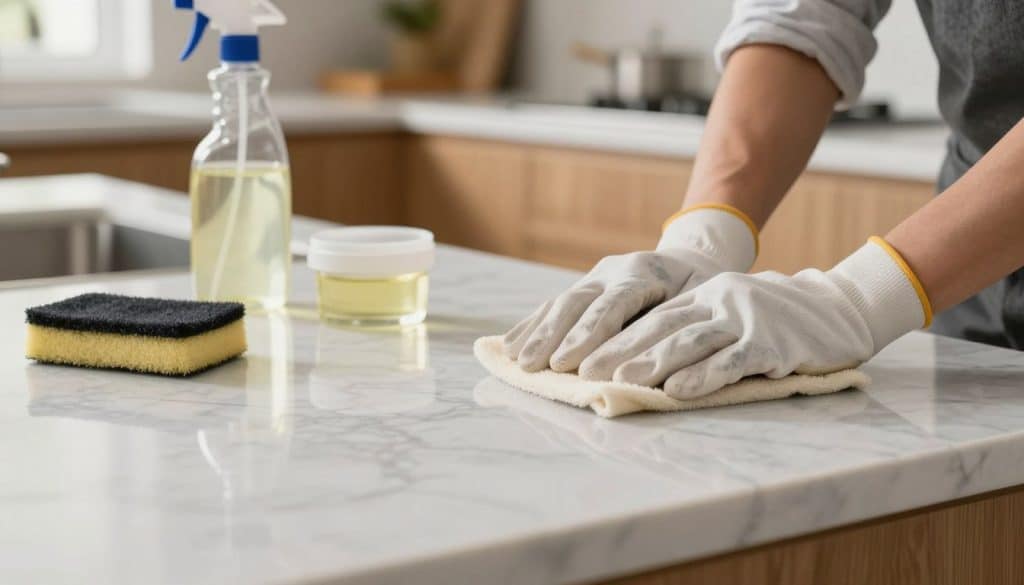
Thorough cleaning matters because a sealer can trap discoloration beneath it. Start with a non-abrasive cleaner and a soft cloth, removing crumbs, grease, and sticky residues.
For stubborn gunk, use acetone or mineral spirits sparingly and with ventilation. These materials dissolve adhesives but won’t harm stone when used correctly.
Dry time, ventilation, and protecting nearby cabinets, sinks, and walls
Let the surface dry fully. Moisture prevents proper penetration and ruins coverage on a countertop. Open windows or run a fan and wear gloves for safety.
Protect adjacent cabinets, sinks, and walls with tape and tarps. Small prep steps save big repairs later.
- Use soft cloths and non-abrasive cleaners for safe, even cleaning.
- Degrease cooktop areas well so oils don’t block absorption.
- Allow full dry time and keep good airflow during the job.
- Cover nearby finishes and check for stains before you apply a seal—don’t lock them in.
If you find deep stains, cracks, or recurring marks, call Rock Solid Tops. We’ll inspect the stone and help you make sure the surface is ready before any product goes on.
How to seal marble countertops step by step
A careful, section-by-section approach keeps results consistent and stress-free. We focus on small zones, clear minutes for dwell time, and steady technique so you “do it once, do it right.”
Gather tools and materials
- Materials: applicator pad, soft cloths, painter’s tape, gloves, and your chosen sealant.
- Have a second cloth ready for wipe-off and a dry buffing rag.
Test a small area first
Pick an out-of-sight spot and follow the product instructions. Wait the recommended minutes or up to 24 hours to confirm no haze or finish change.
Apply by sections and manage dwell time
Work in 2–3 foot zones. Spread a thin, even coat so the stone stays wet for the label’s dwell minutes. Keep an eye on edges.
Wipe excess, add a second coat if needed, then buff
Remove excess before it dries to avoid hazy streaks. If the stone absorbs quickly, apply a second coat after the recommended time. Finish by buffing for an even sheen and lasting protection.
Pro tip: Follow the instructions on the sealer label — it’s the final word. We’ll help when you want a pro touch for larger jobs!

Curing time, when to use your counters, and how often to reseal
Letting a sealer set properly pays off in longer protection and fewer surprises. Typical cure windows are 24–48 hours. That range lets the product finish bonding below the surface so it performs as promised.
During the first day, use the area lightly. Avoid heavy cooking, standing water, and placing items that trap moisture. Light use means quick, careful tasks; normal use can resume after 48 hours if the label allows.
When to check and reseal
Don’t guess with a calendar. Use a small water or mineral oil test when you notice wear. If water darkens the stone within minutes, absorption is active and it’s time for resealing.
- Some surfaces go years between service, others need attention in months.
- High-use sink zones and porous stone require more frequent checks.
- Good daily habits—wipe spills quickly—extend the interval between treatments.
If maintenance feels like a chore, we’ll help you choose a lower-care surface or replace it fast. Rock Solid Tops serves Minneapolis–St Paul and can install new countertops in as little as one week after measuring.
Conclusion
A proper finish gives everyday spills a fair chance of being wiped away before they leave a mark.
Sealing slows absorption and boosts stain protection, but it won’t stop etching from acids. The right prep, correct application, and full cure drive results every time.
Quick checklist: test first, prep well, apply in small sections, respect dwell time, wipe excess before it dries, buff clean, and let the surface cure.
Use the water test periodically and reseal only when the stone shows it needs it. If you want a bigger upgrade, ask about lower-care natural stone options.
Rock Solid Tops — Our Craftmanship, Your Vision. Call (612) 270-4239 or email info@rocksolidtops.com for a free estimate in Minneapolis, MN, Minneapolis–St Paul, and within an hour of the Twin Cities. With 30+ years fabricating and installing stone, we can install new countertops in as little as one week after measuring.