
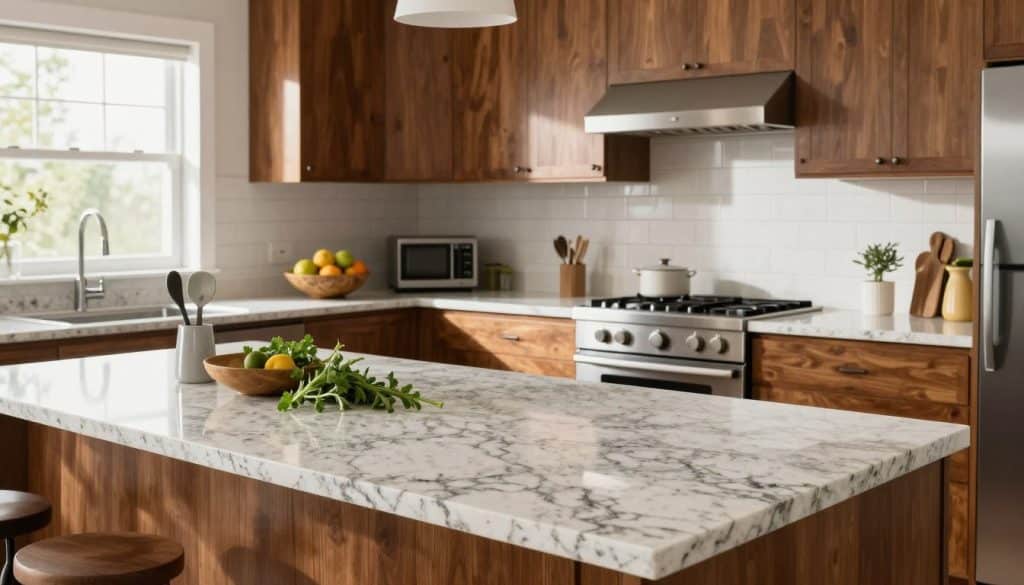
What will the cost of kitchen countertops in Minneapolis look like for your remodel? We know that question drives your planning. It shapes budgets, timelines, and choices.
We don’t offer one-size-fits-all answers. Material, layout, cuts, and schedule change the quote you’ll get. We help you plan with local insight for Minneapolis, St. Paul, and nearby cities.
At Rock Solid Tops, we pair craftsmanship with speed. Our Craftmanship, Your Vision means precise fabrication and friendly guidance. You can have new surfaces installed in as little as one week after measuring!
Read on for clear price ranges, installed numbers per square foot, labor and removal notes, edge and cutout add-ons, and when to call us at (612) 270-4239 or email info@rocksolidtops.com to get a free estimate.
Key Takeaways
- Local pricing varies—material and layout drive the final figure.
- We serve Minneapolis, St. Paul, and nearby areas with fast installs.
- Our Craftmanship, Your Vision guides every project.
- Install can happen in as little as one week after measuring.
- Contact (612) 270-4239 or info@rocksolidtops.com for a free quote.
Kitchen countertop pricing: what most homeowners should expect
Start your budget with price points so you plan from reality, not old estimates. We use national averages to give you a clear starting point and then show which local things make numbers move.
National average range for replacement
The U.S. average replacement sits around $1,851–$4,453, with a midpoint near $3,138. That range helps you orient your expectations but isn’t a final quote.
Typical assumptions and project tiers
We assume most homes have 30–40 square foot of workspace. That gives a simple way to sanity-check your layout before measuring every run.
- Low-end: about $1,851 total for a 30–40 square foot job.
- Mid-range: around $3,138 total for that same area.
- High-end: $4,453+ for premium materials and complex work.
- Installed pricing matters: fabrication and install drive surprises more than material sticker prices.
- Key factors: material grade, fabrication complexity, cutouts, edge style, and local labor availability.
Use these figures to set a realistic budget and then translate national averages to Minneapolis specifics in the next section.
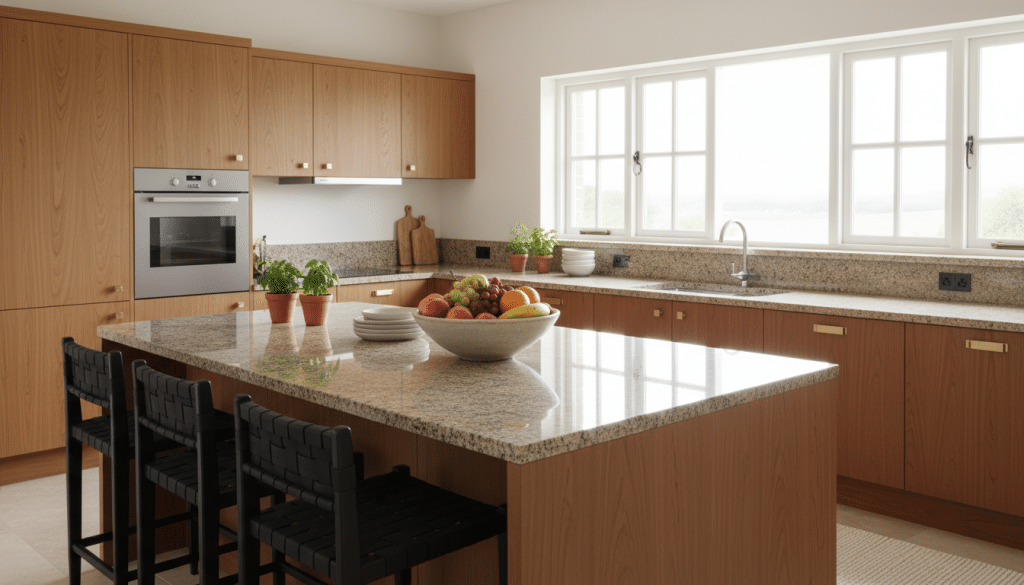
Cost of kitchen countertops in Minneapolis: local factors that can shift your budget
What looks standard online often changes once we factor in local schedules and access. Minneapolis pricing can differ from national averages for several simple reasons.
Why labor rates and availability affect installed price
Skilled crews set the pace. When teams are booked, installation fees rise and timelines stretch. That’s true for busy seasons and complex projects.
We keep scheduling tight by prioritizing area jobs. Serving Minneapolis, St. Paul, and within an hour of the Twin Cities helps us respond faster and avoid long delays.
Material sourcing, delivery, and lead times in the Twin Cities area
Some slabs are local and arrive quickly. Others have longer lead times and extra delivery steps. Longer waits change the installed figure more than a slab’s sticker price.
Layout and access matter too. A cramped space, tricky island, or limited staging area increases labor time and complexity. That shows up on the final invoice.
- Local markets influence what’s readily available.
- Scheduling ties templating and installation to cabinet and appliance timing.
- Materials like quartz and granite are chosen with availability in mind, not just looks.
We can install as soon as one week after measuring, which keeps your remodel moving. Call us to lock a predictable schedule and avoid last-minute increases tied to labor or delivery hiccups!
How pros calculate kitchen countertops cost by square foot and layout
Pro estimates start by deciding whether to charge by surface area or by run length. That choice shapes the final quote and how you compare bids.
Square area vs linear runs. Some fabricators price per square when they need surface area. Others use a per linear foot approach when depth is assumed.
Use per square when you want a true surface measure. Use per linear for simple runs that follow a standard depth (commonly 25–26 inches).
Measuring tips that change your quote
- Measure each run length and confirm depth (25–26 inches is typical).
- Include islands, peninsulas, and bump-outs in your totals.
- Don’t forget short returns, fridge panels, or that landing beside the range.
Seams, corners, and long runs
Runs over about 10 foot usually need seams. Seams, angled corners, and pattern matching add fabrication time and raise price because they increase layout complexity.
Bring a simple sketch and run lengths when you ask us for a quote. It helps us give a tighter estimate and sets you up for the material pricing that follows.
Installed cost per square foot by countertop material
Below we list typical installed figures per square foot for popular surface choices. Use this as a buyer-friendly menu to compare looks, durability, and maintenance.
Laminate
Laminate: $20–$60 per square foot. It’s the budget leader and resurfaces quickly. Newer finishes mimic higher-end designs and colors.
Butcher block
Butcher block: $30–$280 per square foot depending on species, thickness, and finish. Maintenance matters—wood needs periodic oiling.
Quartz, granite, and natural stone
Quartz: $40–$100 per square foot. Low maintenance and consistent look make it a top pick.
Granite: $70–$230 per square foot. Slab selection and veining drive prices.
Marble and other natural stone: typically $70–$250 per square foot for premium slabs and complex fabrication.
- Stainless steel: $50–$250 per square foot — specialty option for a modern, professional look.
- Tile: $30–$60 per square foot — flexible designs, but grout upkeep adds upkeep.
- Concrete & solid surface: $60–$150 per square foot for custom finishes and seamless looks.
Quartz countertops: mid-range pricing with low maintenance value
Quartz hits a sweet spot for many homeowners: durable performance with low upkeep. It pairs modern looks with everyday practicality. That makes it a top pick in a busy kitchen.
What drives pricing
Color and pattern impact price. More movement or rare colors raise the price. Slab grade and how much material you need also matter.
Durability and stain resistance
Non-porous means spills sit on the surface, not inside. Cleanup is faster and sealing is usually unnecessary. Quartz resists stains better than many natural stone options.
When quartz is the best fit
Choose quartz if you cook daily, have kids, or entertain often. You get low maintenance, consistent style, and fewer surprises during wear.
- Sweet spot: strong performance and modern style.
- Seams: smart placement reduces visual disruption but may affect final cost.
- Plan: factor slab selection and layout into your overall budget and timeline.
Granite and other natural stone: premium looks, wide price spread
Granite and other natural stone bring dramatic style, but their prices can swing widely based on a few key choices.
Why prices vary: slab grade, pattern movement, origin, thickness, and the complexity of fabrication all matter. Two slabs labeled the same can sit in different tiers because one has rare veining or limited availability.
Selection matters: we walk you through slab choice so the finished look matches your vision without needless waste. Smart layout reduces odd seams and keeps material use efficient.
Sealing and upkeep to plan for
Natural stone usually needs periodic sealing to protect the surface. That adds small, recurring maintenance expenses to your long-term budget.
Seams, heavy pattern matching, and island cuts increase fabrication time and add to the final price. We place seams where they least interrupt the look.
- Think about daily use: heat, heavy cooking, and cleanup habits affect whether stone fits your routine.
- Resale and enjoyment: premium stone often boosts appeal and daily pride in your kitchen.
- We’ll help: choose slabs that align with your budget and lifestyle without sacrificing the look you want.
Laminate and tile: budget-friendly options with tradeoffs
Budget-focused remodels often turn to laminate or tile when speed and savings matter most. Both materials can refresh a space quickly and keep money in your pocket.
Where laminate shines for cost-conscious remodels
Laminate commonly runs about $20–$60 per square foot installed. It gives clean looks, fast updates, and low upfront expense. It’s best for simple layouts and quick flips!
Tradeoffs: laminate is less heat resistant and dents more easily. Careful use keeps it looking good longer.
Tile pros and cons: design flexibility vs grout maintenance
Tile typically installs around $30–$60 per square foot. It offers many designs and a custom feel at a modest price.
Grout lines require regular cleaning and can trap food, which adds ongoing maintenance time.
Best use cases for rentals and quick refresh projects
- Keep patterns simple to save on labor.
- Avoid specialty edges and complex layouts.
- Choose laminate for tight budgets and tile when visual impact matters.
We recommend these choices when speed, price, and a tidy finish are your main goals. Next, we’ll cover specialty materials where installation complexity raises pricing and skill needs.
Stainless steel and concrete: specialty countertops with higher installation complexity
Specialty surfaces demand extra thought—both for look and for how they’re installed. We’ll walk through who likes stainless steel and why concrete can become a big customization project.
Who stainless steel fits
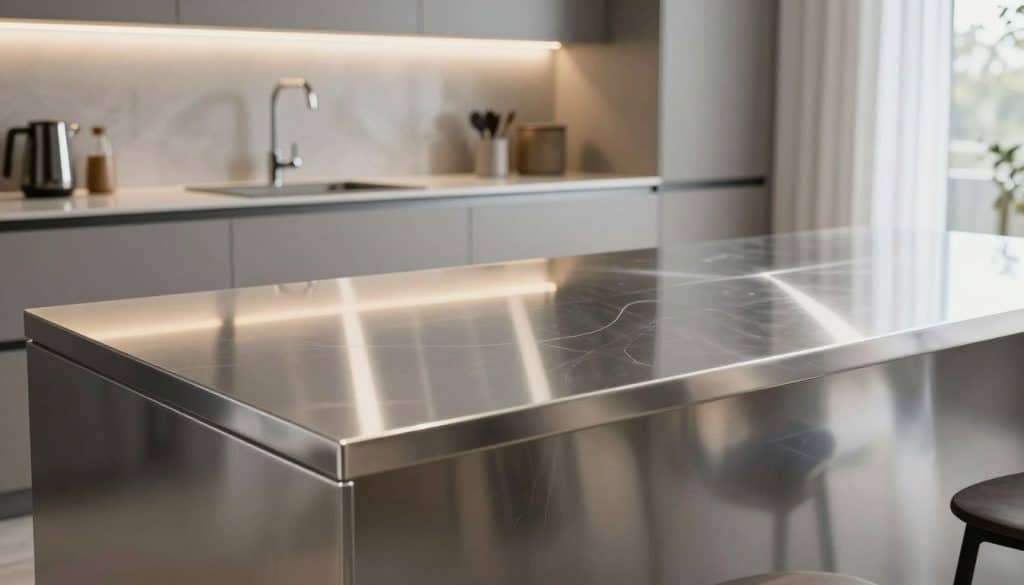
Stainless steel shines in modern, restaurant-style spaces. It’s hygienic and heat resistant, which suits heavy cooking and pro-style setups.
Real-life tradeoffs: steel shows fingerprints and scratches. For some, that raw look is intentional. For others, it’s frustrating.
Why installation matters: steel countertops need precise fabrication, tight seams, and clean edges. That level of fit raises labor and complexity compared to simpler surfaces.
Concrete as a customization playground
Concrete lets you shape color, texture, and edge profiles. It can be molded into one-of-a-kind pieces that really stand out.
But that flexibility adds steps. Forming, reinforcement, curing, and finishing all take time. Each step increases fabrication complexity and the final installed price.
- Good fit for: owners who want an industrial look or a unique focal point.
- Real expectations: both steel and concrete reveal small marks if installation or finish is off.
- Pro tip: professional installation is non-negotiable—tiny errors become very visible on these surfaces.
Next we’ll break down labor and how specialty materials make installation a larger share of your budget.
Labor costs for countertop installation: what you’re paying for
Labor lines on an estimate cover far more than carrying slabs through a doorway. We handle templating, transport handling, seam work, leveling, and final finishing. That prep keeps your cabinets safe and seams tight.
Typical ranges you’ll see
Expect labor costs listed around $30–$50 per square foot. Some crews charge by the hour—commonly $50–$100 hourly. Other bids show a per square or per square foot line. Knowing both formats helps you compare quotes fairly.
Why granite and quartz need expert crews
Granite and quartz demand specialized tools and skill. Precise cuts, heavy slabs, and careful handling reduce chips and cracks. That expertise raises labor needs but protects the final finish.
Complexity that raises labor
- Tight spaces and angled walls add time and challenge.
- Islands and multi-piece installs require extra seams and fittings.
- Smart planning—seam placement, overhang support, plumbing coordination—cuts rework risk.
Ask what the installation price includes: sink setting, plumbing coordination, sealing, cleanup, and disposal. Paying for skilled labor prevents expensive rework later and sets up the next step: removal and disposal.
Removal and disposal: the hidden line items in countertop replacement
Demolition and haul-away are small steps that often change a remodel budget more than homeowners expect. We call these items out up front because they’re one of the easiest ways a quote jumps after you thought you were done.
Typical old countertop removal ranges from about $50–$300 for straightforward pulls. For tougher jobs it can run $200–$500 when demo gets complex.
What makes demo more expensive
The biggest drivers are materials and attachment methods. Tile set in mortar, tops glued down aggressively, and integrated backsplashes add time and labor.
- Tile and mortar: mortar takes extra chipping and cleanup.
- Glued tops: aggressive adhesives need special tools and care.
- Integrated backsplashes: raise demo complexity and risk to walls and cabinets.
- Heavy materials: require extra hands and hauling, which increases fees.
Confirm whether disposal and dump fees are included. Hauling can be a separate line item. Ask us so you won’t face surprises.
Careful removal protects your cabinets. Rushed demo can damage boxes and create new repair bills. Plan demo around your kitchen schedule—flooring, paint, and sink work all tie together. Next we’ll look at edge profiles and how they often change the final price fast.
Edge profiles and finishes: how bullnose and other upgrades change the price
Small edge choices make a big visual and budget difference. Edge work affects how a slab reads in your space and how installers price the job.
Standard edges vs premium edge options
Standard edges are often included in base pricing. They take little extra fabrication time.
Premium profiles, like a full bullnose, ogee, or bevel, add shaping and finishing. That extra labor raises the final line on your estimate.
Edge pricing per linear foot and how to estimate total edge footage
Most shops quote edge upgrades per linear foot. Decorative profiles commonly add roughly $10–$20+ per linear foot. Some quotes run $10–$40 depending on complexity.
- Estimate exposed footage by totaling visible runs, islands, and peninsulas.
- Islands and peninsulas are high-visibility areas where a bullnose shines.
- Rounded edges improve safety in busy rooms and reduce daily knocks.
Pro tip: Keep one edge style across most runs to control price. Use a premium profile selectively as a focal upgrade. Next, we move into cutouts and appliance integration and how they shape final pricing.
Cutouts, sinks, and cooktops: pricing for appliance integration
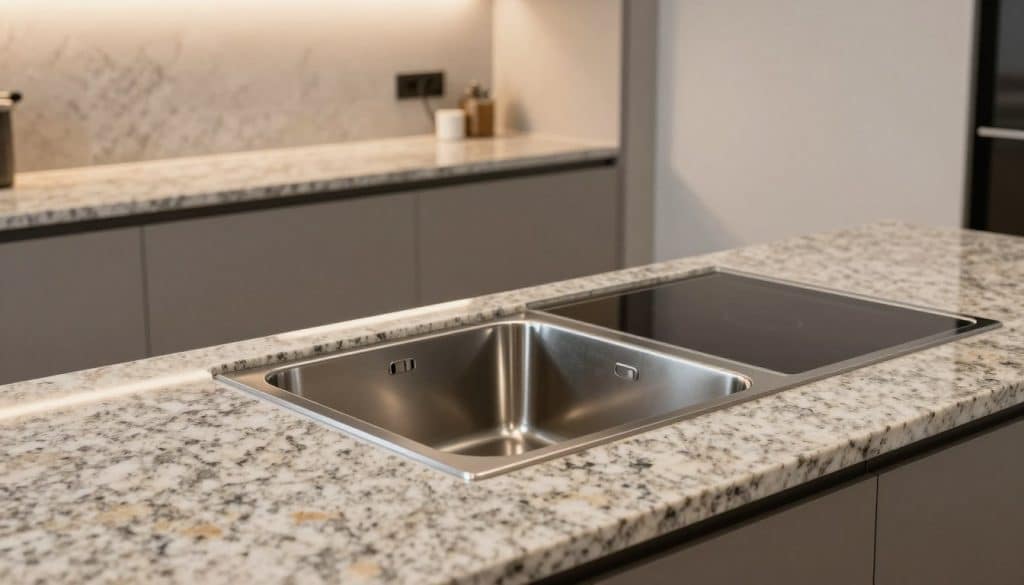
Every sink and cooktop opening adds steps to fabrication—and a clear price range helps you plan. Typical cutouts add about $100–$300 per opening, so budgeting per opening keeps surprises to a minimum.
Typical sink and cooktop cutout charges
We price most standard openings in that $100–$300 band. Complex shapes, large cooktops, or tight access push numbers higher. Stone and quartz require precise cuts, so accuracy matters.
Undermount vs drop-in sinks and labor
Undermount sinks usually need extra finishing, support, and careful sealing. That increases labor costs versus drop-in sinks. If you change sink size later, cabinet and plumbing work may be needed.
Plumbing reconnection and schedule coordination
Plan plumbing reconnection around install day. Templating, fabrication, and installation must sync with your plumber. Decide on appliance and sink specs early to avoid rework.
- We break down cutout pricing so you can budget per opening.
- Pick sinks and appliances early to avoid delays.
- Stone and quartz need precise templates for smooth installation.
We’ll handle details so your project moves smoothly. Next, we’ll cover backsplashes and common add-ons that follow new surfaces!
Backsplashes and add-ons that increase countertops cost
A backsplash often turns a simple surface update into a design statement. It adds material, fabrication, and extra install time. That’s why backsplashes raise the total project line even though they’re a separate surface.
Backsplash pricing per square foot and material choices
Typical installed ranges sit around $20–$50 per square foot depending on material and pattern. Tile patterns, intricate layouts, and heavy grout work push price higher. Wall repairs or extra prep add labor and time.
Matching slab backsplash vs tile backsplash budgeting
A matching slab backsplash gives a seamless, premium look. It often costs more than tile but reduces visual seams. Tile offers more design flexibility and can be friendlier on the budget.
- Where to invest: full-height behind a range looks dramatic; a short splash saves money.
- Coordination: outlets, switches, and wall prep change timeline and fees.
- Sequencing: we usually install backsplashes after countertops and before final appliance set.
We’ll help you pick options that match your vision without turning a tidy project into an expensive surprise. Next, we’ll show money-saving tactics that keep the look you want while trimming extra charges.
How to save money on kitchen countertops without sacrificing the look
Small choices make big differences when you want to save money and keep a high-end result. We focus on simple moves that cut spending but keep style and function intact.
Choose simpler layouts and limit edge complexity
Keep runs straight and reduce seams. Fewer seams mean less waste and less labor. Limit decorative edge work — a standard finish looks clean and saves dollars.
Tip: Avoid applying a bullnose across long exposed runs; premium edges can add about $10–$20+ per linear foot.
Reuse fixtures and compare quotes
If your sink, faucet, and appliances fit current openings, reuse them. That avoids new cutouts and plumbing changes.
Get multiple bids and ask what each quote includes: templating, cutouts, sealing, disposal, and cleanup. That makes comparing true apples-to-apples.
Consider remnants and DIY demolition
Remnants can cover islands or small runs with premium material at a lower price. Measure first to avoid waste.
DIY demolition saves removal fees (often $50–$300+), but only if you can work safely and protect cabinets, plumbing, and walls.
- Plan well: smart choices save money and avoid rework.
- Ask questions: know what’s in each bid before you sign.
- Pick wisely: reuse and remnants are simple, effective savings.
From measuring to installation: what the countertop replacement process looks like
A smooth project starts with clear steps—here’s how we move from measuring to a finished install.
Planning and measuring for accurate square footage
We begin with an on-site visit to map runs and confirm square foot measurements. Final templating comes after cabinets are secure. That avoids surprises and extra charges.
Material selection and reviewing colors in real lighting
We help you pick a material and view slabs in your home. Natural light changes how colors read, so we bring samples and slabs to your space.
Fabrication, templating, and quality checks
Templates guide precise cuts. Our shop fabricates pieces and runs quality checks for seam fit and finish. That work protects your investment beyond surface looks.
Installation day expectations
- Protective prep: we shield floors and cabinets.
- Set and level: pieces are placed and adjusted for perfect seams.
- Seal and cleanup: sealing when required, reconnect plumbing, leave site tidy.
Fast timelines: GET YOUR NEW countertops INSTALLED IN AS LITTLE AS ONE WEEK AFTER MEASURING. We guide choices so your kitchen remodel stays on schedule and your countertops cost stays predictable.
Why Minneapolis homeowners choose Rock Solid Tops for countertop projects
Minneapolis homeowners pick Rock Solid Tops because we pair fast service with proven stone expertise.
We’ve been fabricating and installing granite, quartz, and other stone for over 30 years. That experience means fewer surprises during a remodel and cleaner final installation.
We handle single-room updates and large commercial projects alike — remodels, multi-unit apartments, senior living, restaurants, and full buildouts. Our crews work to timeline commitments so projects stay on track.
- Service area: Minneapolis, St. Paul, and within an hour’s drive of the Twin Cities.
- Design help: in-home and commercial guidance to match style and budget.
- Speed: fast fabrication and installation so you can finish your project sooner.
Our Craftmanship, Your Vision drives every job. We’ll help you pick the right material and layout to protect your budget while delivering the look you want.
Ready to start? Call (612) 270-4239 or email info@rocksolidtops.com for a free estimate and design guidance.
Conclusion
Focus on how the surface will work for you every day, then layer in style and timeline.
Pick materials by function first, then by look. Think in per square foot terms, but budget for real add-ons: labor, removal, edges, cutouts, and backsplash choices.
Your square foot total and layout complexity turn a national range into a true Minneapolis, MN number. Decide sinks and appliances early to protect your remodel schedule and your budget.
At Rock Solid Tops we guide you through budget-friendly, mid-range, and premium options with clear pricing per square foot when it helps. Our Craftmanship, Your Vision means we finish fast and right.
GET YOUR NEW COUNTERTOPS INSTALLED IN AS LITTLE AS ONE WEEK AFTER MEASURING. Schedule a free estimate in Minneapolis and surrounding areas: (612) 270-4239 or info@rocksolidtops.com.