
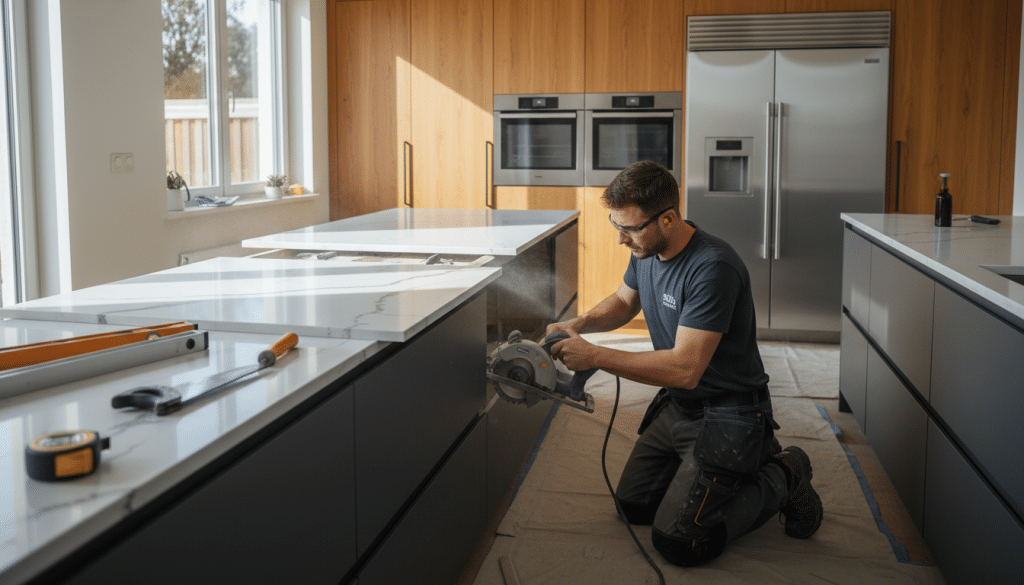
Curious how much a new surface can change your kitchen — and your plans? We’ll explain the countertop installation cost clearly so you can move forward with confidence.
At Rock Solid Tops in Minneapolis, MN, we set expectations up front. We explain real pricing for installed work, not just slab numbers. That helps you compare quotes and avoid surprises.
Fast turnaround matters to busy homeowners and property managers. We often get you from measure to finished in as little as one week after measuring. Free estimate and clear scheduling keep projects smooth.
We’ll show what typically moves price up or down — layout, edges, cutouts, and the material you pick for your kitchen. Our focus is prompt, professional craftsmanship that matches your vision.
Ready to get started? Call (612) 270-4239 or email info@rocksolidtops.com for a free estimate. Our craftsmanship, your vision — simple.
Key Takeaways
- We give clear, practical pricing for installed work so you can plan without surprises.
- Material choice and layout drive most price changes for your kitchen.
- Fast scheduling: many projects finish about one week after measuring.
- We prioritize craftsmanship, cleanliness, and reliable timing.
- Contact us for a free estimate at (612) 270-4239 or info@rocksolidtops.com.
What Minneapolis Homeowners and Property Managers Should Expect in Countertop Pricing
We anchor your expectations with national numbers, then show how local details change the final quote. HomeAdvisor’s updated national average is $3,140, with a normal range of $1,850–$4,456 for kitchen replacement projects.20
Minneapolis–St. Paul projects often sit above or below that range depending on schedule, site access, and material choice. A quick condo refresh will hit the low end. A durable rental upgrade or a commercial buildout for restaurants and senior living can push totals higher.
Why installed pricing beats material-only estimates
Material alone misses fabrication, delivery, and on-site labor. Those line items vary most between bids. We recommend comparing full installed quotes so you know what’s included.
- Size and layout
- Cutouts, edges, and seams
- Installer scope and scheduling
- Standardization for multi-unit budgeting
We serve Minneapolis within about an hour, and we help property managers standardize materials to predict budgets and reduce surprises.
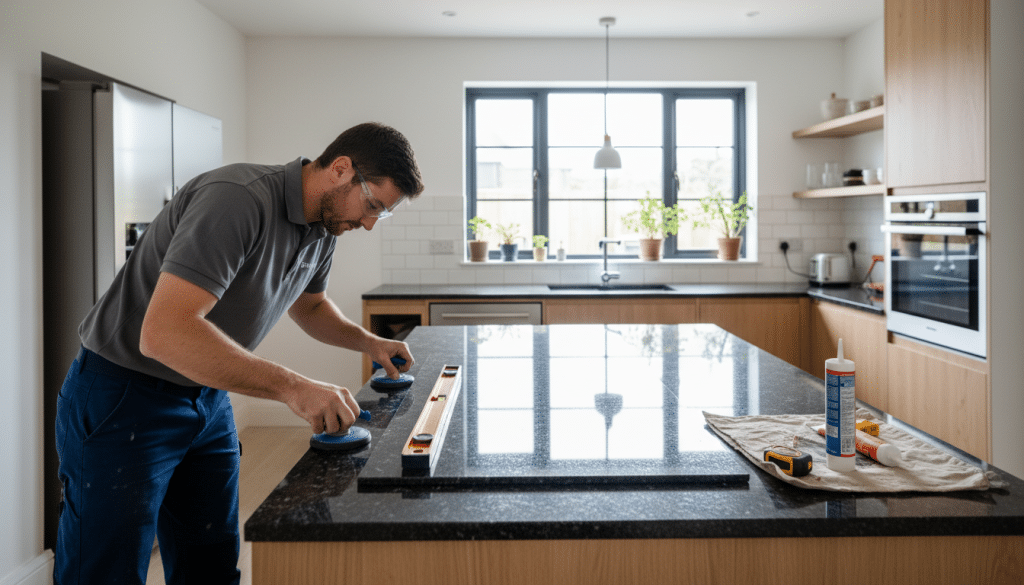
Average Kitchen Countertops Cost: National Ranges to Use as a Starting Point
A national price range gives you a smart starting point for planning. Use these numbers to set expectations before an on-site measure.
HomeAdvisor lists an average project at $3,140 with a normal range of $1,850–$4,456. That helps you benchmark a simple remodel or a fuller kitchen refresh.
Size matters. Small runs (20–30 sq ft) often land between $1,000 and $4,500. Medium kitchens (30–40 sq ft) typically range $1,500–$6,000. Bigger layouts (40–60+ sq ft) can climb to $6,000–$9,000+ when premium materials enter the mix.
- Per square foot pricing is useful for quick planning but misses edges, cutouts, and seams.
- “150 per square” can be realistic for upgraded, straightforward installs with common stone.
- “200 per” shows up with complex fabrication or higher-grade selections.
We recommend using these national ranges to sanity-check your budget, then get a local, installed quote that reflects your actual kitchen and design choices.
Countertop Installation Cost Breakdown: What You’re Actually Paying For
Let’s unpack the quote so you know which line items drive your final bill. We separate the slab price from the work that turns a slab into a usable surface.
Material vs. fabrication
Material is the raw slab price, usually priced per square foot. Fabrication adds cutting, edging, and cutouts for sinks and cooktops.
Labor and why it matters
Labor often runs $20–$50 per square foot and commonly represents about 30%–40% of the total. That covers templating, on-site adjustments, and the experienced hands doing the precise fit.
Shop overhead and extras
Real bids include transport, shop time, templates, adhesives, protective gear, and disposal. Edge profiles and custom shapes stack on top of base pricing.
When a contractor adds value
A general contractor usually tacks on ~10%–20% when you need plumbing, electrical, or cabinet work. For straight swaps you can often go direct and save markup.
- Ask if removal, cutouts, edging, and disposal are listed separately.
- Compare per square and per square foot line items for apples-to-apples quotes.
How to Measure for Cost Per Square Foot Without Guesswork
Start with linear runs and a standard depth to make your math honest and useful. We’ll keep this simple so you can get a planning number that actually helps your kitchen project.
Calculating square footage from linear feet and standard depths
Measure each run in feet. Then multiply the total linear feet by a typical depth of 25–26 inches (about 2.08–2.17 feet). That gives a solid square foot estimate for pricing per square.
Including islands, peninsulas, and odd angles
Draw simple rectangles for islands and peninsulas and add them to the total. Small returns and appliance alcoves add up fast. Count them so your per square math stays realistic.
Accounting for overhangs, seams, and waste/overage
Plan a waste buffer of 10%–15% when layout forces many cuts or seams. Overhangs change usable area and seam placement can affect both appearance and price per square foot.
- Measure linear runs, convert using 25–26″ depth.
- Include islands and wrap returns in your totals.
- Add 10%–15% for waste and seams before you quote a number.
Templating at the shop is still the final authority for fabrication. Use your estimate to compare options, then let the measured template lock in the final numbers.
Countertop Material Price Ranges Per Square Foot Installed
Knowing installed price ranges by material helps you budget smarter and avoid surprises. We’ve been fabricating and fitting granite, quartz, and other stone for 30+ years, serving both residential and commercial projects in Minneapolis.
- Granite: $80–$200 — color grade, thickness, edgework, and seams drive variation.
- Quartz (engineered): $80–$120 — brand patterns, finish, and fabrication complexity matter.
- Marble & quartzite: $70–$200 — rare slabs push pricing into higher tiers.
- Laminate: $20–$50 (Homewyse mid-range ~ $42–$64) — the budget benchmark for simple updates.
- Tile: $35–$70 — lower upfront, but grout upkeep affects lifetime value.
- Concrete: $100–$150 — labor dominates; forms and finishing add time and price.
- Stainless steel: $150–$300 — ideal for commercial kitchens where sanitation and durability justify the spend.
We’ll help you pick the best material for performance and budget. Get a local, installed quote that reflects your layout and goals.
Granite vs Quartz vs Laminate vs Tile: Choosing the Best Countertop Material for Your Use
Not all materials act the same under heat, stains, or heavy meal prep—let’s compare the big four.
Stain resistance, scratches, heat, and daily kitchen wear
Granite handles heat well and hides minor scratches thanks to its natural hardness. It can stain if not sealed regularly.
Quartz is non-porous and resists stains and bacteria. It stands up to daily wear but can discolor with intense heat.
Laminate is easy to clean and budget-friendly. It resists stains but scratches and burns show more readily.
Tile offers heat resistance and low staining, though grout can stain and require upkeep.
Design goals: patterns, color consistency, and the look of stone
Every surface has different benefits. We’ll help you choose the best material for your needs.
- Granite gives a unique, natural pattern—no two slabs match.
- Quartz provides a consistent pattern for a predictable look.
- Laminate and tile offer many colors and affordable design flexibility.
Maintenance expectations: sealing, cleaning, and long-term durability
Pros matter: sealing schedule for stone, daily wipe-downs for quartz, gentle cleaners for laminate, and grout care for tile.
We’ll advise based on your lifestyle—busy family kitchen or low-maintenance rental—so the material meets performance and design goals without surprises.
Slab vs Tile vs Prefab: How Product Format Changes Cost and Performance
Format matters: how a material arrives at your kitchen determines seams, durability, and the final price. We’ll walk you through real differences so your per square estimates make sense.
Why tile can be dramatically cheaper
Tile often runs ~30%–80% less than a slab for similar finishes. Smaller pieces ship and set faster, which lowers labor and shop time.
That cheaper route trades a seamless look for grout lines and extra upkeep. Expect different long‑term maintenance, too.
Where seams show up and why they matter
Slab work gives fewer seams, so the overall look stays cleaner. Tile and prefab force more joints, and seams affect both appearance and how a bid is built.
- We’ll explain when prefab makes sense for simple runs.
- We’ll show layouts that force seams and add fabrication time.
- We’ll tie format choices to per square and per square foot pricing so quotes are easier to compare.
Cutouts, Outlets, and Appliances: The Add-Ons That Move Your Quote
Small cuts and outlet holes add up faster than you expect when planning a kitchen refresh. We’ll walk through common add-ons and the typical ranges so you can budget smartly.
Sink and cooktop cutouts
Sink cutout: typically $100–$300 depending on shape and undermount detail.
Cooktop cutout: usually $120–$400 for gas or electric openings and support framing.
Faucet holes and electrical cutouts
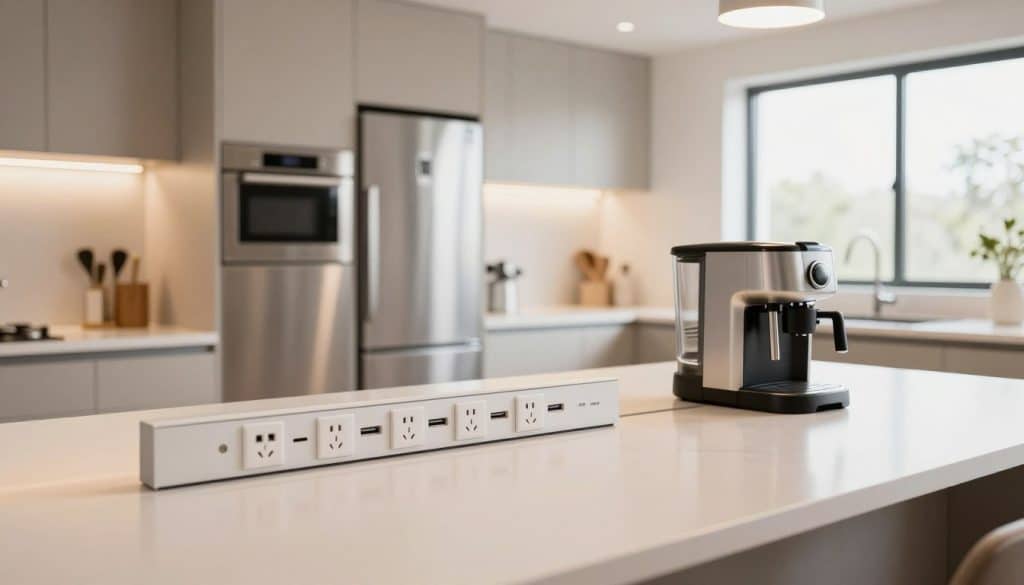
Faucet holes and simple outlet cutouts commonly run $20–$125 each. Pop-up outlets and power strips add time and often push the price higher.
Rule of thumb: many cutouts average about ~$100 each. Complex shapes cost more shop hours and add to your per square estimate.
Integrated accessories and specialty shapes
Integrated drains, soap dispensers, built-in chopping boards, and curved islands increase fabrication time. One “small” accessory can add hours in the shop and shift final quotes.
- Tell us the exact appliances and outlet locations up front.
- List faucet holes, pop-ups, and specialty cutouts before templating.
- We’ll note these factors so your installed price stays steady after measurement.
Edge Profiles and Corners: Small Design Choices With Big Budget Impact
The way an edge ends tells a lot about your kitchen’s final look. It also affects fabrication time and the per-foot price you’ll see on a quote.
Included edges vs. upgraded profiles
Straight or eased edges are often included in a base price. Upgraded profiles like ogee, mitered, and Dupont need extra steps and polish, so they raise the cost.
Cost per linear foot ranges
Expect edge treatments to run roughly $10–$60 per linear foot depending on style and material. Use per square and per square foot estimates for early budgeting, then add linear-foot edge allowances.
Curves, corners, and why they differ
Curves and inside corners take more cutting, more polishing, and more risk. That explains separate charges versus straight runs.
- We’ll show which profiles are standard and which add hours in the shop.
- We’ll map realistic per-foot ranges so you can compare options quickly.
- We’ll help you choose details that improve look where it matters most.
Backsplashes and Transitions: Matching Stone, Mixing Tile, and Managing Costs
The right backsplash balances beauty and function without breaking your budget. We’ll help you weigh a full-height stone splash for a seamless statement versus tile for flexibility and lower cost. Both routes work—your layout and style guide the choice.
Full-height stone vs. tile budgeting
Full-height stone gives a unified look and fewer seams. It reads like one continuous surface and pairs neatly with stone countertops.
Tile offers pattern options and easier repairs. Tile usually lowers the overall cost and lets you mix colors for contrast.
Coordinating with cabinets, walls, and outlets
Check cabinet condition and wall flatness before we start. Wavy walls or old cabinets often need prep work, which protects the final finish.
Plan outlet placement early. Moving outlets after fabrication adds time and expense and can disrupt the clean transition between wall and surface.
- Transitions: corners, window sills, and joins need forethought to avoid awkward seams.
- Material match: coordinate your backsplash with countertops and cabinet finishes for a polished kitchen result.
Removal, Disposal, and What Happens to Your Old Countertops
What happens to your old surfaces matters more than most homeowners expect. Removal and haul-away are simple lines on a quote. In reality they affect scheduling, cleanup, and whether cabinets or floors survive the swap intact.
Typical removal and disposal ranges
Most projects add a removal fee of about $50–$300. Disposal or landfill fees commonly add roughly $20–$25. Many fabricators bundle both into one line so you see a single charge on the final invoice.
Why heavy demo can cost more
Laminate comes off fast. Stone and tile often need more labor because they’re mortared or bolted down. Breaking up heavy materials takes time, tools, and careful handling, which raises the price and extends the work window.
Protecting cabinets and floors
We always protect adjacent surfaces. That means floor coverings, cabinet guards, and controlled break-up to avoid chips or plumbing damage. A small protection step now prevents expensive repairs later.
- We’ll explain removal and disposal line items on your quote.
- We’ll show when heavy stone or tile adds labor time.
- We’ll list protection measures to keep your kitchen intact.
- We’ll advise when DIY removal risks damage and when pros are worth it.
What Makes Installation More Complex (and More Expensive)
Long runs and heavier materials can turn a simple swap into a careful, multi‑trade project. We walk you through the common factors so you know what to expect and when to plan for extra work.
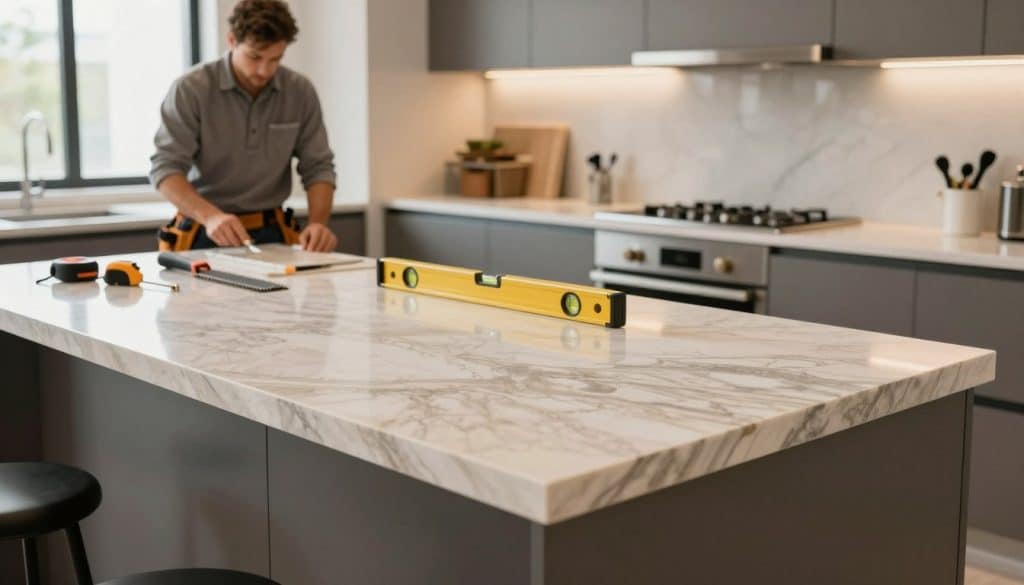
Long runs, seams, and structural support
Runs over 10 feet often need seams to fit through doorways and around corners. Seams affect appearance and where supports must sit.
We plan seam placement to hide joins and keep the surface strong. Long spans may also need added blocking or brackets so the surface stays steady over time.
Leveling cabinets and reinforcing bases for heavy stone
Even cabinets that look fine can be out of level. That creates gaps, stress, and weak points when a heavy stone goes on top.
We check and level bases, and we specify reinforcement when needed. Skipping this step risks cracks, loose seams, and premature wear.
Plumbing, electrical changes, and coordinating trades
Moving sinks or adding outlets adds hours and may require a licensed contractor. Those trades affect schedule and the final price.
When plumbing or wiring is complex, we recommend a coordinated approach. That keeps the project on time and avoids rework.
- Factors: long runs, seams, cabinet leveling, reinforcement, and trades coordination.
- Project tip: tell us about planned sink moves or appliance swaps early.
- When to call a contractor: major plumbing or electrical work beyond simple cutouts.
We’ll flag issues up front so your kitchen project stays smooth and predictable.
Budget Planning Tips to Lower Countertops Cost Without Sacrificing Quality
Smart planning can shave hundreds off your project without changing the look you want. We’ll give clear, practical moves you can make now so the final quote stays predictable and honest.
Choosing a simpler layout and limiting curves
Keep runs straight and avoid many curves or odd angles. Fewer cuts reduce fabrication time and mistakes. That usually means lower per square foot labor and cleaner seams.
Picking the right material grade for durability
Match material options to how you use the kitchen. Mid‑grade slabs often give great durability without premium pricing. Compare grades for stains, hardness, and warranty so you don’t pay for features you won’t use.
When DIY removal helps—and when it risks damage
Removing old surfaces yourself can trim the quote. Do it only when cabinets and flooring are protected and plumbing is simple.
If demo is risky, hire pros—damage to cabinets or floors can erase any savings. We’ll advise which approach fits your project and budget.
- Simplify layout to cut fabrication time.
- Choose material grade for the right balance of durability and price.
- Do DIY removal only when it’s safe and saves real money.
- Ask questions so your budget reflects real factors, not surprises.
Value and ROI: How New Countertops Can Pay Off in Resale and Leasing
A smart surface swap can turn a dated kitchen into a strong selling point. HomeAdvisor notes replacements can return up to ~98.5% ROI depending on scope and market. That makes this upgrade one of the highest-yield moves you can make.
Why a surface replacement delivers high ROI
Buyers and renters judge kitchens fast. A fresh look boosts perceived value and speeds sales or lease-ups. That helps your budget and shortens vacancy time.
Material impact for rentals, multi-unit, and senior living
Durability changes operating expenses over time. Low-maintenance choices cut service calls and replacements between turns.
- Quartz — durable, non-porous, great for premium units and low upkeep.
- Granite — high-end look and long life with periodic sealing.
- Laminate — low upfront price and quick refreshes for workforce housing.
We’ll help you weigh the pros and the look against your budget and long-term project goals. Together we pick the right choice of material so your investment pays off.
Minneapolis Countertop Installation Timeline: From Measuring to Install in as Little as One Week
Quick, coordinated steps keep your kitchen downtime short and predictable. We map the timeline so you can plan around cooking, tenants, or business hours. GET YOUR NEW COUNTERTOPS INSTALLED IN AS LITTLE AS ONE WEEK AFTER MEASURING.
We start with templating and measuring. That visit confirms edge profiles, cutouts, and exact dimensions. Clear approvals at that stage speed everything up.
Fabrication follows in our shop. Most standard slabs and common edges move through the shop within days. Then we schedule a focused install window so you know the exact day we’ll be on site.
What can slow a project
- Custom edges, many cutouts, or unusual shapes add shop time.
- Specialty materials with low local stock can delay fabricating.
- Site issues—unleveled cabinets, plumbing, or blocked access—hold up install day.
How to keep your project fast
Decide quickly on material and edge options. Approve templates on the same day. Give clear access for template and install visits.
We work residential and commercial projects across Minneapolis–St. Paul and within an hour. Property managers: tell us your turnover windows and we’ll plan around them. Prompt scheduling plus clear choices = fast, professional results.
Conclusion
The right plan beats guesswork: match material, layout, and details to how you actually use the kitchen countertop.
Sanity‑check quotes with simple per square math. Numbers like 150 per square or 200 per only work when scope is clear. Use a per square foot baseline, then add edges, cutouts, seams, removal, and site readiness to avoid surprises.
Pick materials by performance and care: quartz, granite, tile, laminate, stainless steel, or concrete each behave differently with stains and scratches. We help you choose the best option for design and durability.
Ready to talk? Rock Solid Tops — 30+ years serving Minneapolis, MN and surrounding areas. Call (612) 270-4239 or email info@rocksolidtops.com for a free estimate on residential or commercial projects.