
Curious why some surfaces keep their shine while others look dull in months?
We’re Rock Solid Tops, your Minneapolis, MN countertop experts with 30+ years of fabrication and installation experience. Call us at (612) 270-4239 or email info@rocksolidtops.com for a free estimate. Our promise: Our Craftmanship, Your Vision.
Quartz is prized as a durable, non-porous material that rarely needs resealing, but daily upkeep matters. Small residue left behind can dull a finish and lead to stubborn stains in busy kitchens and baths.
In this short guide, we’ll show exactly how to clean quartz countertops safely — from quick daily wipe-downs to haze fixes and stain removal. You’ll get simple wins you can start today: warm water, mild soap, the right cloth, and a rinse-and-dry habit.
We fabricate and install quartz and other stone surfaces across Minneapolis–St. Paul and nearby areas. Often we measure and have counters installed in as little as one week after measuring. Call for fast, professional help and material guidance!
Key Takeaways
- Daily care prevents buildup that harms shine and longevity.
- Use warm water, mild soap, and a soft cloth for routine maintenance.
- We offer free estimates and fast installations—often within a week.
- Rock Solid Tops brings 30+ years of local fabrication and installation expertise.
- Contact (612) 270-4239 or info@rocksolidtops.com for help or a free quote.
Why Quartz Countertops Need the Right Cleaning Approach
Your surface’s long life hinges on knowing what it’s made of and what can harm it. We’ve worked with stone and engineered finishes for 30+ years, and that background matters when protecting your investment.
What engineered stone is made of
Engineered quartz is mostly quartz crystals (about 90–93%) bound with roughly 7–10% resin and pigments. The hard mineral gives strength. The binder holds it together.
Why resins deserve gentle treatment
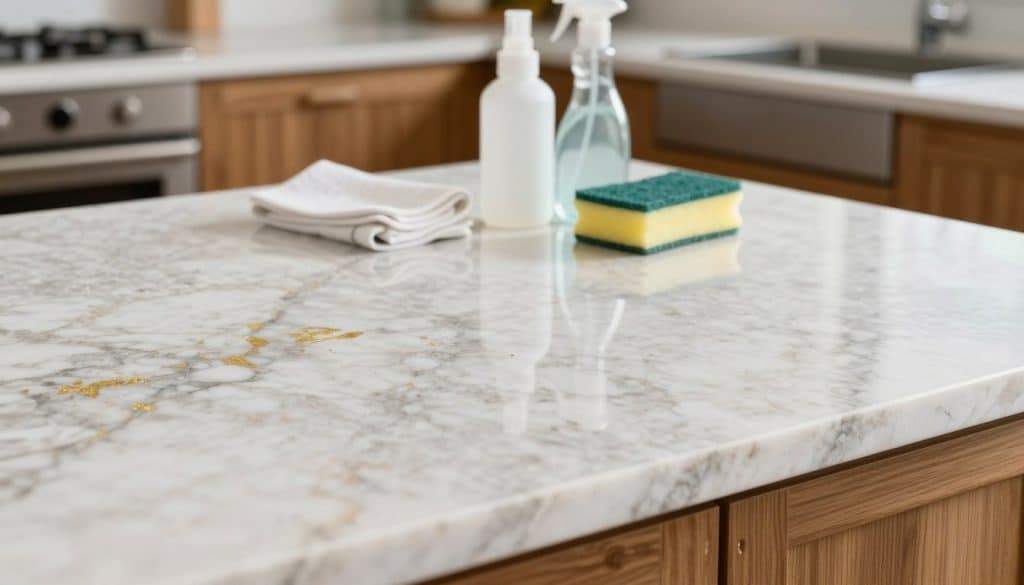
The resin can react to harsh chemicals and heat. Most mystery dull spots aren’t the stone failing — they’re the binder reacting. Treating that binder gently keeps the original finish.
Residue, wear, and everyday causes
Grease, soap film, and dried minerals leave residue that creates haze and traps stains over time. Gritty crumbs dragged across the counter cause small scratches and long-term wear.
- Use soft cloths; avoid abrasive scrubbing.
- Wipe up spills instead of air-drying to stop mineral marks.
- Skip harsh chemicals that slowly change the binder and cause damage.
Next, we’ll share a simple, quartz-safe toolkit so you can keep counters bright without guessing. We’ve got your vision covered!
What to Use and What to Avoid on Quartz Surfaces
A simple, well-chosen kit under the sink saves time and preserves shine. Keep the list short and practical so you’ll actually use it.
Safe basics you can trust
Keep under the sink: mild dish soap, warm water, and a microfiber or soft cloth. These three products handle most daily messes without risk.
Tools that protect the finish
Microfiber lifts oils and crumbs without rubbing like sandpaper. Use a soft cloth for drying and a second microfiber for buffing. Light pressure wins—let soap and water do the work.
What to avoid
- Skip vinegar and other acids—these attack the resin binder.
- Avoid bleach and ammonia-based sprays; they can dull or yellow over time.
- Never use abrasive powders, scouring pads, or harsh chemicals that claim to “strip” or “etch.”
Rule of thumb: If a cleaner promises aggressive degreasing, it’s probably too strong. Harsh chemicals cause the binder to break down, which looks like permanent damage. Use gentle products and tools, and move on to the daily routine next for best results.
How to Clean Quartz Countertops for Daily Shine
Keep your surface shining daily with a quick, repeatable routine that only takes a few minutes. We built this playbook for busy Minneapolis kitchens and baths. Follow these steps after meals and morning tasks for the best results!
Clear crumbs and grit first
Start by removing loose particles. Dragging grit creates micro-scratches, so sweep or wipe them away before any wetter step.
Mix the right daily solution
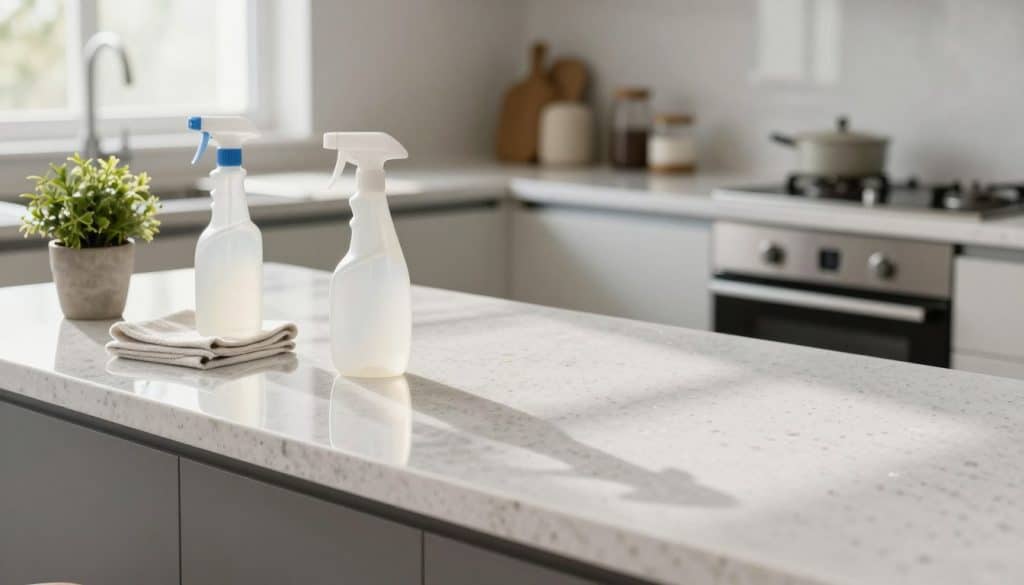
Use a small drop of mild dish soap in a bowl of warm water. Damp a microfiber cloth and wring well—less moisture, more control.
Wipe, rinse, and buff
Wipe in smooth passes, focusing on greasy zones. Then do a second pass with clean water to remove soap water and prevent sticky film or residue.
Finish like a pro
- Dry and buff with a clean microfiber cloth for a streak-free shine.
- Wipe sooner after use—less effort, less scrubbing later.
How to Deep Clean Quartz Without Damaging the Finish
When light reveals streaks and haze, it’s time for a careful deeper treatment. This is the step we take when daily wiping won’t remove greasy sheen, persistent smudges, or that “never quite clean” feeling.
When a deeper session makes sense
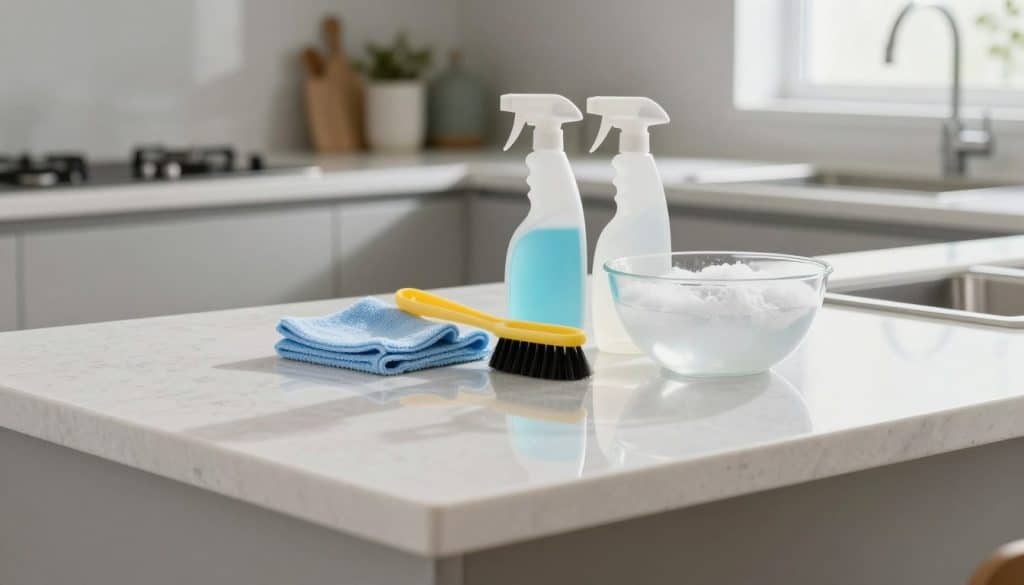
Signs: streaks under lighting, fingerprinty areas, or a dull film that resists soap and water. The goal is simple: remove buildup on the surface without stressing the resin or causing damage.
Safe all-purpose cleaners and a gentle process
Choose a non-harsh, quartz-safe all-purpose cleaner for smudges and streaking. Use it sparingly, let it sit a minute, then wipe and rinse with clean water. Dry fully to avoid residue that can create new haze.
Careful baking soda paste for stubborn grime
- Make a mild paste with baking soda and water.
- Apply just on the spot and rub gently with a soft cloth.
- Rinse completely and dry—no scrubbing or repeated heavy use.
Restraint wins: a light, disciplined method restores shine and protects your investment. If stains, disinfecting needs, or cloudy quartz persist, the next section has targeted steps.
How to Remove Tough Stains, Disinfect Safely, and Fix Hazy Quartz
The minutes after a spill decide whether a mark sets or wipes away. Act fast, blot excess, then wipe gently. This simple habit saves a lot of time and keeps surfaces bright.
Fast spill cleanup strategy
Blot first: use a soft cloth or paper towel. For oily foods and dark liquids like wine or coffee, blot—don’t smear.
Follow with a damp microfiber and mild soap rinse. Dry thoroughly so minerals and sticky residue don’t set.
Stain-lifting recipe
For discoloration, mix equal parts hydrogen peroxide and water. Apply the solution on the spot, wait a minute, then wipe gently with a soft cloth.
Rinse with warm water and dry. Repeat once if needed, but avoid scrubbing hard.
Safer disinfecting after raw meat
Skip bleach. Use diluted isopropyl alcohol in a spray bottle, wipe clean, and let it evaporate. This evaporates fast and won’t stress the resin like harsh chemicals might.
Hard water spots and cloudy finishes
- Remove mineral deposits with gentle mechanical action—soft cloth and steady rubbing.
- Avoid vinegar; it can harm the binder over time.
- If the surface looks cloudy, rewash with mild soap and warm water, rinse thoroughly, and buff dry to remove residue.
When to escalate: if stains or haze return despite correct steps, the issue may be product choice or technique. Give us a call — we’ll help diagnose the area and recommend a lasting solution!
Habits That Help Keep Quartz Looking New Over Time
Small daily habits make a big difference in keeping surfaces bright and sanitary. Wiping after each use in the kitchen and bathroom stops residue and prevents buildup. This simple rhythm saves time and effort over the years.
Protect against heat and scratches
Use trivets or hot pads whenever a hot pan is nearby. Sudden heat can stress the resin and harm the finish.
Always cut on a board. Never drag gritty bags, small appliances, or cookware across the countertop—these cause scratches.
Smart product and tool habits
Adopt a two-cloth habit: one damp cloth for washing and one dry microfiber for buffing. This keeps surfaces streak-free and fast to maintain.
Stick with gentle, quartz-safe products and soft tools. Avoid abrasive pads and random cleaners that leave residue or dull shine.
Areas that need extra love
- Around faucets — watch for water spotting.
- Near cooktops — wipe grease film promptly.
- Bathroom vanities — remove product buildup often.
These habits help us keep quartz looking new longer. Consistent care protects your investment and keeps kitchen areas ready for daily life!
Conclusion
Consistent care keeps surfaces bright with a simple, reliable routine we trust.
Try this: clear grit, wash with a small amount of mild dish soap and warm water, rinse fully, then dry and buff with a microfiber cloth for a streak-free finish. This removes residue and helps lift most stains without harsh work.
The big three: quick stain response, gentle products that protect the resin, and consistent drying to stop water spots. Skip vinegar, bleach, ammonia-based sprays, and abrasive pads for lasting shine.
Planning a remodel or managing a commercial space? Rock Solid Tops fabricates and installs granite, quartz, and other stone for residential and commercial projects across Minneapolis, MN and surrounding areas. Call (612) 270-4239 or email info@rocksolidtops.com for a free estimate. Our Craftmanship, Your Vision. We can have new countertops installed in as little as one week after measuring.