
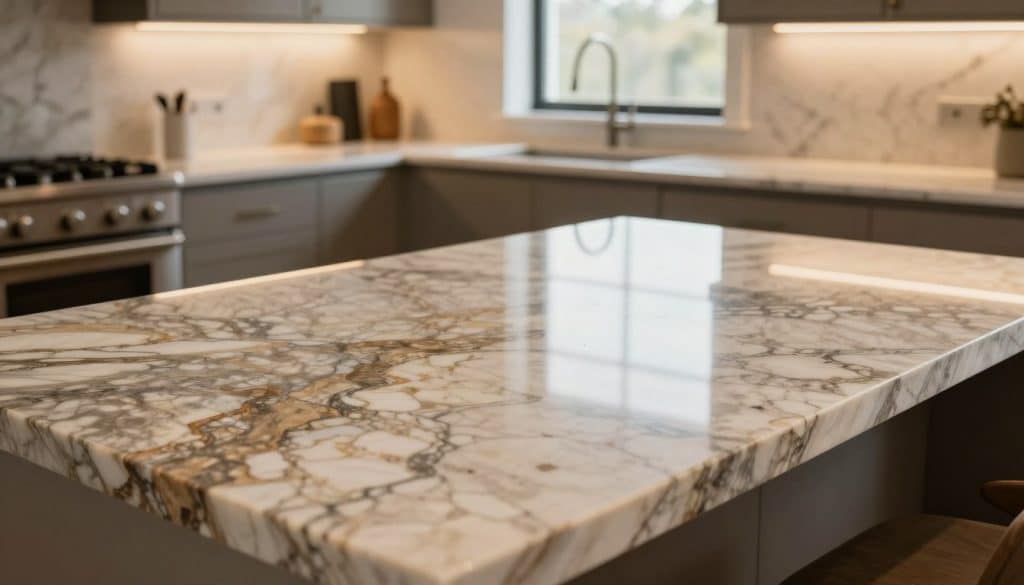
Curious why a marble-like surface can sometimes cost more than other stones? We start with the thing you really want to know: the current market range for quartzite countertops cost, and what makes that number move.
We’ll show why this stone often sits above common alternatives. It offers a marble look with strong durability when sealed and installed right. But the final price goes beyond the slab.
Fabrication, edge details, seams, cutouts, and jobsite access all change the final figure fast. We write for homeowners planning a kitchen upgrade and for commercial managers who need clear budgets and timelines.
At Rock Solid Tops we bring 30+ years fabricating and installing stone in Minneapolis, MN and surrounding areas. Our mantra is Our Craftmanship, Your Vision. Call (612) 270-4239 or email info@rocksolidtops.com for a free estimate.
Key Takeaways
- We explain quartzite pricing drivers so you can budget without surprises.
- Stone price is only part of the total — fabrication and installation matter.
- Expect marble-like looks with better durability when sealed properly.
- Our 30+ years ensure precise work and dependable timelines.
- Local service in Minneapolis, MN with free estimates by phone or email.
Quartzite countertops cost : average price ranges per square foot
A useful way to compare bids is to look at installed pricing by the square, not just lump sums. That lets you check numbers apples-to-apples and spot vague quotes fast.
National installed ranges typically run from about $60 to $200+ per square foot. Broadly speaking:
- Economy/average: ~$60–$100 per square
- Standard: ~$100–$150 per square
- Premium: ~$150–$200+ per square
What’s included with an installed price? Expect templating, basic fabrication, setting, and standard seaming. What’s often excluded are demo, plumbing, specialty edges, and long-distance delivery.
Remember: layout affects the final number. An island, long run, or many corners raises waste and adds seams. Labor matters too—this stone is heavy and unforgiving if mishandled, so skilled installation protects your investment.
Armed with these ranges, you can sanity-check quotes and ask the right questions before you commit.
What quartzite is and why it’s priced like a premium stone
Understanding how this stone forms helps explain why it often commands a premium. It starts as sandstone and, under intense heat and pressure, becomes a dense, quartz-rich metamorphic rock. That transformation makes it much harder than many other natural stones.
Hardness and fabrication: The dense material takes more time and tougher tooling to cut, polish, and finish. Skilled fabricators and more machine wear add to the final fee.
Look and performance: Light backgrounds, flowing veining, and natural depth give a marble-like appearance while delivering strong scratch resistance and good heat tolerance when sealed.
- We recommend sealing to maintain stain resistance and long-term durability.
- True slabs are one-of-a-kind — that rarity boosts their market value.
- You’re buying both a high-end look and lasting performance.
We help you weigh visual appeal against practical benefits so you get a surface that looks great and performs for years.
Key factors that drive cost quartzite countertops up or down
Not all slabs are created equal—several choices push pricing up or down. We’ll walk through the main factors so you know what to ask and why a quote varies.
Rarity, color, veining, and pattern consistency
Rarity matters. Limited quarry supply or a sought-after color raises per square foot pricing fast. Stronger veining or dramatic patterns need careful planning to match seams and avoid waste.
Slab grade and quality levels
Grade ties directly to real-world price bands: economy, standard, and premium. Higher quality means cleaner patterning, fewer imperfections, and steadier consistency.
Thickness, slab size, seams, and layout
Choosing 2 cm versus 3 cm affects material, handling, and installation effort. Thicker slabs often increase costs. Large islands, L-shapes, or waterfall designs can require more slabs and extra seams—raising labor and waste.
Finish options and regional impacts
Polished, honed, or leathered finishes change both look and performance. Some finishes add fabrication time and price. Regional factors—shipping distance, local labor, and availability around Minneapolis—also push final costs up or down.
- Quick guide: rarity, color, slab size, thickness, finish.
- Ask for per square foot ranges when comparing bids.
- Plan design early to limit seams and waste.
Quartzite slab pricing vs. installed pricing: what you’re really paying for
Supplier tags show slab price, but the installed figure includes many hidden steps. We break down what adds up so you know where dollars go. This helps you compare bids with confidence.
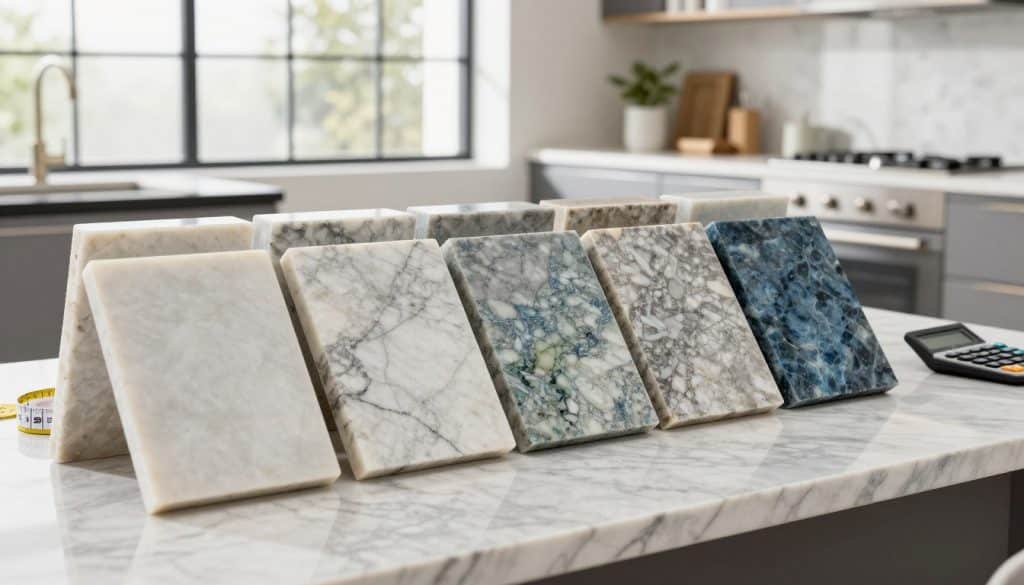
Material costs and how suppliers set them
Slab prices vary by color, rarity, grade, and thickness. Bigger slabs yield more usable area and fewer seams, which raises the sticker price but can lower waste.
Fabrication: the hands-on work that adds value
Fabrication includes templating, cutting, edge polishing, and sink cutouts. Precision tools and skilled crew time make this work accurate and safe.
Labor, handling, and final installation
Heavy slabs need careful transport and on-site handling. Labor to carry, set, level, and finish seams is a major line item. For quartzite, hardness increases machine wear and skilled labor needs.
- Quick guide: slab vs installed, material factors, fabrication steps.
- Watch for vague line items—ask for breakdowns and a clear cost per square foot.
- Higher quoted prices often mean better equipment, fewer mistakes, and a cleaner installation.
Popular quartzite varieties and their typical cost per square foot
To budget smarter, review common slab varieties and the installed ranges they often fall into. Below are five popular options and typical per square foot ranges you’ll see on estimates.
Classic White — ~$60–$180 per square foot
Classic White is a go-to for bright kitchens. Pricing swings with slab grade and pattern consistency. Cleaner slabs cost more due to less waste and easier vein matching.
Super White — ~$60–$130 per square foot
Super White offers marble-like movement. When veining is bold or inconsistent, fabricators may use more slabs, which raises the installed range.
Fantasy Brown — ~$50–$80 per square foot
Fantasy Brown hides daily wear with warm movement. Its approachable pricing makes it a solid option if you want style without premium pricing.
White Macaubas — ~$110–$130 per square foot
White Macaubas gives a linear, modern look. Matching those lines at seams needs care, so fabrication and seam planning affect final figures.
Taj Mahal — ~$100–$250 per square foot
Taj Mahal is a premium favorite. High demand and matching challenges push prices higher, especially for large, consistent slabs.
- Note: These ranges are typical — thickness, finish, edges, and cutouts change installed totals fast.
Trending quartzite colors and what they cost installed
Some colors are steady sellers; others are rare finds that need special handling and higher installed totals. We cover trends so you can balance design goals with real-world prices and availability.
Mont Blanc, Sea Pearl, and Cirrus Gray: modern neutrals
These neutrals pair well with many cabinet tones and give a timeless look. They photograph nicely and fit classic or modern schemes.
Note: neutral does not always mean cheaper. Slab grade and vein consistency still influence prices and fabricating time.
Cristallo and Amazonite: rare statement slabs with higher pricing
Statement stones draw attention for their unique appearance and rarity. That uniqueness often raises pricing because sourcing and matching are harder.
Blue Roma, Glacier Wave, and Fusion: bold patterns and matching challenges
Bold patterns and heavy veining create drama. They also force careful seam placement and extra slab use to keep movement continuous.
Our practical advice: pick a slab that fits your layout, not just a showroom sample. Strong tones and bold patterns can look stunning—when planned right!
- Quick takeaway: choose trends you’ll love long term and check slab availability before you commit to installed prices.
Installation cost breakdown: fabrication, delivery, and on-site work
Installation is where your plan becomes reality. We outline the key steps so quotes make sense and you can spot extras that add to final totals.
Measuring and templating for accurate square foot totals
We measure precisely and template on-site to avoid waste. Accurate square foot figures prevent over-ordering and lower unexpected costs.
Transport and safe handling for slabs
Heavy slabs require crating, bracing, and careful carrying. Skilled labor reduces breakage risk and keeps delivery delays from inflating totals.
Seam placement and vein matching
Seam work is meticulous. Matching veins creates a seamless surface but can add time and expense. It’s worth it for the finished look.
Cabinet support, leveling, and sealing at install
We check cabinet support and level before setting stone. Proper framing prevents cracks and future repairs.
Sealing happens at install to protect the surface. Annual resealing is a small recurring expense that preserves value.
- Quick guide: templating, transport, seams, support, sealing.
- Ask for a line-item installation breakdown when you get quotes.
Edge profiles, backsplashes, and upgrades that change your final cost
Edge and backsplash upgrades can shift a quote more than you expect. Small design choices add fabrication time, tooling wear, and extra materials. That’s how a neat detail grows into a noticeable price change.
Square, eased, bevel, and ogee: how edge styles affect price
Simple square or eased edges use less shaping and polish. They keep labor low and the final price reasonable.
Bevel and ogee profiles need more passes and hand finishing. That extra work raises labor and increases wear on blades, so their costs are higher.
Waterfall edges and full-height backsplashes
A waterfall edge looks dramatic but often means extra slabs, seams, and careful layout. That increases material waste and installation time.
Full-height backsplashes add both stone and wall prep. They give a premium look, but they also add labor and materials to the quote.
Extra cutouts: sinks, faucets, cooktops, and outlets
Each cutout requires precise routing and more tooling. Multiple cutouts stack time and risk, so expect each to show up as a separate line item in your estimate.
- We show: how small upgrades can add up quickly.
- Pick visible upgrades (like a waterfall on an island) that deliver the most design impact.
- Ask for itemized pricing so you can trade extras for savings without surprise costs.
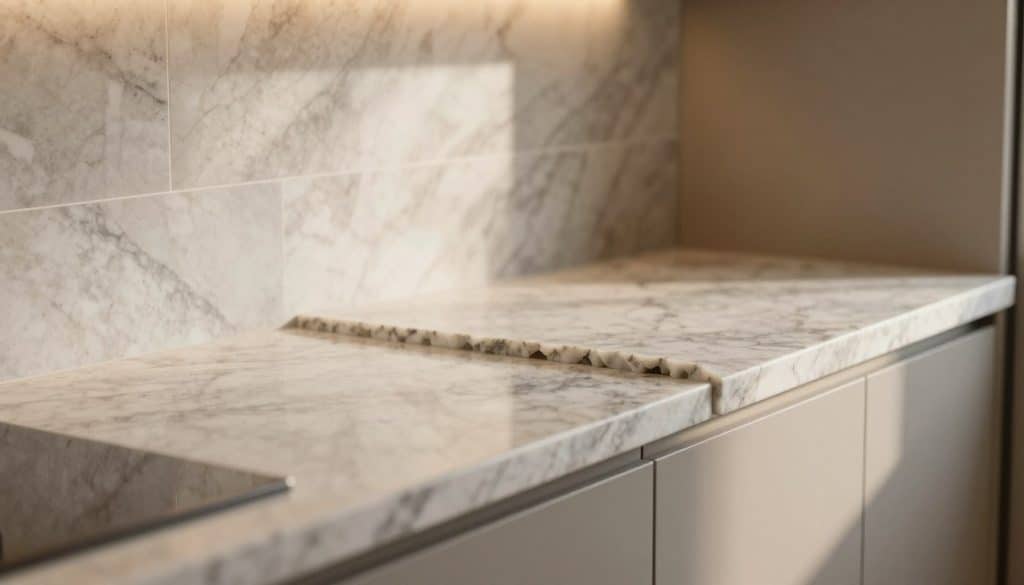
Hidden costs to plan for in a remodel
Hidden fees can quietly add hundreds to a remodel if you don’t plan for them. We call out the common extras so your estimate is realistic and your timeline stays tight.
Old countertop removal and disposal
Removing the old countertop is often a separate line item. Demo, hauling, and landfill fees can show up after the main bid. Ask whether removal and disposal are included so that demo work doesn’t surprise your budget.
Plumbing and electrical adjustments
Moving a sink, rerouting plumbing, or raising outlets for a backsplash means hiring trades. Separate permits or reconnections add labor and material charges. Get written clarity on who covers that work.
Site access issues: stairs, tight turns, or crane needs
Tight halls, flights of stairs, or long carries increase handling and time. Heavy quartzite slabs may need extra crew or a crane. Project size and layout also drive more handling steps and higher costs for installation.
- Tip: Confirm demo, haul-away, and reconnects in writing so you’re not guessing.
- We plan for these items so your estimate stays realistic and stress-free.
How to calculate your quartzite countertop cost for your kitchen
A quick, reliable estimate begins with accurate measurements and a clear layout plan.
Getting accurate measurements and square footage: Measure each run and island. Include overhangs and full-depth backsplashes. Add cutout areas for sinks and cooktops. If you want precision, schedule a template—templating removes guesswork.
Simple cost-per-square-foot formula to estimate totals
Use this base formula: total square footage × installed price per square foot = base total. Then add upgrades and trades.
Example project math using real cost components
Example: 40 square foot kitchen × $120 per square foot = $4,800 base. Add materials (slab premium) $800, fabrication $700, and installation $600. Extras (edge profiles, two cutouts, backsplash) = $900. Final estimate ≈ $7,800.
- Tip: If your layout needs more than one slab, expect higher material and waste charges.
- Use low/mid/premium per square foot ranges to see best/worst budgets.
- Treat this math as planning—confirm with an on-site measure for a real quote!
Maintenance and long-term ownership costs for quartzite countertops
Owning natural stone means planning for a few yearly habits that keep your surface looking its best. We’ll walk through what regular maintenance looks like and how small actions protect durability and value.
Annual sealing and why it matters
Sealing is typically done once a year to resist stains and moisture. Annual sealing helps the stone shed spills and keeps the finish lively. Skipping it raises the risk of permanent staining and may require professional restoration—an expensive repair compared to routine care.
Daily cleaning and products to avoid
For routine cleaning, use mild soap and water or a stone-safe cleaner. Wipe spills quickly to protect the seal and preserve durability.
- Avoid: harsh acids, bleach, and abrasive pads that strip sealers and dull the surface.
- Plan for: small annual sealing costs as part of ownership to prevent larger long-term costs.
- Tip: simple maintenance and the right materials keep your investment looking great and help resale value.
Quartzite vs. granite vs. marble vs. quartz: cost, durability, and look
Choosing the right surface comes down to balancing look, durability, and long-term value. We compare common options so you pick with confidence.
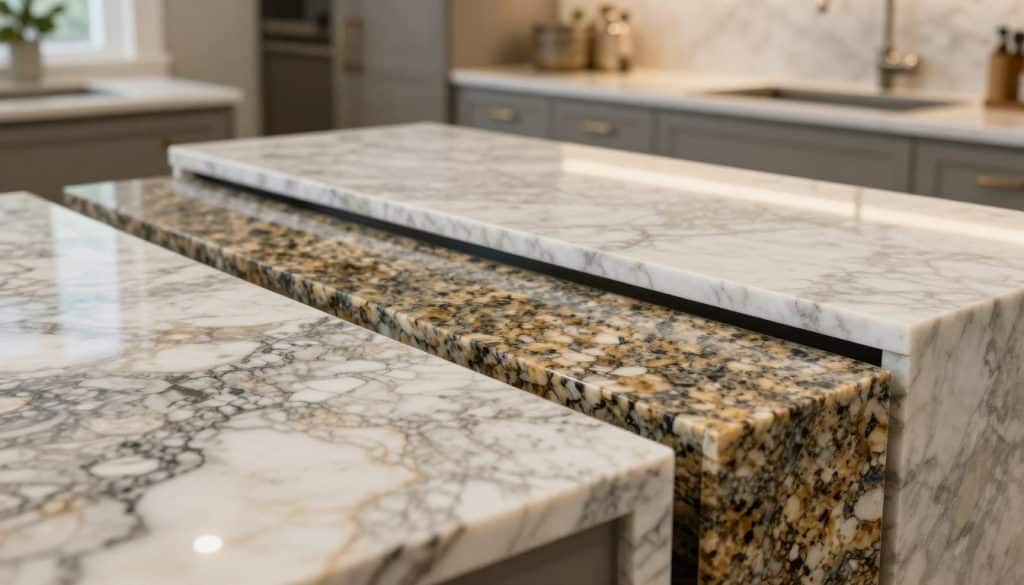
Quartzite vs granite: cost and value tradeoffs
Granite often runs lower in price—typically about $40–$150 per square foot—while our stone usually sits higher. Granite is durable and heat resistant, making it a practical choice for active kitchens.
Value tip: choose granite if you want strong performance at a lower entry price. Pick the premium stone if you want a marble-like appearance with extra resilience.
Quartzite vs marble: appearance, etching risk, and pricing
Marble wins on classic look and veining, but it etches and stains easier. That leads to more careful care and potential repairs over time.
Durability note: our stone often resists etching better and can cost more than many marbles. If you love marble’s appearance but need tougher performance, this is a good compromise.
Quartzite vs quartz: engineered consistency vs natural uniqueness
Engineered quartz averages about $50–$100+ per square foot and gives uniform patterns and low maintenance. It’s consistent and predictable.
Natural slabs offer unique movement and one-of-a-kind appearance. Matching veins at seams can raise pricing and waste, but the visual payoff is unique.
- Who should choose what: busy families often favor quartz or granite for low upkeep.
- Serious cooks may pick the tougher natural stone for heat and scratch resistance.
- Design-first homeowners might accept extra care for marble-like looks and unique slabs.
How to get the best price on quartzite countertops without sacrificing quality
Smart planning and simple choices can trim your project price without risking quality. We focus on real-world strategies that reduce waste and keep fabrication smooth.
Choose colors and patterns that reduce waste
Pick common colors and steady patterns to lower slab waste and simplify seam matching. Bold movement looks great but can force extra slabs and longer fabrication time.
Pick the right thickness and finish for your lifestyle
Ask what thickness and finish suit daily use. A 3 cm slab often needs more handling; a honed or leathered finish may save on polishing time.
Plan layouts early to minimize slabs and fabrication time
Early layout planning reduces the number of slabs and seams. Fewer seams mean less labor and better prices per square.
Bundle decisions to avoid change orders
Decide sinks, edges, and backsplash up front. Bundling keeps scheduling tight and prevents costly rework.
- Save smarter: choose patterns that match your layout.
- Reduce waste: one thoughtful slab choice beats multiple last-minute swaps.
- Communicate: clear plans and prompt decisions protect your budget and quality.
In short: balance design and practicality. The best value comes when the project looks right, functions right, and is installed right the first time.
Quartzite countertops in Minneapolis, MN: what impacts local pricing and timelines
Local labor rates, delivery distance, and seasonal demand drive how quickly we can schedule and what your final price looks like. Minneapolis has higher winter handling needs and steady renovation seasons that affect lead times.
Slab availability plays a big role. If a specific slab is rare or needs matching, availability extends the timeline even when fabrication moves fast.
Our typical process is clear and predictable:
- Initial consult and slab selection
- Measuring and templating on-site
- Fabrication and final installation coordination
Expect communication at every step. We confirm scope, delivery windows, and any special handling for winter installs to reduce delays.
Working local matters. We service Minneapolis, St. Paul, and within an hour of the Twin Cities. That cuts delivery time, lowers labor and transport costs, and makes follow-up service easier.
Work with Rock Solid Tops: fast quartzite fabrication and installation you can trust
From slab selection to final seam polishing, we handle every step so you don’t have to. We combine quick turnarounds with careful work and a focus on lasting results.
Our Craftmanship, Your Vision: design help for colors, tones, and edges
We help you choose colors, tones, and an edge profile that fit your kitchen and budget. Our team offers on-site design guidance so you see how materials will read in your space.
Get your new countertops installed in as little as one week after measuring
We move fast without cutting corners. Depending on slab availability and scope, many projects reach installation in one week after templating!
Service area: Minneapolis, St. Paul, and within an hour drive of the Twin Cities
We serve homeowners and commercial managers across the Twin Cities. From multi-unit apartments to restaurants and senior living, we bring 30+ years of fabrication and installation experience.
Schedule your free estimate: (612) 270-4239 or info@rocksolidtops.com
Ready to start? Call or email for a free estimate. You can trust your project is in good hands because we’re Rock Solid—prompt, professional, and detail-obsessed.
- Local partner for selection through install
- 30+ years across granite, quartz, and natural stone materials
- Residential & commercial projects with reliable timelines
Conclusion
Bottom line: slab grade, thickness, seams, edges, and fabrication set the final number more than a showroom tag. Control those choices and you control your budget.
Think in terms of installed price per square foot for a base estimate. Then add upgrades, demo, and trades so there are no surprises.
Value reminder: this stone gives a premium look and strong durability when you commit to annual maintenance and proper sealing.
The right price isn’t the lowest one. It’s the quote that includes real work and protects your finished appearance.
Get a professional measure to lock square footage, seam plans, and slab count before you sign. For quartzite countertop pricing in Minneapolis, MN and surrounding areas, call Rock Solid Tops at (612) 270-4239 or email info@rocksolidtops.com.
Our Craftmanship, Your Vision — and yes, you can get your new countertops installed in as little as one week after measuring!