
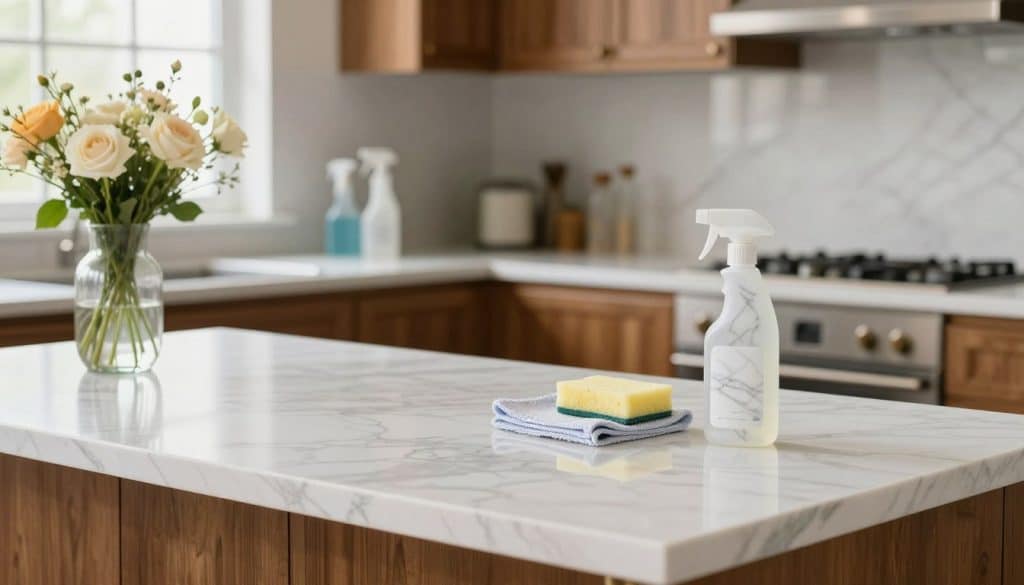
Marble is bold and beautiful, but it asks for smart habits. We’re Rock Solid Tops — a Minneapolis-area partner with 30+ years of fabrication and installation experience. Our Craftsmanship, Your Vision guides every step, from fast estimates to design help.
This guide shows exactly how to clean marble countertops without dulling the finish. Marble rewards gentle technique more than force. It’s porous, sensitive to etching and stains, and needs the right routine from day one.
We’ll walk you through everyday cleaning, stain removal, and etch fixes — and tell you what’s safe for DIY and what’s best left to pros. Our goal is simple: keep your surface bright, minimize stains, and protect the sealer so your countertop lasts.
Follow this practical checklist for quick wipe-ups, the right soap solution, safe drying, and smart prevention. You don’t need a cabinet full of chemicals. Consistent, gentle cleaning does most of the heavy lifting. When you’re ready for a new install in Minneapolis, we’ll help you choose the best stone for your needs.
Key Takeaways
- Gentle routine protects beauty and finish.
- Technique beats muscle for everyday upkeep.
- Different problems need different fixes — some DIY, some pro.
- Consistent care preserves sealer and resists stains.
- Rock Solid Tops offers fast estimates and design help in Minneapolis.
Why Marble Countertops Need Special Care
Because marble reacts quickly with spills and acids, a clear care plan makes daily life easier. We focus on craftsmanship and practical guidance so you can protect your investment without stress.
Porous natural stone and what that means for stains
Marble is a soft, porous natural stone. That porosity means pigments and oils can soak in fast. Act quickly after spills and you’ll avoid many common problems.
Etching vs. staining — tell the difference
Staining happens when color soaks into the stone and looks darker inside the surface.
Etching is a matte or chalky mark from acids that chemically change the finish. Citrus, wine, and some cleaners cause etching; oils and dyes cause stains.
- Spot check: stains look darker; etching looks dull in reflected light.
- Daily wipe-ups protect the sealer and reduce staining risk.
- Knowing the difference guides the right repair—polish for etching, poultice for stains.
We’ll walk you through practical steps next. With a little know-how and our craftsmanship-first approach, maintenance gets much easier and more confident.
How to clean marble countertops for everyday messes
Quick, gentle steps are all you need for a show-ready surface. We want your kitchen to look great and stay protected. Start with the goal: remove crumbs, grease, and smudges while preserving the sealer.
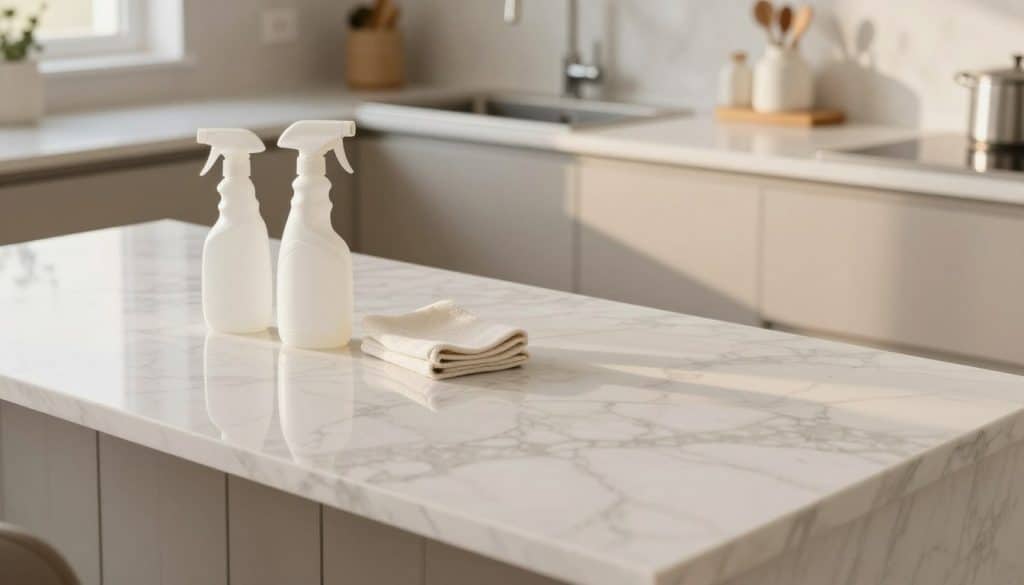
Safe cleaners for routine care
Use a pH-neutral stone cleaner or just a few drops of mild dish soap. Both are gentle and effective. They protect finish while lifting everyday soils.
Simple soap solution method
Mix a small amount of dish soap in warm water. Dampen a microfiber cloth—don’t soak it—and wipe in smooth passes across the surface.
Rinse, dry, and buff
Wipe again with clean warm water to remove any soap residue. Then dry immediately with a clean microfiber cloth. Finish with light circular buffs to restore shine.
Removing sticky residue safely
For gum, syrup, or dried food, loosen with a damp cloth first. Then gently scrape at a low angle with a razor or plastic scraper using light pressure. Avoid scraping aggressively.
- Protect the sealer with gentle cleaning choices.
- Rinse well near sinks and cooktops to prevent spots.
- No rough pads or harsh sprays—gentle wins every time.
We’re Rock Solid Tops — practical steps, minimal fuss, and care that keeps your surface shining.
Cleaners and habits that can damage a marble surface
Some everyday products look safe but can quietly harm your stone surface. We want you to avoid costly mistakes and keep finishes bright.
Why vinegar, lemon juice, and other acids are a no-go
Acids and stone don’t mix. Vinegar and citrus-based sprays react with calcium in the stone and cause etching. Etching leaves dull, rough spots even when the area looks okay at first.
Call out vinegar by name: it’s a common DIY choice that can wear the sealer and leave lasting marks.
Abrasive tools and harsh chemicals that strip sealer or scratch
Avoid rough scrub pads, gritty powders, and bleach-based cleaners. These cleaners can scratch the finish or strip the sealer. Once protection is gone, stains set faster.
Everyday culprits: standing water, oils, and dyed products
- Standing water near sinks can change color and weaken the surface over time.
- Cooking oils and spilled bottles add stain risk when left on the surface.
- Dyed products and kids’ compounds may seep in and require heavy treatments.
Quick habit change: wipe spills promptly and use a stone-safe cleaner. Small daily care beats risky deep scrubs every time. We’re here to help protect your investment with craftsmanship-level advice.
How to remove stains from marble countertops without etching
Stains on natural stone need prompt, gentle attention to avoid lasting damage. Follow calm, step-by-step choices so you don’t trade a stain for etching.
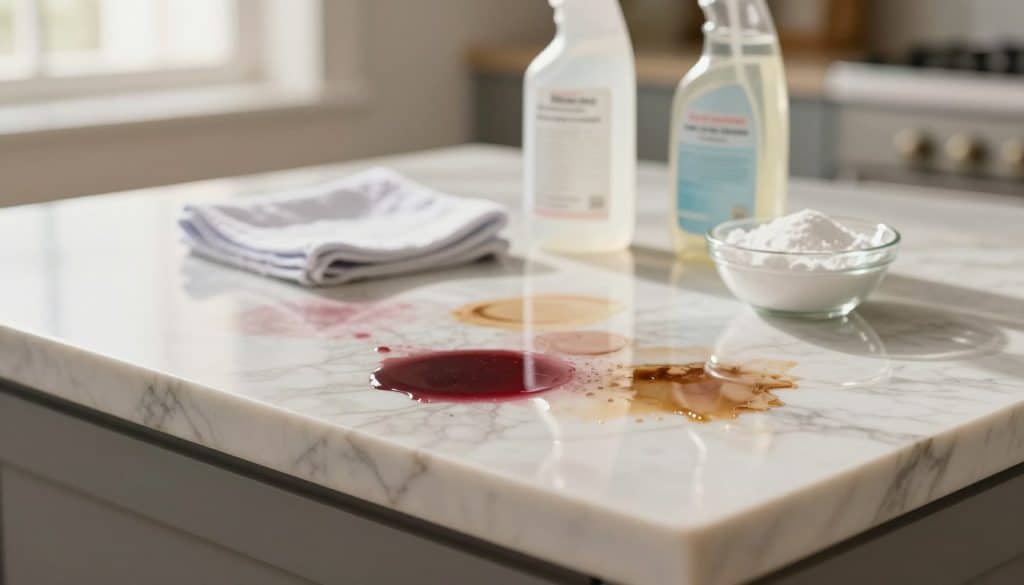
Blot first: the spill response that prevents deeper staining
Blot — don’t wipe. Press a clean cloth or paper towel to absorb liquid. Wiping spreads pigment across the surface and into pores.
Organic stains: hydrogen peroxide methods and when to add ammonia
For coffee, wine, or food, a low-strength hydrogen peroxide spot can lift discoloration. Add a drop of ammonia only if the mark won’t budge, and use in a ventilated area.
Oil-based stains: absorb-and-lift approaches using baking soda or similar
Cover the oil mark with baking soda or corn starch. Make a gentle paste with a little water or hydrogen peroxide, apply, then let sit before wiping.
Inorganic stains and poultice basics
Ink or rust may need a poultice — a thick, absorbent compound that draws the stain out as it dries. Apply, cover, and let the poultice pull the stain over several hours.
Test first and call a pro when unsure
Always test methods in an inconspicuous spot. If a stain resists or the finish looks at risk, pause and contact an experienced stone pro. We’re happy to help protect your investment.
Fixing water spots, dullness, and etching on marble surfaces
Small rings and dull patches can make a beautiful slab look tired — often you can revive it yourself.
Diagnose first. Water rings and spots often mean moisture sat on the surface. Etching looks like ghosted, matte areas that won’t wipe away.
Buffing for light marks
Work on a clean, dry area. Use a soft cloth and circular strokes. Keep pressure even so the sheen stays uniform.
- Use a fresh microfiber — dirt can scratch.
- Gentle, repeated passes lift water spots and minor surface haze.
- Stop and inspect often; you want gradual improvement, not removal of finish.
When professionals are best
Deep scratches or broad etching need restoration. Pros re-hone and re-polish the top layer, restoring true finish — they aren’t covering issues up.
Realistic note: gentle buffing helps small marks. For wide damage, calling a stone pro protects long-term value and keeps your clean marble looking great!
Sealing and maintenance to keep marble looking new for years to come
A well-sealed surface is your countertop’s best defense against everyday spills and stains. Sealing slows absorption, gives you time after a spill, and makes daily maintenance easier. Sealants make marble stain-resistant, not stain-proof, so good habits still matter.
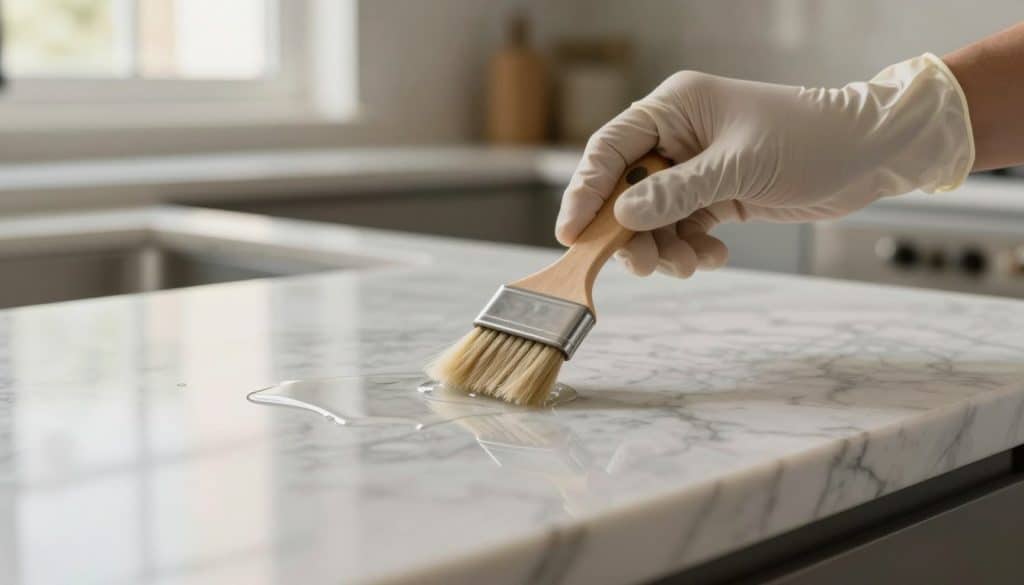
Water-drop test that shows if a sealer is working
Place a few drops of water on the countertop and watch for a minute. If the drops bead, the sealer is working.
If the stone darkens or absorbs the water, plan for resealing soon. Repeat this quick check across the surface in several spots.
Sealing frequency for busy kitchens and high-use areas
Frequency depends on use. A kitchen or bar that sees daily use may need an annual touch-up in heavy zones.
Most homes benefit from professional sealing every 3–5 years. High-traffic areas in your area may need attention more often.
Protection habits that really work
- Use coasters for drinks and trivets for hot pans.
- Always cut on a board, not the stone.
- Wipe spills quickly—short actions save years of damage.
Our Craftsmanship, Your Vision: pair smart sealing with simple maintenance and your marble countertops will stay beautiful for years come. If you need a care plan or stone selection advice in the Minneapolis area, we’re here to help.
Local help in Minneapolis for stone countertop care and replacement
For homeowners and property managers in the Twin Cities, hands-on stone expertise is one call away. Rock Solid Tops pairs local service with decades of skill so your surfaces get the attention they need.
Rock Solid Tops: craftsmanship-first granite, quartz, and stone
Our Craftmanship, Your Vision guides every project. We’ve spent 30+ years fabricating and installing granite, quartz, and other stone for homes and commercial sites. We focus on clean lines, tight fits, and finishes you’re proud to show.
Free estimate and on-site design help
We visit your home or job site, help pick the best material, and offer free estimates for small remodels through large buildouts. We handle residential kitchens and multi-unit, senior living, and restaurant projects with prompt, professional service.
Fast turnaround and service area
- GET YOUR NEW COUNTERTOPS INSTALLED IN AS LITTLE AS ONE WEEK AFTER MEASURING.
- Service area: Minneapolis, St. Paul, and within an hour of the Twin Cities.
- Prompt fabrication and installation keep your schedule on track.
Ready for expert help? Schedule your free estimate today at (612) 270-4239 or info@rocksolidtops.com. We’re here to maintain, restore, or replace stone surfaces with care and speed.
Conclusion
Gentle habits and prompt action save hours of repair work later. Use a mild soap solution and a soft cloth for routine care. Rinse, dry completely, and buff with light circular passes to keep surfaces bright.
Fast spill response, avoiding acids like vinegar, and skipping abrasive scrubs are the biggest guards against stains and dull patches. Watch for standing water; leftover moisture can leave marks if ignored.
For routine messes use the right solution. For set-in marks, consider targeted stain methods or professional restoration. We’re Rock Solid Tops — Our Craftmanship, Your Vision.
If you’re in Minneapolis or nearby and want help with stone care or replacement, call (612) 270-4239 or email info@rocksolidtops.com. We can install new surfaces in as little as one week after measuring!