
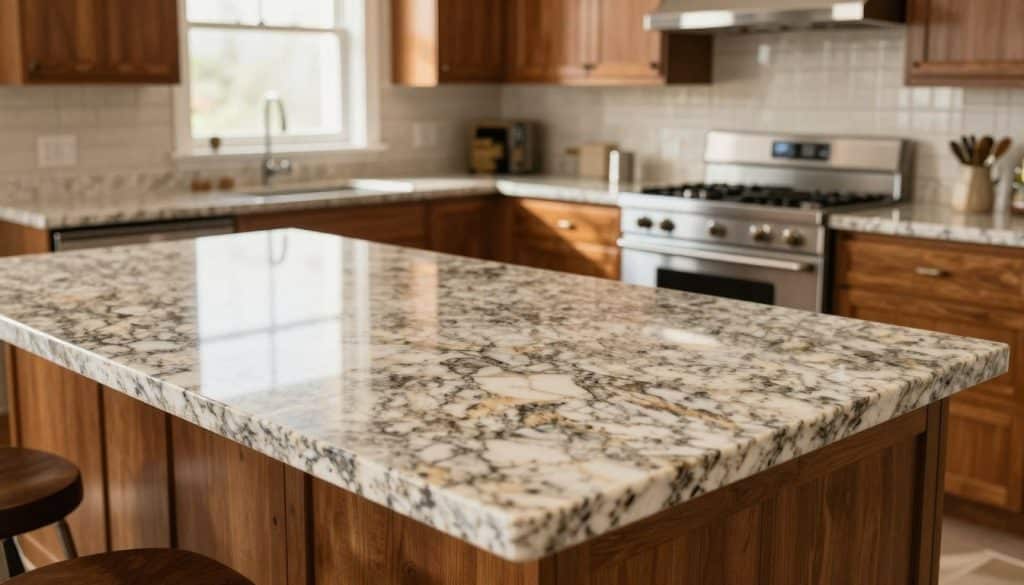
Looking for a rock-solid surface that looks great, fits your budget, and won’t become a maintenance headache when choosing between quartz countertops versus granite?
We’re Rock Solid Tops — Our Craftmanship, Your Vision. For over 30 years we’ve been fabricating and installing granite and quartz surfaces for kitchens, baths, and workspaces across Minneapolis, MN and surrounding areas.
In this practical, side-by-side guide we’ll show how engineered stone and natural stone differ in makeup, porosity, heat tolerance, maintenance, and long-term wear. This isn’t about naming a single winner. It’s about matching the right material to how you live and work.
We pride ourselves on clear answers and fast service. In many cases you can get your new countertop installed in as little as one week after measuring. Call (612) 270-4239 or email info@rocksolidtops.com to schedule a free estimate. We’ll help you pick the best choice for your home and vision.
Key Takeaways
- We bring 30+ years of hands-on fabrication and installation experience.
- Natural stone and engineered stone differ in maintenance and appearance.
- Expect fast turnaround—often installation within one week after measuring.
- We guide design choices on-site and handle precise fabrication.
- Contact us for a free estimate: (612) 270-4239 or info@rocksolidtops.com.
Granite vs. quartz countertops at a glance for Minneapolis homeowners
Deciding on a new surface means balancing looks, maintenance, and real-world use. For Minneapolis and St Paul homes, daily habits and weather matter. Kitchens see heavy use. Bathrooms face humidity. Workspaces need easy cleanup and a professional look.
Why the choice matters:
- Appearance: natural stone offers one-of-a-kind movement; engineered stone gives consistent color and pattern.
- Maintenance: quartz countertops are typically non-porous and wipe down fast, while granite countertops need sealing to resist stains and bacteria.
- Performance: granite handles higher heat; quartz has temperature limits but resists staining well.
Quick at-a-glance: granite = 100% natural slab. quartz = engineered stone made from about 92–94% quartz chips plus resin. These material differences change seams, uniformity, and long-term wear.
For busy family kitchens, rentals, powder rooms, and home offices we’ll help you weigh appearance, durability, seams, and cost. Our Craftmanship, Your Vision—we serve Minneapolis, St Paul, and areas within an hour of the Twin Cities for projects small and large.
Once you understand what each material is made of, the rest of the differences make a lot more sense.
What granite and quartz countertops are made of
Understanding what’s in each surface helps you make fewer surprises. We’ll keep this simple and practical so you can plan for cleaning, seams, and heat.

Granite: a 100% natural stone slab
Granite is a true, solid rock pulled from quarries in large blocks. Fabricators cut those blocks into polished slabs that show natural movement and color shifts.
Why it matters: each slab is unique. That beauty can mean visible seams and variation across runs.
Engineered slabs made from quartz chips
Engineered surfaces are manufactured from about 92–94% quartz chips mixed with resins and pigments. The result is a consistent, non-porous slab that cleans easily.
Why it matters: uniform patterning means fewer surprises when you order matching pieces for an island and backsplash.
How composition affects porosity, uniformity, and performance
- Porosity: natural stone absorbs more; sealing reduces risk. Non-porous engineered slabs resist stains from day one.
- Uniformity: granite natural pieces vary; engineered runs stay consistent.
- Fabrication: hardness, resin content, and patterning guide how we plan seams and cutouts for sinks and cooktops.
Knowing this makes selection easier. Next, we’ll cover appearance, color choices, and how to pick the right slab for your project.
Quartz countertops versus granite: appearance, colors, patterns, and slab selection
Choose a look that matches your home: bold natural movement or clean, repeatable patterning. We’ll walk you through what to expect so your final kitchen matches your vision.
Unique veining and natural variation in granite slabs
Granite natural stone offers dramatic veining and one-of-a-kind grain. Each slab is unique, so a small sample may not show the full pattern.
That natural movement creates a high-end look. But it can make seams more visible if the grain doesn’t line up.
Consistent color options and modern looks in quartz surfaces
Engineered slabs give steady color and repeatable patterns. If you want matched runs, clean lines, or a uniform island, this is the safe choice.
Quartz countertops provide many colors and patterns, so you can plan a seamless, modern look with less surprise.
Samples vs full slabs, and seam visibility
Always view the actual slab when possible. A sample can’t reveal full veining, depth, or where seams will fall.
- Granite: dramatic, variable, may show seams.
- Quartz countertop: consistent, easier seam blending.
- Designer tip: pick dramatic movement or calm minimalism to pair with cabinets and floors.
We come to your home to help you narrow colors and patterns, lay out slabs, and plan seam placement. That protects the look you’re paying for and brings your vision to life.
Cost per square foot installed: granite vs. quartz in the United States
A practical budget begins with understanding typical per square foot installed costs nationwide. That helps you plan and pick the right design and options without surprises.
Typical installed price ranges and why they overlap
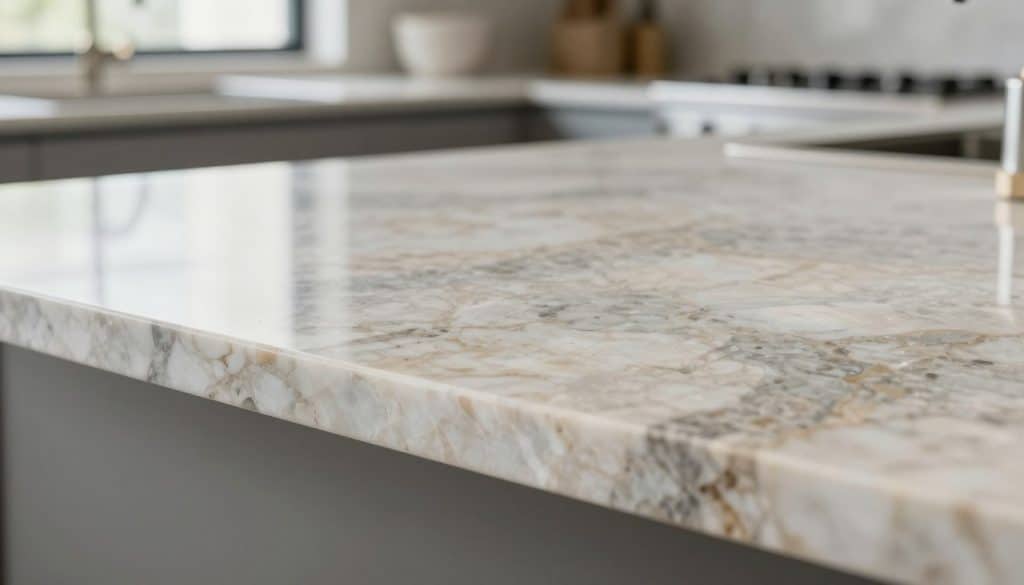
Installed pricing often runs about $80–$140 per square foot for engineered slabs and roughly $80–$175 per square foot for natural stone. These ranges overlap because entry options and exotic choices exist in both families.
What drives pricing: slab rarity, transport, and fabrication
Costs rise when a slab is rare, imported, or needs long-distance shipping. Complex cuts, premium edge profiles, and holes for sinks or cooktops add labor and cost.
Budget planning beyond the slab
- Cutouts for sinks and cooktops — add per square or per opening charges.
- Edge profiles and waterfall panels — more detail increases cost.
- Backsplash runs and special support or framing — plan these into total installation costs.
We’ll walk your space, measure precisely, and help you compare per square foot totals. After measuring, we can often fabricate and install in as little as one week, keeping your project on time and on budget.
Durability and daily performance in real kitchens
Picture a busy Tuesday night: pots on the stove, kids doing homework at the island, and a spill to clean up. Which surface keeps your kitchen running and still looks great the next day?
Scratch and chip resistance
Granite is naturally very hard and resists scratches and chips from heavy use.
Quartz blends stone and resin, which adds slight flexibility and helps absorb everyday knocks. Both hold up well with common kitchen habits like chopping and meal prep.
Stains, bacteria, and easy cleaning
Quartz is non-porous, so spills wipe off fast and germs have fewer places to hide. That makes quick cleanup a real advantage for busy families.
Granite performs well when sealed regularly. Skipping sealing raises the chance of stains and bacterial growth, so planned maintenance matters.
Heat limits and sunlight
Heat is a real factor. Granite tolerates very high temps. Quartz handles typical pans but has a lower threshold—use trivets to be safe.
Direct sun can fade engineered surfaces over years. If your kitchen gets strong UV, we’ll help you plan placement or finishes to reduce long-term discoloration.
- Simple habits: use cutting boards, wipe spills promptly, and avoid placing hot pans directly on the surface.
- We’ll ask: how you cook, where light falls, and how much traffic you expect—so your new top matches real life.
Maintenance and care requirements over time
Every surface needs a little attention; the real question is how much time you want to spend on upkeep. We help you pick based on lifestyle so you don’t get surprised down the road.
Sealing granite countertops: what it is and how often it’s needed
Sealing is a simple protective barrier applied to a porous, natural material so it resists absorbing liquids and stains.
Most granite countertops are sealed before use and typically need resealing every 1 year. In many homes the interval can stretch to 1–3 years depending on use and product.
If sealing is ignored, stains and dark spots from oils or wine become more likely and cleaning takes more time.
Quartz countertop cleaning basics for low-maintenance households
Engineered surfaces are non-porous, so no sealing schedule is needed. Clean with a soft cloth, mild soap, and water. Wipe spills quickly.
- Do: use cutting boards, trivets, and gentle cleaners.
- Don’t: use harsh chemicals or place hot pans directly on the top.
- Tip: choose based on how much daily maintenance you want to spend.
We’re prompt and professional. Rock Solid Tops explains care up front so your chosen countertop materials match your household and save you time over years.
Which countertop material fits your project best?
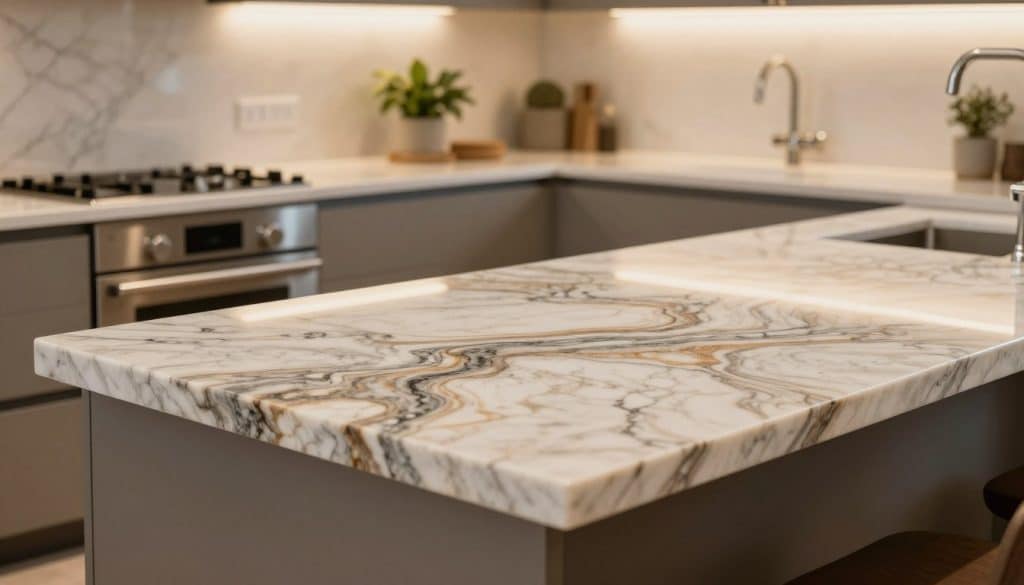
Match the material to how you cook, clean, and live so your new surface works from day one. We’ll make the decision simple by scenario so you don’t translate technical details into guesswork.
Best choice for heavy cooking and frequent hot pans
Granite excels where heat tolerance matters. For active kitchens and home chefs, its natural stone makeup handles hot pans with less worry. Choose this when high-heat use is common and style with natural movement matters.
Best choice for busy families who want easy cleanup
Quartz offers non-porous surfaces that wipe clean fast and need no sealing. If kids, spills, and tight schedules rule your life, this choice reduces chores and protects against stains.
Best choice for bathrooms and high-humidity spaces
Non-porous material is comforting in baths and powder rooms. Sealed natural stone also works well when installed and maintained correctly. Pick based on design and how much maintenance you want.
Best choice for restaurants, apartments, senior living, and commercial buildouts
- Repeatable runs and easy maintenance: favor non-porous engineered slabs for multi-unit projects and tight timelines.
- Aesthetic impact: choose natural slabs when unique character is a selling point for restaurants or upscale spaces.
- We handle both: small remodels to multi-unit apartments, senior living, and commercial buildouts with on-site design help, fast fabrication, and installation across Minneapolis–St Paul.
Conclusion
Ready to choose a surface that balances daily use, style, and long-term value?
Core takeaway: both quartz and granite are premium options. The real decision ties composition—natural stone vs engineered stone—to how you cook, clean, and live.
Keep in mind: installed cost per square foot often overlaps, so pick the slab and colors you love and the maintenance level you’ll keep up with. Sealing matters for natural material; temperature limits and UV exposure matter for quartz.
We bring 30+ years of experience, prompt professional installation, and fast turnaround—often installed in as little as one week after measuring.
Our Craftmanship, Your Vision. Schedule a free estimate: (612) 270-4239 or info@rocksolidtops.com. We serve Minneapolis, St Paul, and areas within an hour of the Twin Cities.