
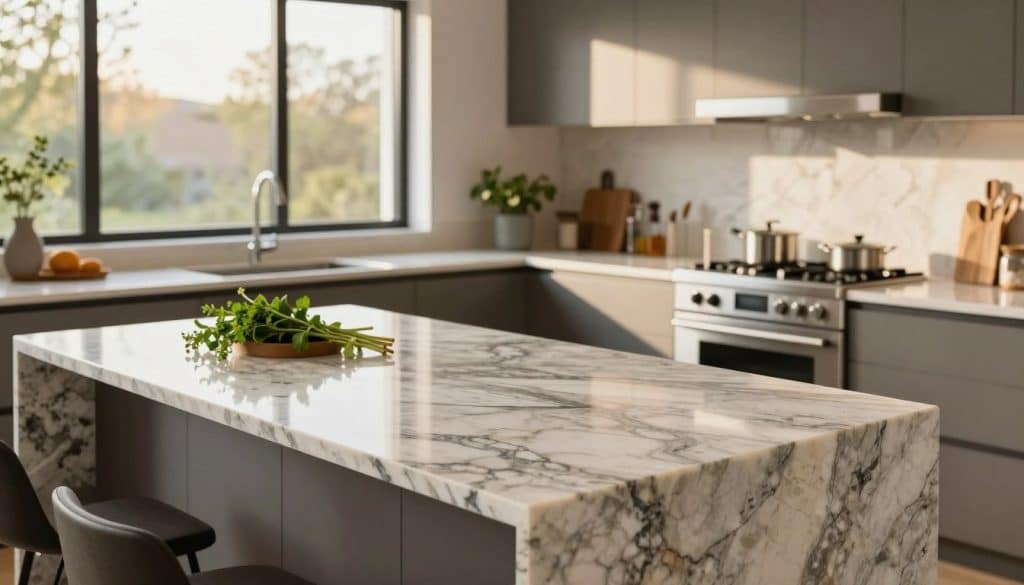
Curious how a natural slab can give you marble-like beauty and hold up to daily life? That big question leads our guide and it matters when you want lasting style in your home.
We introduce Rock Solid Tops with our tagline: “Our Craftmanship, Your Vision.” With 30+ years fabricating and installing, we help Minneapolis-St Paul clients move from idea to install fast—sometimes in as little as one week after measuring.
Formed from quartz-rich sandstone under heat and pressure, quartzite is a natural stone prized for its marble-like design and strong durability. It often needs periodic sealing, but it performs well in busy kitchens and high-use areas.
In this guide you’ll get clear, practical answers: how quartzite forms, how it compares to quartz, what it looks like, daily care, pricing factors, and the installation process. We put your vision first and guide you through slab selection, fabrication, and a professional install.
Promise: durable surfaces, clean details, and a finished space you’ll be proud to show off.
Key Takeaways
- Quartzite pairs high-end looks with real durability for everyday life.
- We offer fast, expert service in Minneapolis and nearby areas.
- Expect clear guidance on performance, care, and cost.
- Periodic sealing keeps the stone looking its best.
- Our process prioritizes your vision from slab to install.
What Is Quartzite Countertop?
We’ll explain the geology behind a strong, beautiful kitchen surface and what it means for you. Quartzite is a natural stone formed from quartz-rich sandstone that underwent intense heat and pressure deep underground. That metamorphic process fuses grains into an interlocking crystal structure.
The result is a dense rock that typically contains about 90%–99% quartz. High quartz content gives notable hardness and scratch resistance, often rating near 7 on the Mohs scale.
- Definition: a slab cut from quarried stone, not a factory-made blend.
- Formation: sandstone + heat + pressure → fused crystals and greater density.
- Performance: durable material for countertops, but porous variation means occasional sealing.
We keep it practical: every slab varies, finishes affect porosity, and simple care preserves long-term wear. Visit a showroom knowing slab, finish, porosity, and hardness—terms that help you choose with confidence.
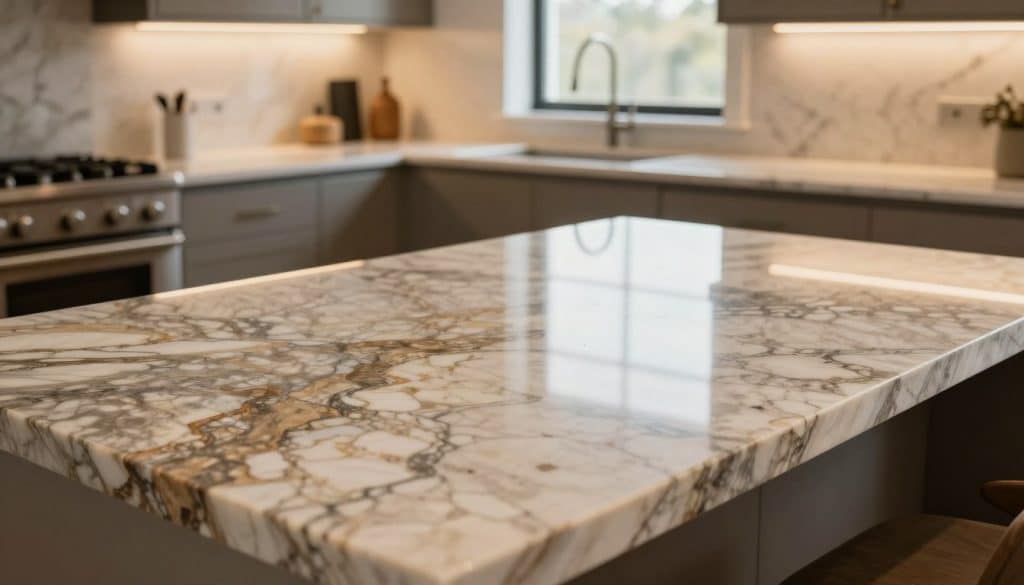
Quartzite vs Quartz: Key Differences Homeowners Should Know
Let’s cut through the confusion: these two materials share similar names but act very differently in kitchens. We’ll compare composition, heat performance, stain risk, and visual consistency so you can choose with confidence.
Natural stone vs engineered surface
Engineered quartz blends about 90% ground quartz with resins and pigments. That mix creates a nonporous, uniform surface that rarely needs sealing.
Natural quartzite forms underground into a crystalline slab. It handles heat well and can be refinished, but many varieties need periodic sealing to lower stain risk.
Performance and daily care
- Heat resistance: natural stone wins for direct heat near range tops.
- Stain risk: sealed quartz performs well; unsealed quartzite can absorb spills.
- Repairability: quartzite can be honed or repolished; engineered surfaces may chip but are not refinished the same way.
In short: choose quartz if you want consistent color across large runs. Pick quartzite for unique veining and strong heat resistance. We’ll help you match material to your lifestyle and cooking habits!
Quartzite Appearance, Colors, and Finish Options
A slab’s look can make a kitchen sing, and quartzite brings deep, glassy sparkle with bold veins.
Homeowners fall for marble-like veining that pairs with a crystalline sheen. That glassy depth gives movement and a bright, layered look when light hits the surface.
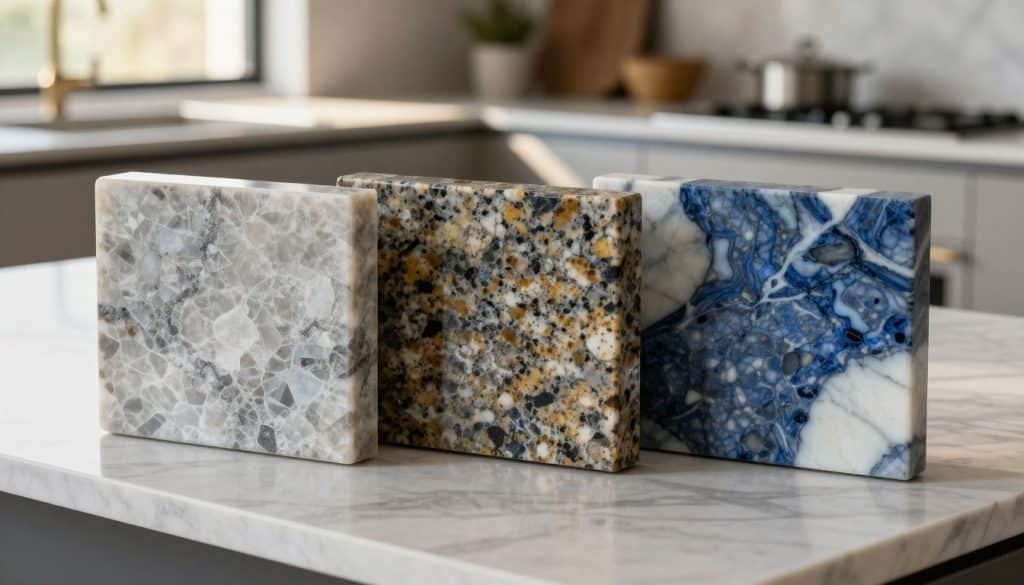
Trace minerals create the palette. Iron oxides add warm reds and golds. Chlorite brings soft greens. Dumortierite can yield rare blue tones.
Finishes change both look and upkeep. A polished finish ups the shine and wipes clean easily. Honed surfaces soften reflections for a matte feel. Leathered surfaces add texture and hide fingerprints.
- Polished: high shine, easier wipe-downs.
- Honed: low gloss, hides light scratches.
- Leathered: textured, camouflages smudges.
Slab-to-slab variation is the point of natural stone. View and approve the exact slab so the most striking veins land where you want them—on the island or a focal backsplash.
We’ll help you match slab movement and finish to your design and daily life so there are no surprises on install day.
Durability and Performance in Real Kitchens
In busy kitchens, performance matters as much as looks. We’ll translate lab numbers into everyday use so you know what to expect.
Hardness and scratch resistance in daily use
The stone rates near Mohs 7, which means excellent hardness and scratch resistance. In plain terms: it stands up to forks, pans, and regular traffic. Still, use cutting boards for sharp blades to protect both tools and the slab.
Heat resistance for cooking zones and busy countertops
This material handles direct heat better than many alternatives. Hot pans placed briefly rarely damage the surface. For safety and longevity, we recommend trivets near ranges and under hot cookware.
Porosity, water absorption, and temporary darkening
Porosity varies by variety; some pieces are more absorbent. Water can wick in and cause brief darkening around sinks or wet zones. That dark patch usually fades as the water dries.
- Durability tips: seal regularly and wipe spills promptly.
- Edge choices: round or eased edges reduce chip risk in high-traffic spots.
- Maintenance: pick a finish that fits daily life—polished for easy cleanup, textured for hiding marks.
We balance honesty with optimism: this is a high-performance stone, but each slab behaves slightly differently. Talk to our fabricators so your selection matches how you cook and entertain!
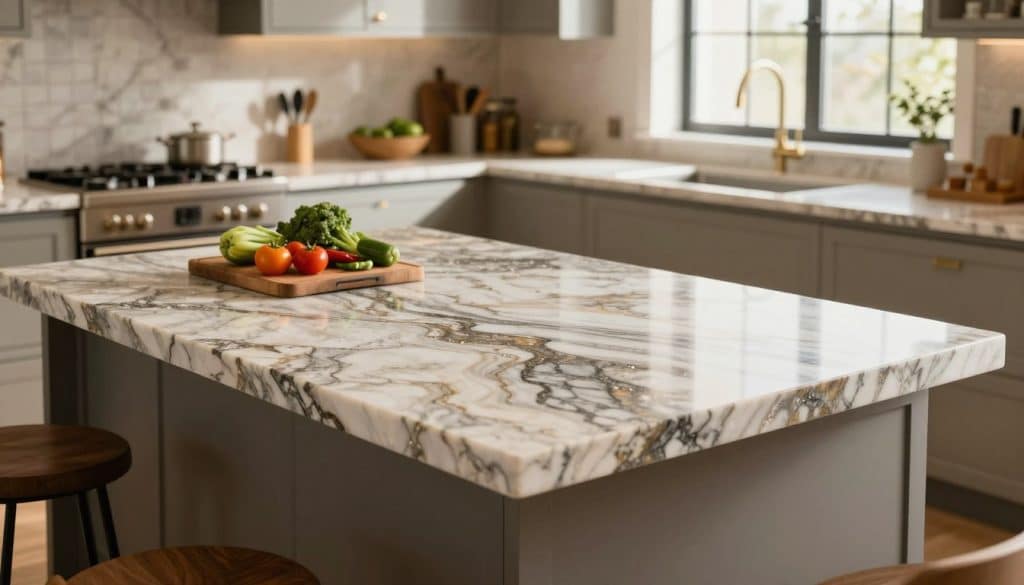
Does Quartzite Need Sealing and How Often?
Most natural slabs benefit from a simple sealing routine to guard against spills and stains. Yes—raw stone tends to be porous and can absorb liquids if left unprotected.
Why many slabs absorb water
Porosity comes from the stone’s formation process and the minerals it contains. That tiny pore network lets water and oils sink in, which can cause temporary darkening or stains.
When to reseal and the easy water-bead test
We recommend resealing about once a year for most installations. Some denser materials stretch to 18 months; others need attention at six months under heavy use.
Drop a few water beads on the surface. If beads sit, the sealer works. If the water darkens and soaks in within minutes, it’s time to reseal.
Best products and daily habits
- Use impregnating sealers: they sink in and protect pore walls.
- Avoid topical “wet-look” coatings: they can peel and cause problems.
- Wipe spills quickly, especially oils and dyes, and give honed or leathered finishes extra care.
How to Clean Quartzite Countertops Without Damaging the Surface
Keeping a natural stone surface clean starts with simple daily habits that respect the sealer and finish. We recommend a gentle, repeatable routine so the slab stays beautiful and functional.
Everyday cleaning with mild soap and water
Use warm water, a few drops of mild dish soap, and a soft cloth. Wipe, then dry quickly to prevent water spots. A soft touch prevents scratches and preserves the sealer.
Disinfecting safely while protecting the sealer
Mix 70% isopropyl alcohol with water for occasional disinfecting. Spray lightly and wipe—don’t soak the surface. Avoid bleach or acidic cleaners that can strip protection.
Stain response: wine, oil, and tomato sauce
- Blot spills fast—dabbing reduces absorption.
- For oil or wine, clean with mild soap then dry; persistent marks may need a poultice.
- Acidic sauces: wipe promptly to limit surface change; reseal sooner if spots appear.
When to use a poultice and when to call a stone professional
A poultice is a paste that pulls absorbed discoloration out over 24–48 hours. Try it for stubborn stains, but stop if the stain lingers. Call a stone pro to avoid damaging premium materials or the finish.
Common Quartzite Myths and the Mislabeling Problem
Before you sign off on slabs, learn two quick checks that protect your investment. Mislabeling in the stone trade happens, and it changes how surfaces wear and age.
Why some slabs are actually marble or dolomite: Sellers sometimes market calcite-rich rock as premium quartzite. That matters because calcite-based marble can etch from acids and needs different care than harder materials.
Scratch test — glass check
Ask to test an out-of-the-way spot against a glass edge. True quartzite has enough hardness to scratch glass. If the slab won’t mark the glass, you may be looking at a softer stone.
Acid test — lemon or vinegar
Apply a tiny drop of vinegar or lemon juice to an inconspicuous area. Real quartzite stays unchanged. If the surface dulls or etches, that signals calcite content like marble or dolomite.
- Mislabeling affects long-term appearance and care.
- Two quick checks help buyers and people making final slab choices.
- We’ll guide you through verification so your countertops perform as promised.
Quartzite Compared to Granite and Marble
Choosing between the big three natural stones can feel overwhelming in a busy showroom. We’ll give a clear, practical comparison so you match looks and performance to your daily life.
Hardness, sealing, and long-term wear
Quartzite typically ranks very high for hardness and resists scratches better than many alternatives. Granite varies by deposit; some slabs are nearly as hard, others less so.
All three materials benefit from sealing. Many granites are porous and need regular sealing. Proper care keeps any slab performing for decades.
Etching resistance and kitchen practicality
Marble is famous for etching from acids like lemon or vinegar. If you cook often, marble needs close attention.
The quartz-based option offers stronger chemical resistance and better daily practicality while still giving elegant veining.
Choosing for design and lifestyle
- Heavy cooking and family life: choose the toughest surface you can afford.
- Entertaining and commercial use: favor low-maintenance, hard-wearing material.
- Showpiece kitchens: marble works if you accept extra care and graceful aging.
We help you weigh durability, maintenance effort, and design so your countertops look great for years—and fit how you live!
Quartzite Slabs, Cost Factors, and What Impacts Your Final Price
Accurately budgeting your project starts with knowing which factors move the price dial. Prices for premium stone often run about $60–$100+ per sq ft for material only. Rarity, veining, and demand push some slabs above that range.
Fabrication and installation raise the total. Thicker pieces, complex edges, extra seams, and sink or cooktop cutouts take more time and tooling. A waterfall detail looks dramatic but requires extra planning and labor.
- Slab size & seams: more seams mean higher labor and waste.
- Thickness & edges: 3cm and ornate profiles increase cost and weight.
- Cutouts & layouts: islands, curves, and waterfall work add installation time.
Harder stone lengthens the process. While quartz can be shaped more easily thanks to resins, natural stone demands tougher tooling and care. That affects the final invoice.
Looking to save? Consider granite for value or quartz countertops for consistent color and lower upkeep. Get a site-specific quote—every project varies, and a tailored estimate avoids surprises!
Quartzite Countertop Installation in Minneapolis, MN: What to Expect with Rock Solid Tops
Fast timelines don’t have to mean rushed work; we pair speed with careful craftsmanship. With more than 30 years fabricating and installing stone, we guide your project from design to the final wipe-down.
GET YOUR NEW COUNTERTOPS INSTALLED IN AS LITTLE AS ONE WEEK AFTER MEASURING. We offer in-home design help, precise templating, shop fabrication, and a clean professional install.
- Start-to-finish process: design consult, measuring/templating, fabrication, installation.
- Material guidance: we help you choose between quartzite, granite, and quartz countertops based on use and upkeep.
- Slab planning: seam placement, sink and cooktop cutouts, and edge profiles for an intentional result.
- Project types: small remodels, full kitchen installs, and commercial buildouts across multi-unit and hospitality jobs.
- Service area: Minneapolis–St. Paul and anywhere within about an hour drive of the Twin Cities.
We’re prompt, professional, and committed to your vision. Our Craftmanship, Your Vision. Schedule a free estimate at (612) 270-4239 or info@rocksolidtops.com.
Conclusion
Here’s a short, practical recap to guide your next step toward a beautiful install.
Quartzite is a natural stone made of roughly 90%–99% quartz. It offers strong heat resistance, can be refinished, and usually needs periodic sealing to guard against stains.
By contrast, quartz is engineered with resins and pigments. That makes quartz countertops nonporous and color-consistent, though they can be more heat sensitive.
Mislabeling happens—verify slabs before you buy. Cost and installation vary by slab, edge, and layout, so get an exact quote for your plan.
Our Craftmanship, Your Vision. With 30+ years serving Minneapolis, we can measure, fabricate, and install fast—often in one week. Schedule a free estimate at (612) 270-4239 or info@rocksolidtops.com.