
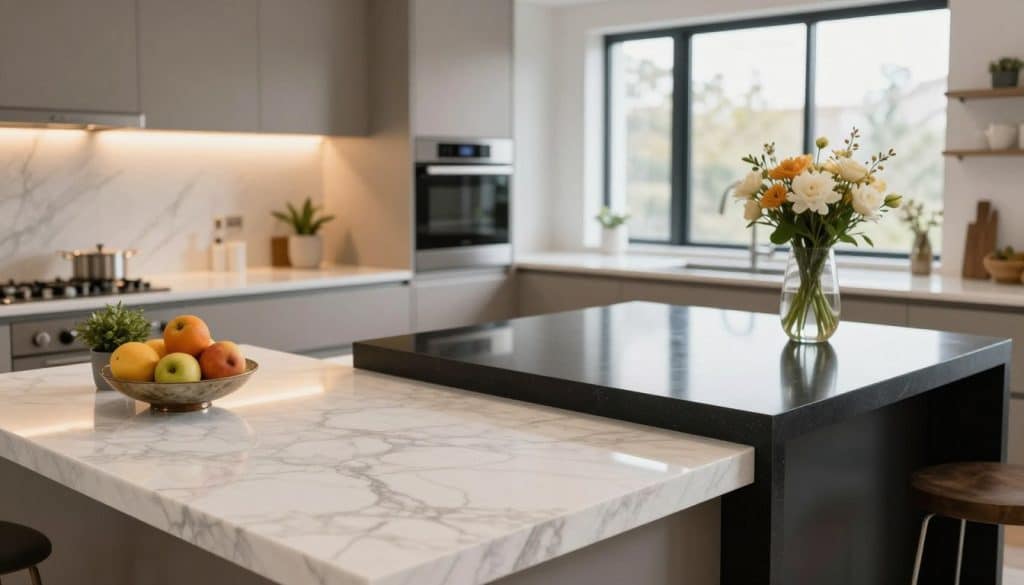
Rock Solid Tops — Our Craftsmanship, Your Vision. Ready to choose the best surface for your remodel in Minneapolis-St. Paul? Which surface gives your kitchen the signature look you want and fits your daily routine?
We’ll walk you through the real differences between marble quartz and engineered stone using clear, practical language. You’ll learn how appearance, wear, and maintenance change day-to-day life in your home.
We work with both materials and fabricate and install stone surfaces, so our advice comes from real installs — not just specs. Expect an honest comparison that points out where natural slabs shine and where engineered options win for easy care and consistent patterns.
Whether you’re planning a remodel, new build, or a commercial refresh, we’ll help you make a confident choice that fits your timeline and budget. Fast, professional installs across Minneapolis, MN and surrounding areas — that’s our promise!
Key Takeaways
- Appearance: Natural slabs offer unique veining; engineered pieces give steady, repeatable looks.
- Durability: Some surfaces scratch or stain easier; others resist daily wear better.
- Maintenance: Sealing and care vary—know what your routine should be.
- Heat & Use: Understand real heat risks and everyday resilience.
- Cost & Value: Compare upfront price and long-term upkeep to match your budget.
- Local Advantage: Rock Solid Tops offers expert guidance and quick installs in the Twin Cities.
Choosing Between Marble and Quartz Countertops for Your Home or Business
Picking the right surface for your project starts with four simple filters: look, durability, maintenance, and budget. We use these filters with every client to narrow options fast and confidently.
- Look: the style you want for your kitchen or vanity.
- Durability: how the surface holds up to daily wear and heavy use.
- Maintenance: the cleaning routine you’ll realistically keep.
- Cost: material, fabrication, and installation that fit your plan.
The best choice shifts by space. A guest bath can handle softer, high-character stone. A busy kitchen or a commercial service space needs predictable, low-upkeep materials to limit downtime.
Natural stone brings unique patterning and luxury appeal, but it asks for more care and caution—it’s porous and can stain or etch if not protected. Engineered options deliver consistent looks and easy cleaning, ideal when matching slabs or minimizing maintenance is a priority.
Quick take
Rule of thumb: choose natural character when one-of-a-kind appearance matters. Choose engineered materials when predictability, hygiene, and simple upkeep top your list. We’ll visit your site in Minneapolis and help you apply these considerations to your home or business project.
What Is Marble and Why Homeowners Love the Natural Stone Look
A slab cut from the earth brings depth and movement you simply won’t find in prints. Formed when limestone meets heat and pressure, marble is a true natural stone with a history you can see in every piece.
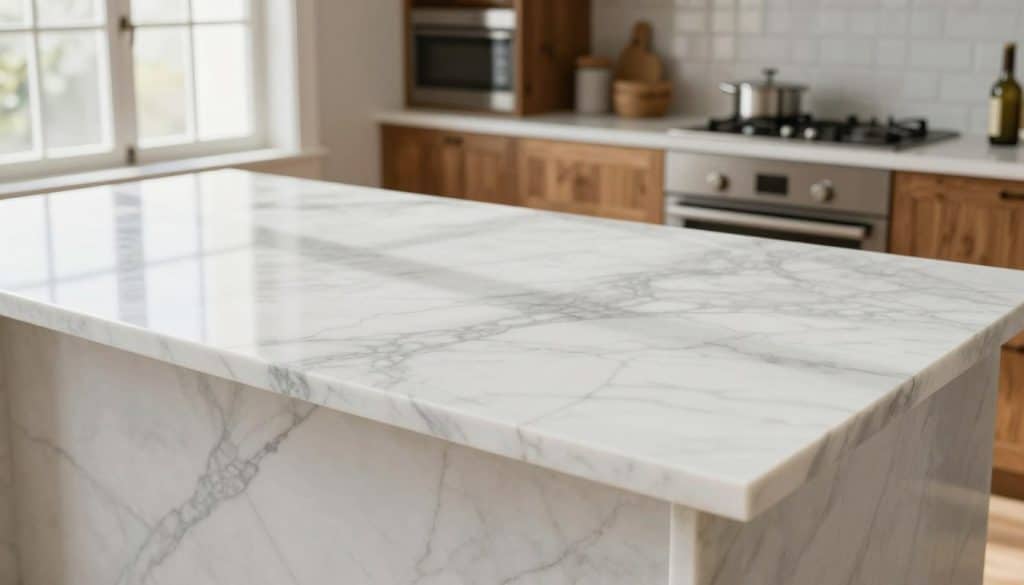
Each slab is unique. Mineral deposits create veining that ranges from delicate feathering to bold, dramatic lines. That variation gives the surface unmatched beauty and rich patterns across colors and veins.
Finish choices change the final look. A polished finish gives gloss and contrast—colors pop and veins have depth. A honed finish reads softer and more matte, lowering glare for a subtler presence in busy kitchens or baths.
- Simple definition: created from limestone over time, so no two slabs match.
- Main reason to choose it: unmatched beauty, depth, and character.
- What to expect: softer material that rewards mindful use in high-activity zones.
If you want a one-of-one centerpiece and don’t mind a bit of care, this material may be the match. We’ll help Minneapolis homeowners pick the right slab and finish during design and installation.
What Is Quartz and How Engineered Stone Delivers Consistent Designs
For long runs and matched islands, engineered quartz gives predictable results every time. Rock Solid Tops helps you pick a surface that looks like your design and stands up to daily life.
How it’s made
Quartz is an engineered stone made by combining natural quartz crystals with resins and pigments. The mix is compressed into durable slabs ready for fabrication. That mix yields a strong, non-porous material that resists stains.
Consistent patterns and wide range
Consistency matters when you need matching runs and islands. Engineered slabs offer uniform patterns and a broad color range so installations look seamless.
Get the veining look without extra care
Marble-look quartz recreates veining and depth without the sealing and acid sensitivity of natural stone. It’s a low maintenance choice for busy homes that still want a high-end look.
- Defined: engineered mix of natural quartz and binders.
- Design flexibility: solids to bold patterns across a wide range.
- Practical: easy care, durable—still use trivets for hot pans.
Marble countertops vs quartz: Appearance, Patterns, and Design Versatility
The visual story a slab tells depends on pattern, finish, and the light it lives in. We help you balance those elements so the final surface fits your layout and style.
Marble’s depth and natural variation
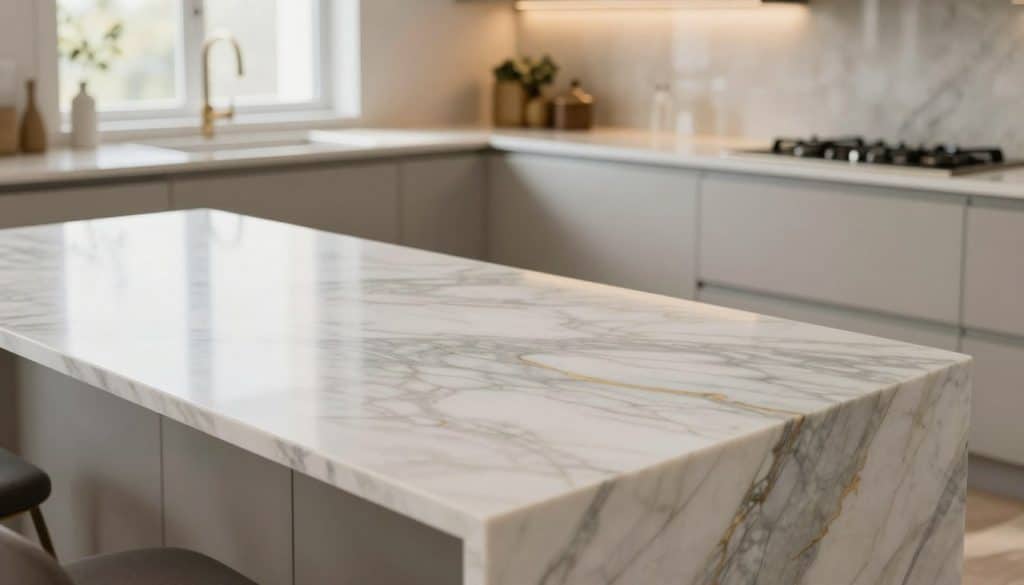
Marble brings one-of-a-kind veining and organic movement across each surface. Each slab reads differently across an island. That natural variation creates drama and timeless beauty.
Quartz color consistency for large spaces
Quartz offers even color and repeatable patterns, which makes matching multiple slabs simple for big kitchens or commercial runs. It can mimic veining while keeping a predictable look.
Style fit and lighting
Choose natural character for classic, luxurious rooms. Pick controlled patterns for sleek, modern designs. Lighting alters perception: natural light reveals depth, while under-cabinet or warm bulbs change tone and contrast.
- Movement: organic vs controlled patterns.
- Matching: quartz simplifies multi-slab runs.
- Finish: polished = more reflection; honed = softer, less glare.
We’ll visit your space, test slabs and designs against cabinets and flooring, and help you pick the surface that delivers lasting beauty and the look you want.
Durability and Daily Performance: Scratches, Chips, and Wear
Daily use exposes the real strengths and weak spots of any kitchen surface. The busiest spots—by the sink, prep zones, and coffee station—show wear first, no matter which material you pick.
Marble’s relative softness and scratches in high-traffic areas
Marble is a classic stone with beautiful character, but it is softer. Scratches appear more easily when you slide pans, use abrasive tools, or run a high-traffic home. Be realistic about wear in active kitchens.
Quartz strength and resistance to chipping and cracking
Quartz is engineered for performance. Its composition makes it highly resistant to everyday scratches and less likely to chip or crack under normal use. That’s why property managers and busy homeowners choose it for predictable durability.
Longevity expectations in busy homes and commercial buildouts
With thoughtful habits and routine care, both materials can serve for decades. For restaurants and multi-unit properties, we often recommend the tougher option to lower upkeep and downtime.
- Set expectations: High-traffic zones show use first.
- Marble tradeoff: beauty with higher scratch risk.
- Quartz advantage: durable, consistent performance.
We’ll help you match performance to how you actually use your space—not just what looks great in a showroom. Rock Solid Tops installs for real life in Minneapolis and surrounding areas, so your surface works as hard as you do.
Maintenance and Stain Resistance: Sealing, Etching, and Easy Cleaning
Every surface needs a care plan; the right routine keeps your investment looking great. We’ll explain the practical differences so you can pick a material that fits your life and cleaning habits.
Porosity and etching explained
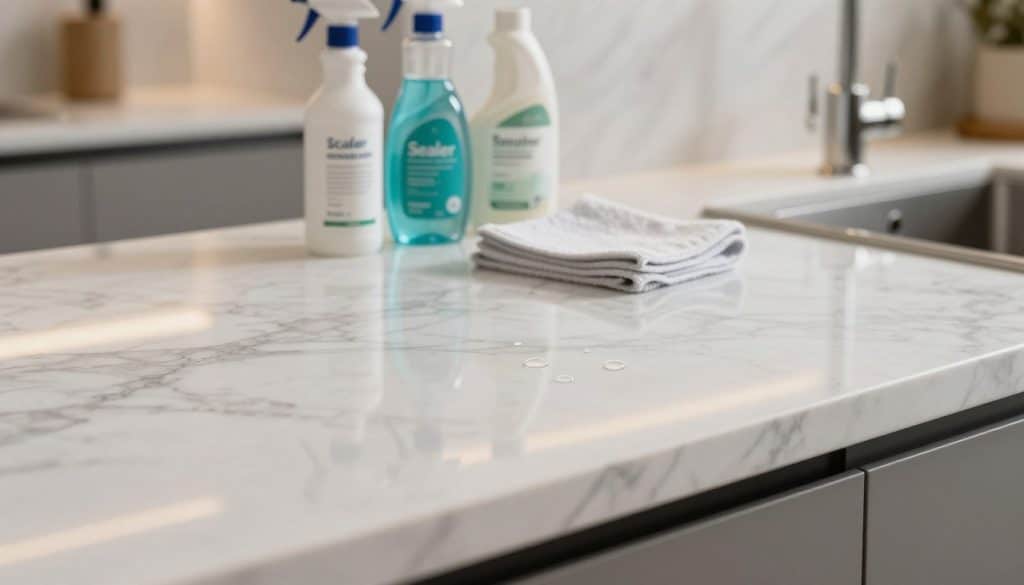
Marble is porous, so liquids can soak in and cause visible stains. Acidic spills like citrus or vinegar can also cause etching—a dull mark that looks like a stain but is actually a change to the finish.
Non-porous benefits
Quartz is non-porous and highly resistant to stains. It doesn’t need routine sealing, and daily cleaning is usually just a wipe with mild soap and water. That makes it a true low maintenance option for busy kitchens and baths.
Practical care and what to avoid
- Wipe spills quickly—don’t let liquids sit and risk staining.
- Use mild soap and a soft cloth for routine cleaning.
- Avoid harsh chemicals and abrasive pads that cause surface damage or dulling.
- Apply a professional-grade sealing schedule for marble to reduce staining risk; know it’s not foolproof.
In short: choose quartz for the easiest, most hygienic daily care. Choose marble if you love natural stone character and are willing to follow a simple maintenance and sealing plan. We’ll help you weigh that trade-off and pick the right choice for your home.
Heat Resistance and Kitchen Realities
How you cook and entertain matters more than the showroom samples. Hot sheet pans, slow cookers, air fryers and curling irons are the everyday heat events that shape real kitchen wear.
Marble performance with hot pans and temperature swings
Natural marble handles moderate heat better than many expect. Still, rapid temperature swings can stress the stone and finish. We advise care during heavy cooking to protect long-term durability.
Quartz heat limits and why trivets are still recommended
Quartz uses resins, so very hot cookware placed directly on the surface can discolor or warp the countertop. Even with tough wear resistance, you should always use trivets or hot pads.
- Everyday risks: don’t set a hot sheet pan directly on the counter.
- Simple protection: trivets, hot pads and cutting boards prevent costly repairs.
- Design considerations: if you cook often, we’ll plan work zones and seams to keep high-heat tasks away from sensitive areas.
Preventing heat damage is cheaper than repairing it. We’ll help you choose a stone and layout that match your cooking style and maintenance goals so your surface stays rock-solid for years.
Cost and Value Considerations in the United States
Knowing where your dollars go helps you pick the right surface without surprises.
Material prices in the U.S. vary a lot. Expect natural stone to commonly land around $40–$200+ per square foot. Engineered slabs typically range near $40–$150 per square foot. Those bands depend on rarity, finish, and design demands.
What drives price changes
- Slab rarity and dramatic veining raise material costs.
- Thickness, edge profiles, sink cutouts and complex layouts add fabrication time.
- Transport and skilled installation affect the final invoice.
Where the budget really goes
The material itself is only part of the story. Fabrication precision and pro installation often make up a large share of project cost. Custom edges, seams, and appliance cutouts add labor and time.
Resale notes: Some buyers prize luxury natural surfaces for their wow factor, while many prefer practical, low-maintenance quartz for daily durability. Both can raise perceived home value when matched to style and use.
We keep it transparent. Call Rock Solid Tops for a free estimate in Minneapolis, MN — we’ll review options and help you balance look, durability, and budget.
Installation Process and Timeline with Rock Solid Tops in Minneapolis, MN
From the first measure to the last polish, we run a tight, transparent installation process that minimizes disruption. Our Craftmanship, Your Vision. Get your new countertops installed in as little as one week after measuring!
How the process works
We measure your space, help you pick a slab or quartz design, then fabricate with precision. Our team does edging, cutouts, and a careful set and seal. Finally, we complete a quality check so the surface is ready for daily use.
What we handle
- Remodels and single kitchen installs
- Multi-unit apartments and senior living
- Restaurants and commercial buildouts
Design guidance and service area
We come on-site to advise on edge profiles, finish, and lighting so the final look fits your home or business. With 30+ years in stone fabrication and installation, we plan seams and details for a premium result.
Service: Minneapolis–St. Paul and about an hour around the Twin Cities.
Schedule your free estimate: (612) 270-4239 | info@rocksolidtops.com
Conclusion
Deciding on a surface comes down to how you live, cook, and clean every day.
Marble offers one-of-a-kind beauty and natural veining but asks for regular maintenance and careful use. Engineered quartz gives consistent look, strong durability, and easier care for busy households.
The best choice depends on your lifestyle: active kitchens need low-upkeep products; quieter spaces can showcase natural character. Seeing samples in person makes the decision simple.
We’ll match your design vision to the right material and layout. Our Craftmanship, Your Vision. Call Rock Solid Tops for a free estimate in Minneapolis, MN — (612) 270-4239 or info@rocksolidtops.com.