
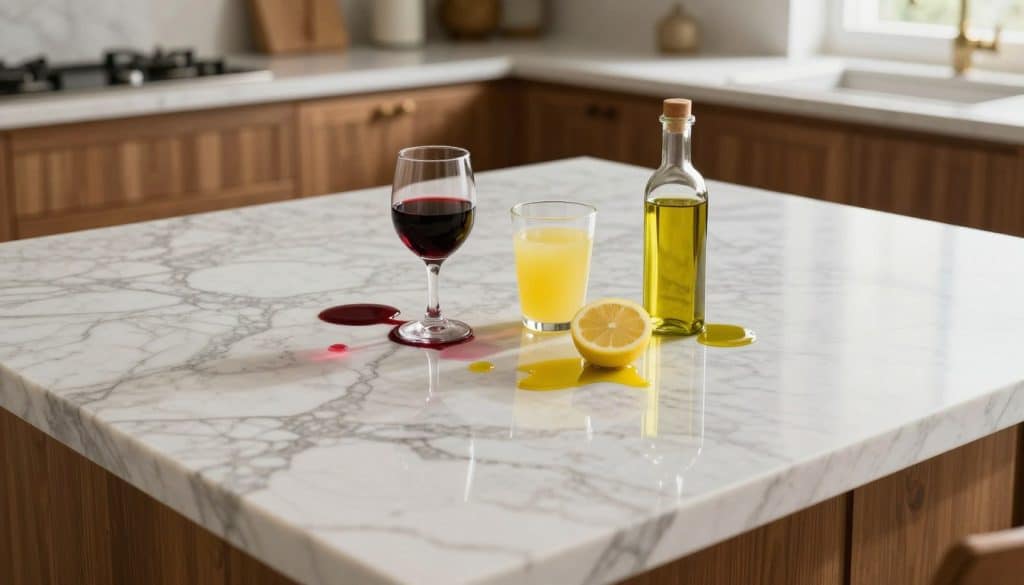
Have you ever wondered, will marble stain when daily life meets your countertops?
We’re Rock Solid Tops, Minneapolis area experts with 30+ years fabricating and installing granite, quartz, marble, and other natural stone. Our Craftmanship, Your Vision guides every step. Call (612) 270-4239 or email info@rocksolidtops.com for a free estimate — service throughout Minneapolis–St. Paul and within an hour of the Twin Cities.
Marble isn’t fragile, but it’s particular. It reacts and absorbs, so coffee, wine, and metal can leave visible stories. Some marks are true stains; others are etching from acids.
We love the classic look and we’ll be honest about care. In this guide we explain why discoloration occurs, the tradeoffs between honed and polished finishes, how porosity affects results, simple daily habits to protect surfaces, and safe DIY fixes for common marks.
If you’re choosing countertops or dealing with an ugly mark, call (612) 270-4239 or email info@rocksolidtops.com for straightforward advice and fast installation—often within a week after measuring.
Key Takeaways
- We provide local expertise and quick turnarounds: Our Craftmanship, Your Vision.
- Know the difference: discoloration versus etching matters for repair.
- Finish choice (honed vs. polished) affects appearance and care.
- Simple daily habits cut risk of common stains.
- Contact us for a free estimate: (612) 270-4239 or info@rocksolidtops.com.
Why Marble Stains Happen on Natural Stone Surfaces
Understanding how natural stone behaves helps you protect your counters. We explain the two main causes so you can choose the right care and finishes for your lifestyle.
Marble is particular: absorption and reactions
Marble is porous and made largely of calcium carbonate. That means it can absorb liquids and react chemically with acids.
Everyday items like coffee, cooking oils, wine, soaps, and cosmetics are common culprits. They either penetrate the pores or trigger a chemical change on the surface.
Stain vs. etching: two different problems
- Stain: a discoloration caused when a substance soaks into the stone. Stains often look darker or tinted.
- Etching: surface damage from acids that dull or leave chalky spots. Etching often appears lighter and catches light differently.
- Knowing which you’re facing stops futile fixes and prevents further damage from the wrong cleaner.
We guide Minneapolis homeowners through material choices and care routines. Once you know absorption versus reaction, you can prevent most problems and fix the rest safely.
Will marble stain? What to Expect in Today’s Kitchens and Bathrooms
In busy kitchens and wet bathrooms, plain spills can turn into lasting marks faster than you expect. Yes — marble can stain, especially if liquids sit. Expectations matter more than perfection.
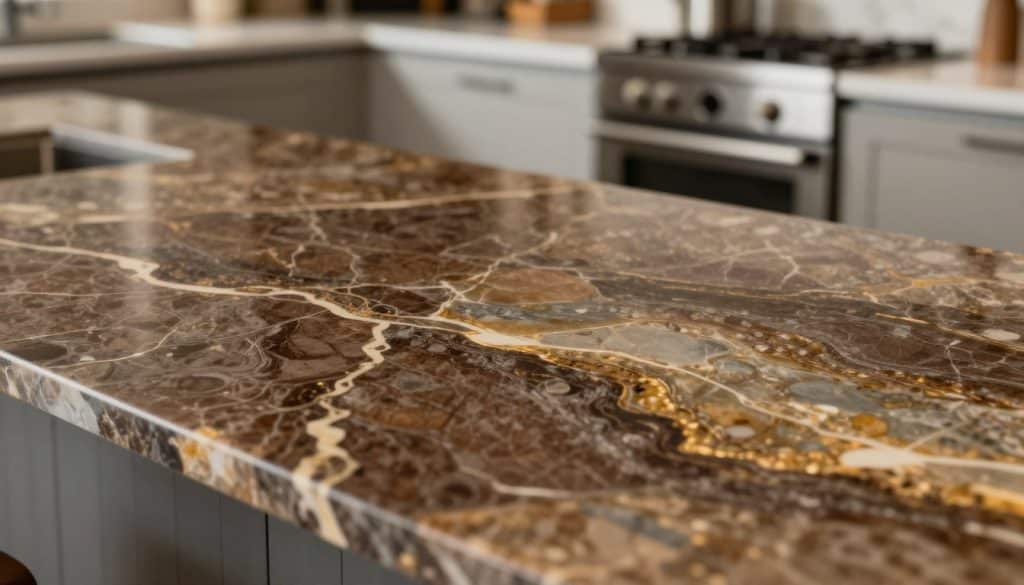
How fast staining can occur when spills sit over time
Liquids soak in with time. The longer a spill stays, the deeper it can go. Coffee, wine, and greasy messes are common culprits.
Even standing water or steady condensation leaves marks after repeated exposure. Bathrooms need the same clean-up habits as kitchens.
Why “high maintenance” is often a care and sealing issue, not a deal-breaker
Porosity is the main factor. A good sealer slows absorption and gives you a buffer to blot, not wipe, spills right away. Clean with mild soap and water for daily care.
- Quick action: blot spills immediately.
- Routine sealing: slows absorption over time.
- Simple cleaners: mild soap + water protects the finish.
We help Minneapolis homeowners pick the best stone and build a practical upkeep plan. If you’re weighing options, we’ll walk you through pros, cons, and proper care so you don’t get surprised later.
Honed vs. Polished Marble: How Finish Changes Staining, Marks, and Scratches
The finish you pick decides whether spills hide or stand out under light. Below we break down the practical tradeoffs so you can match look and function to your space.
Honed surfaces: matte, forgiving, but more absorbent
Honed gives a soft, matte look that reduces glare. It hides small wear and fingerprints well.
That matte feel often means a more open surface that can accept liquids faster. In busy kitchens or a rental turnover, expect higher care needs for greasy or pigmented spills.
Polished surfaces: glossy, tighter, yet show scratches
Polished creates a glossy face that reflects light. The tighter grain tends to resist liquid penetration better than honed.
Polished tops can reveal scratches and etches more easily because shine highlights every change. For a spa-like bath, polished often reads as premium. For high-traffic food service, it may need more touch-ups.
- Busy family kitchen: honed or a protected polished surface.
- Rental or restaurant: choose durable sealing and expect maintenance.
- Primary bath or low-traffic area: polished for elegance.
Some marks are color deep in the pore and can be lifted. Others change texture or shine and need polishing or refinishing to fix. We help Minneapolis homeowners and property managers pick the right finish, fabricate to spec, and install with care—so your choice fits daily use, not just the showroom look.
Porosity Explained: How Water, Oil, and Spills Seep Below the Marble Surface
What looks like a wet ring can be a liquid moving beneath the stone’s skin. Porous surfaces have tiny channels that let fluids travel below the visible layer. That process changes how marks appear and how you fix them.
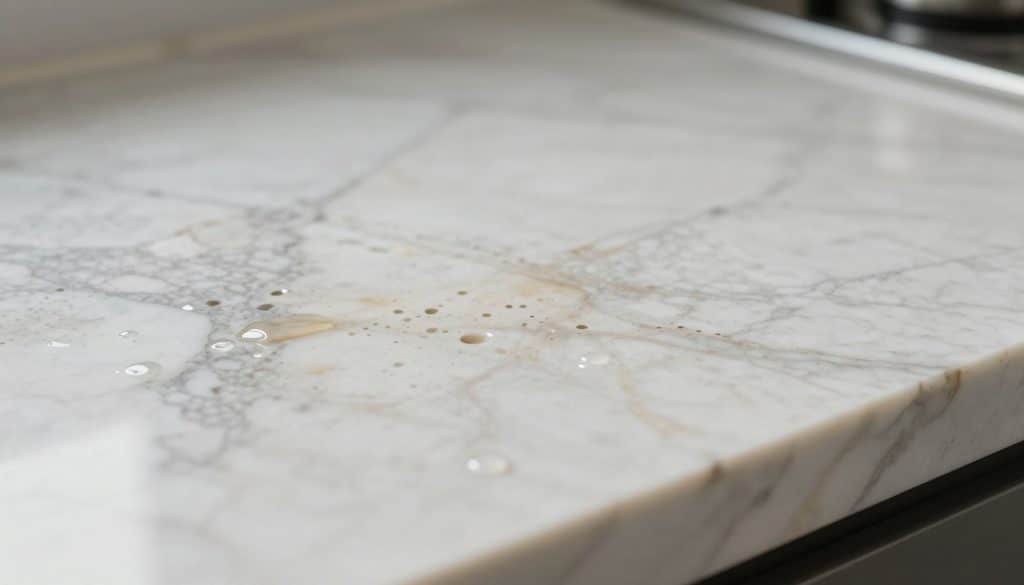
What porous means for counters and bathroom moisture
Porous means the surface has microscopic pathways that draw in water and other liquids. In bathrooms, constant moisture, toiletries, and standing water near sinks let liquids creep in without dramatic spills.
Repeated exposure can dull a finish and create spots that look cloudy.
Why dark patches often signal oil absorption
Oil behaves differently than water. Dark patches that seem perpetually wet usually mean oil has entered the stone below the surface.
Oil bonds and darkens the pores, so these marks are tougher to lift. That’s why poultice methods are often needed rather than scrubbing.
- Prevention: keep surfaces dry and wipe spills quickly.
- Sealing: slows absorption — it’s protection, not armor.
- Advice: we work with many stone types and can recommend care for Minneapolis homes and commercial spaces.
Everyday Prevention: How to Keep Marble From Staining
A few small routines stop most marks before they start. Act fast on spills and keep simple tools on hand. That saves time and avoids costly repairs.
Blot, don’t wipe: When a spill happens, gently blot with a soft cloth. Wiping spreads the liquid and can enlarge the affected area. Blotting contains the problem quickly.
Use coasters and trays: Use coasters for drinks, mugs, and anything that sweats condensation. Place soap dispensers and metal décor on trays or mats so moisture and oxidation don’t sit on the surface.
- Countertop kit: soft cloths, stone-safe cleaner, and a designated drying towel.
- Daily cleaning: mild soap + water, rinse, then dry with a soft cloth for safe cleaning and fresh look.
- Sealing reality: sealers slow absorption but don’t stop etching from acids. Seal periodically as part of routine maintenance.
We’ll help you choose the best material for your needs and set up a practical plan. If you want to keep marble looking great with simple, realistic proper care, call (612) 270-4239 for a free estimate in Minneapolis–St. Paul.
Identify the Stain Type Before You Clean
Pause and play detective—small clues point to different fixes. Take a breath and look closely before you scrub. The wrong cleaner can turn a quick fix into a bigger repair.
Play detective: location, color, and pattern clues
Ask three quick questions: where is it, what color, and what shape does it follow? Marks near a coffee station often trace back to coffee. Dark blobs by the stove usually mean oils or grease.
When a mark is actually etching
Some issues are not a stain at all but etching from acids. Items like wine, citrus, and toothpaste can leave pale, chalky spots. Pigment removers may not help etching.
- Stop and assess before you scrub—wrong moves can deepen damage.
- Quick test: look and touch—etched areas feel dull or different; stains are color changes on the stone.
- Not sure? If gentle cleaning doesn’t change the mark, switch strategies or call us for guidance in the Minneapolis area.
How to Remove Common Marble Stains Without Damaging the Surface
Not every dark spot needs heavy chemicals or a pro—some lift with patient, simple steps. Start gently and protect yourself: gloves, good ventilation, and no mixing of products.
Safety first
- Begin mild: use a neutral cleaner and soft cloth.
- Avoid acids: don’t use vinegar or acidic cleaners that dull the finish.
- Never mix bleach and ammonia — it’s dangerous.
Common fixes
- Oil and grease: dark marks often need a poultice. Apply an absorbent paste, cover with plastic, let dry, then repeat until faded.
- Coffee, tea, wine: try a 12% hydrogen peroxide solution with a few drops of ammonia on a poultice for pigment lift; test first in a hidden spot.
- Rust and metal: oxidation often follows the object’s shape. These marks can be stubborn and sometimes permanent; poultice may help but stop if no change.
- Water spots: mineral haze often just dulls shine. Use a stone-safe polish and soft buffing rather than harsh scrubs.
- Biological growth: remove mildew with diluted bleach or peroxide, rinse well, and improve ventilation to prevent return.
If a mark resists safe attempts, stop and call us. We help Minneapolis homeowners with practical fixes, sealer advice, and professional repair or replacement.
How to Make and Apply a Poultice for Deep Staining
You can lift embedded marks with a simple, controlled paste and a little time. A poultice is a controlled paste that pulls a stain out of stone instead of forcing it deeper. It’s a safe, step-by-step DIY approach when used correctly.
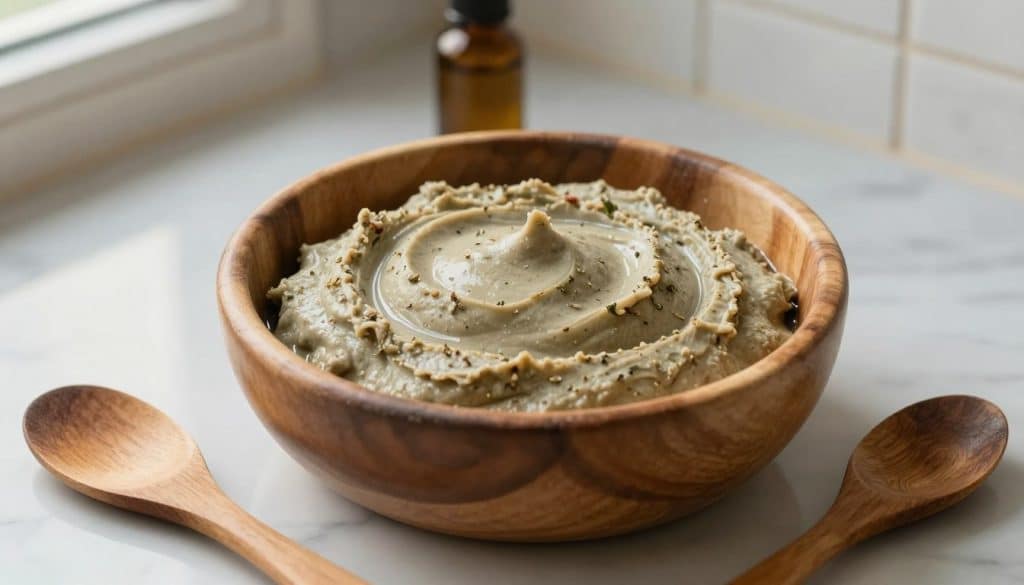
Ingredients and pairings
White absorbents: kaolin, diatomaceous earth, powdered chalk, talc, or plain gauze. Use white material so you don’t add color back into the surface.
- Oil: baking soda + water or mineral spirits mixed to a paste.
- Organic (coffee, wine): 12% hydrogen peroxide mixed with a white absorbent.
- Rust: diatomaceous earth + a rust remover product, tested first.
Application steps and timing
- Pre-wet the spot with distilled water.
- Mix chemical and white absorbent to a peanut-butter consistency.
- Spread 1/4–1/2″ thick, extend ~1″ beyond the mark, cover with plastic and tape edges tight.
- Let work 24–48 hours; remove plastic after ~24 hours so the poultice can dry.
- Lift paste, rinse with distilled water, and buff dry. Repeat up to five cycles if needed.
Safety essentials
Wear gloves and ventilate the area. Protect nearby finishes and never mix bleach with ammonia or other incompatible chemicals. If the finish dulls, or you’re unsure, stop to avoid permanent damage and call Rock Solid Tops for help. We’re happy to take over and protect your investment.
Cleaning Dos and Don’ts: Avoiding Etching, Dull Finish, and Chemical Damage
Cleaning choices shape how long your counters keep their look and shine. Small habits make a big difference. Use them to protect the finish and avoid costly repairs.
What to skip
- Vinegar, lemon-based sprays, and most all-purpose cleaners — they are acidic and cause etching.
- Bleach or strong industrial formulas — they can strip sealers and change color.
- Abrasive pads and scouring powders — they roughen the surface and increase future damage.
- Use a neutral-pH, stone-safe cleaner for daily cleaning.
- Dry the area after cleaning to prevent water marks and mineral haze.
- For light cosmetic issues, gentle buffing may help; avoid aggressive tools.
About steel wool and scratches
Industry guides sometimes mention 0000 steel wool for tiny, careful touch-ups on polished surfaces. It can work in specific cases, but it’s risky. Improper use can make scratches worse or dull the finish.
When to stop DIY and call a pro
If marks keep returning, the finish looks visibly dulled, the surface feels rough, or a DIY method doesn’t improve things, pause. Continued attempts can cause permanent damage.
Call Rock Solid Tops for expert advice, refinishing, or repair. We serve Minneapolis–St. Paul and help you protect your investment—fast and with care.
Conclusion
Good countertop care starts with a clear, simple plan you can follow every day.
Marble is porous and reactive, so quick blotting, routine sealing, and smart cleaners stop most staining. Know the difference between discoloration and etching before you try fixes; poultices often need repeat cycles and some rust marks may not lift.
For honest advice and fast service in the Minneapolis, MN area (Minneapolis & St Paul and within about an hour of the Twin Cities), call us. We fabricate and install granite, quartz, marble, and other natural stone for homes, multi-unit projects, senior living, restaurants, and commercial buildouts.
Our Craftmanship, Your Vision. Schedule your free estimate today — call (612) 270-4239 or email info@rocksolidtops.com. Ask about installation in as little as one week after measuring.