
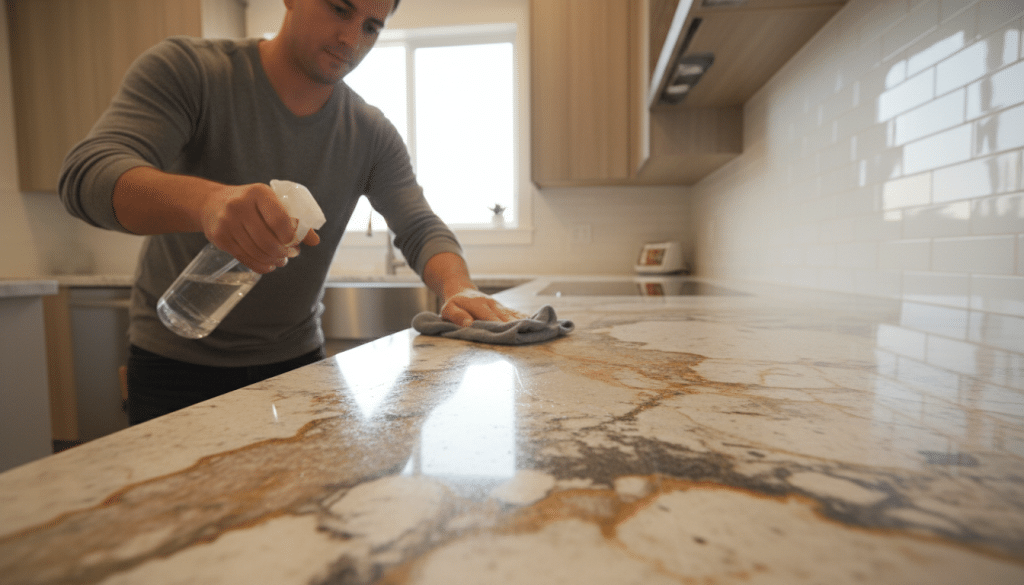
Curious why some stone surfaces stay flawless while others fade after a year? It often comes down to proper caring for quartzite countertops and using the right maintenance methods.
We’ll answer that, and show you simple daily steps that protect your investment. Quartzite is a mined natural stone formed when sandstone transforms under heat and pressure. It yields hard, interlocking crystals that offer granite-like durability and marble-like elegance.
We explain what normal upkeep looks like, how to handle spills, and when sealing matters. You’ll also learn what to avoid so the finish stays sharp. Our team has 30+ years fabricating and installing granite, quartz and other stone. Our promise: Our Craftmanship, Your Vision.
Minneapolis, MN homeowners: we offer fast turnaround — get new countertops installed in as little as one week after measuring. Call (612) 270-4239 or email info@rocksolidtops.com for a free estimate. We support you beyond installation so you never guess about products or timing.
Key Takeaways
- Quartzite blends strength and beauty — ideal in a busy kitchen.
- Daily gentle cleaning prevents common damage.
- Avoid harsh cleaners and abrasive tools to keep the finish intact.
- Periodic sealing stops stains from becoming long-term issues.
- Rock Solid Tops offers speedy installation and ongoing support.
- Contact us in Minneapolis for a free estimate and fast answers.
Quartzite countertops basics for homeowners and designers
A quick look at how this stone forms clears up why it’s prized for both looks and long-term performance. Quartzite starts as sandstone and, under heat and pressure, becomes a denser natural stone with interlocking crystals. That change gives it notable durability.

Why it’s compared to marble and granite
People liken quartzite to marble because of soft veining and light palettes. They compare it to granite due to its hardness. Both comparisons set realistic expectations about care and appearance.
Quartzite vs quartz
Quartzite is a mined stone. Engineered quartz is made from ground quartz and resin. That difference changes how each material reacts to heat, cleaners, and wear.
Unique slabs and design impact
- No two slabs match — veins, color, and movement vary naturally.
- Colors range from whites and greys to pinks, greens, and blues.
- Design choices like seam placement make a slab feel custom.
We help Minneapolis homeowners and designers compare options, pick the right quartzite slabs, and plan thoughtful installation that protects your surface and style.
Caring for quartzite countertops with a simple daily cleaning routine
You don’t need complicated products to keep a beautiful stone surface — just a few minutes each day. We’ll show a no-fuss plan that fits a busy kitchen and protects long-term upkeep.
Daily wipe-down
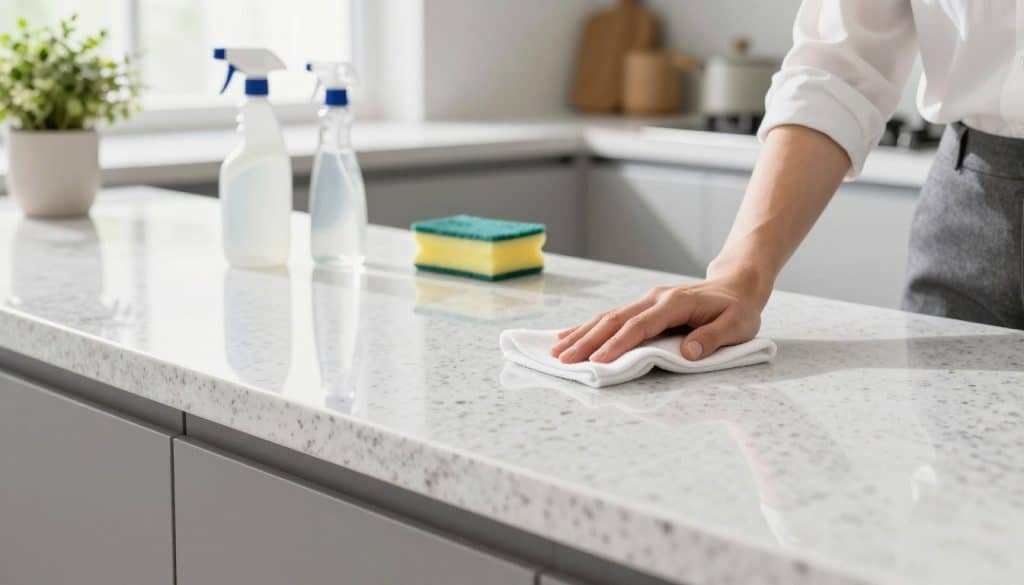
Use warm water and a soft cloth or a microfiber cloth for quick touch-ups after meals. A fast wipe removes crumbs and spills before they set.
Choose a mild cleaner
Add a small amount of soap or a pH-neutral stone cleaner when you need a deeper clean. Use the right amount so you don’t strip seals or dull the finish.
Avoid abrasive tools
Skip scouring pads and harsh scrubbing. Abrasive pads can slowly scratch and dull the stone over time, making upkeep harder.
Quick habits that help
- Wipe rings and splatters immediately.
- Keep a spray bottle with warm water and cleaner on hand.
- Don’t let sticky residue sit overnight.
Questions about the best cleaner? Call Rock Solid Tops — we’ll help you pick the right product and keep your quartzite countertop looking great.
Cleaners and habits to avoid to prevent damage and dullness
A few avoidable mistakes can dull a beautiful surface faster than you expect. Quartzite is tough, but the protective sealer is the real defense against stains and wear. Protecting that layer keeps your stone looking fresh longer.
Why vinegar and citrus cleaners harm the sealer
Acids in vinegar and lemon break down sealer over time. This speeds up dullness and makes stains more likely to soak in.
Why bleach-based products are too harsh
Bleach can strip protection and leave lightened, patchy spots. Don’t use bleach to disinfect the slab.
Knife and cutting board best practices
Never cut directly on the surface. Use a cutting board to prevent scratches and edge chips.
Heat, cookware, and common kitchen risks
Hot pans and slow cookers can stress the finish. Always use trivets to avoid heat damage and color changes.
- Residue removal: Soften dried messes with water, then lift with a blunt tool — no razor scraping.
- Daily habit: Wipe spills quickly to reduce stain risk and time-based damage.
Sealing quartzite countertops to protect against spills and stains
Sealing adds a protective layer that gives you a few extra minutes to catch a spill before it becomes a stain. Quartzite has excellent durability, but it is still porous. That porosity lets pigments in sauces, wine, and juice soak in if you wait too long.
Topical vs penetrating: what lasts longer
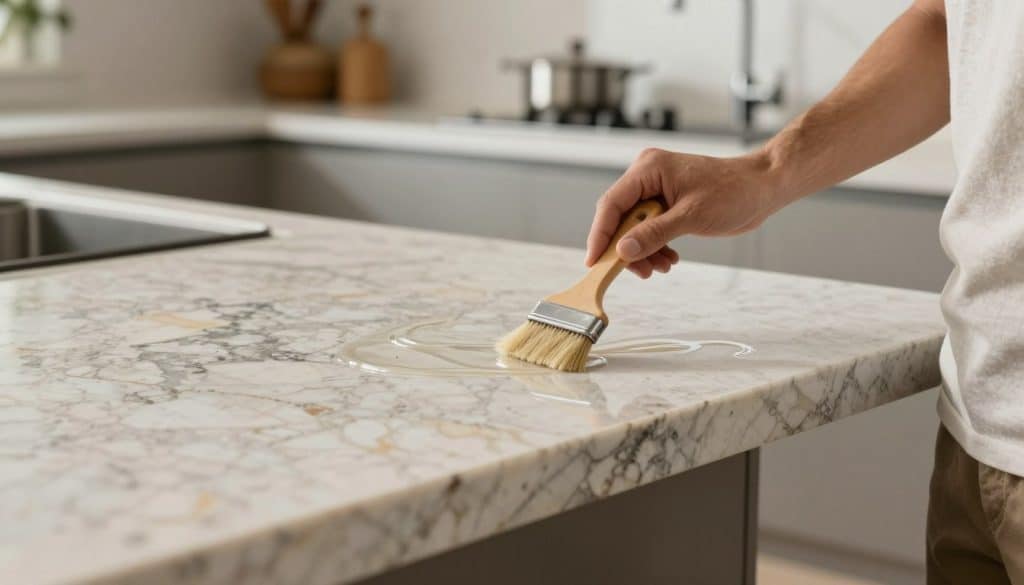
Topical products sit on the surface. They can change sheen and wear off faster. Penetrating sealers soak into the stone and usually protect longer.
How often to reseal and the one-year water test
Many installations hold up between 1–3 years. Do a one-year water test: drop water on the slab, watch the darkening. If it darkens quickly, reseal annually. If it beads or takes minutes, check again next year.
Safe application basics
- Pick the right product and follow the label.
- Apply by spray or wipe, then let it cure; respect dry time.
- Keep ventilation—open windows and run fans while sealing.
We make sealing manageable and fast. If you want product guidance or a professional recommendation in Minneapolis, reach out to Rock Solid Tops — our craftsmanship, your vision!
How to handle spills, stains, and tough residue on a quartzite countertop
Spills happen — here’s a calm, step-by-step plan to limit damage and save time. Quick action is the best defense when a pigment meets a stone surface.
Fast spill routine
Blot, don’t smear. Use a clean cloth to lift wine, tomato sauce, or juice. Rinse the spot with a little water, then dry the surface so pigments don’t linger.
Pulling out a stain
If a pH-neutral cleaner won’t do it, try a poultice or a baking soda and water paste. Apply a thick layer, cover with plastic wrap, and let it sit 1–2 days.
Remove the wrap, rinse gently, and repeat if needed. This method pulls discoloration up from the stone without aggressive scrubbing.
Removing dried-on mess
Soften dried food with warm water first. Use a blunt tool to lift residue — never scrape with a razor. This prevents chips and surface scratches on your stone countertop.
- Memorize this: blot, rinse, dry with a cloth.
- Common culprits: wine, tomato sauce, and bright juices—act fast.
- If a stain persists or the stone looks etched, contact Rock Solid Tops for expert help.
Conclusion
A simple plan—gentle cleaning, prompt spill response, and periodic sealing—preserves that showroom look. Quartzite brings marble-like movement and the toughness many homes want. Small habits prevent big problems.
Choose the right products and tools. We’ll help you compare quartz and other stone options so the material suits your style and daily life. Many homeowners pick quartzite countertops for lasting beauty and performance.
We’ve done this for 30+ years. Our Craftmanship, Your Vision. Fast installs—often as little as one week after measuring—cover Minneapolis, St Paul, and areas within an hour of the Twin Cities.
Make sure you schedule a free estimate today. Call (612) 270-4239 or email info@rocksolidtops.com and we’ll answer your questions and set a convenient time!