
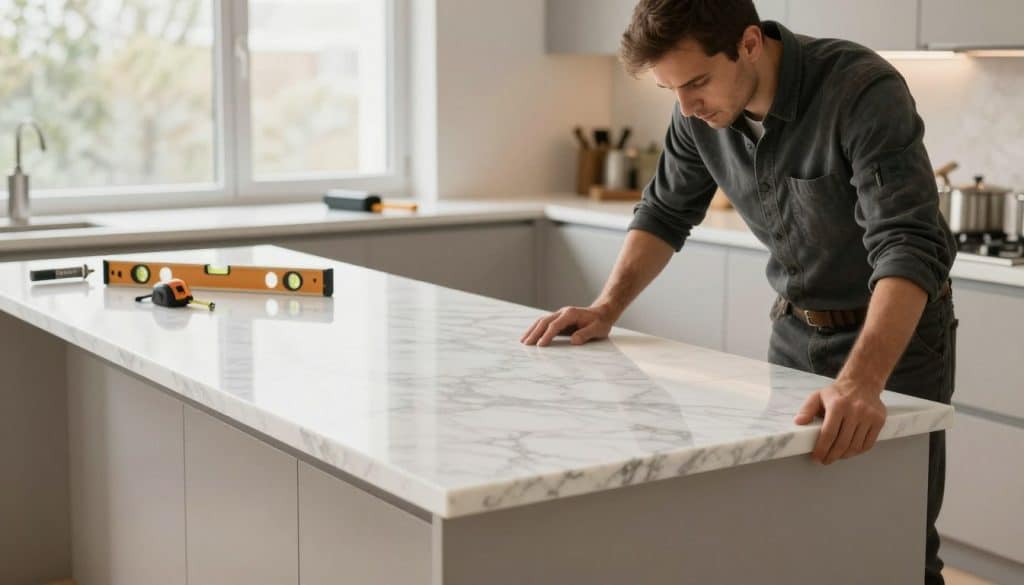
Curious whether a classic stone top fits your Minneapolis kitchen and budget? We’ll give you clear numbers so you can decide with confidence.
At Rock Solid Tops we blend Our Craftmanship, Your Vision with 30+ years of fabrication and installation experience. Typical marble starts near $125 per square foot installed. Most projects fall between $2,000 and $5,000, with many around $3,000.
We’ll explain what drives the final total: slab, fabrication, installation and all the little line items that move your number. You’ll see prices both per square foot installed and as full project ranges, because that’s how homeowners shop in our area.
Fast turnaround: get your new tops installed in as little as one week after measuring. Want a real number for your kitchen or bath? Call (612) 270-4239 or email info@rocksolidtops.com for a free estimate.
Key Takeaways
- Base installed price often starts around $125 per square foot.
- Most projects range $2,000–$5,000; many land near $3,000.
- Final cost = slab + fabricating + installation + extras.
- Major drivers: stone type, veining, thickness, edges, cutouts, access, schedule.
- Rock Solid Tops offers local expertise, fast installs, and free estimates.
Marble countertop costs in Minneapolis
If you’re planning a remodel, knowing local price bands for natural stone saves surprises down the road. Most projects in Minneapolis land between $2,000 and $5,000, with a typical job near $3,000.
At the low end you’ll see small vanity tops or easy installs near $600. High-end kitchen installs with premium slabs, many cutouts, or tricky deliveries can top $15,000+
Installed vs. material-only pricing
Material alone often runs $40–$100+ per square foot. Installed pricing adds templating, fabrication, transport, and labor, which is why per square foot installed matters when you compare quotes.
Minneapolis labor and logistics that change costs
Local labor commonly costs $35–$45/hour and skilled fabricators are in demand. Winter weather, tight street access, stairs, and older homes can add time and fees.
- Tip: Compare quotes apples-to-apples — same thickness, edge, cutouts, and backsplash scope.
- Tip: Ask for per square figures and a full project range to avoid surprise add-ons.
How much marble countertops cost per square foot installed
Start here: installed price bands that match small baths, everyday kitchens, and high-end builds.
Entry-level — Best for small vanity tops or compact kitchens where real stone matters but the footprint is limited. Typical installed pricing starts near $125 per square foot. Expect simpler slabs, standard edges, and minimal cutouts.
Mid-range — The most common choice for Minneapolis homes. This tier balances style and upkeep. Installed ranges generally sit between $150–$200 per square foot depending on slab selection, seams, and moderate fabrication detail.
Premium — For bolder veining, rarer slabs, and careful seam planning. Luxury installs can reach $250+ per square foot. Higher-grade material, thicker stone, and decorative edges add time and labor.
- Remember: the same square foot of surface can vary by selected thickness, edge profile, and number of cutouts.
- Buyer guidance: if you cook often, weigh tradeoffs—marble is stunning but needs more care for long-term durability.
- Next up: slab type (Carrara, Calacatta, Statuario) is one of the biggest levers you control for final price and appearance.
Marble slab prices by type and veining
Not all slabs are created equal — price swings with type, veining, and rarity. Below is a simple cheat-sheet of typical material ranges so you can compare at the yard.
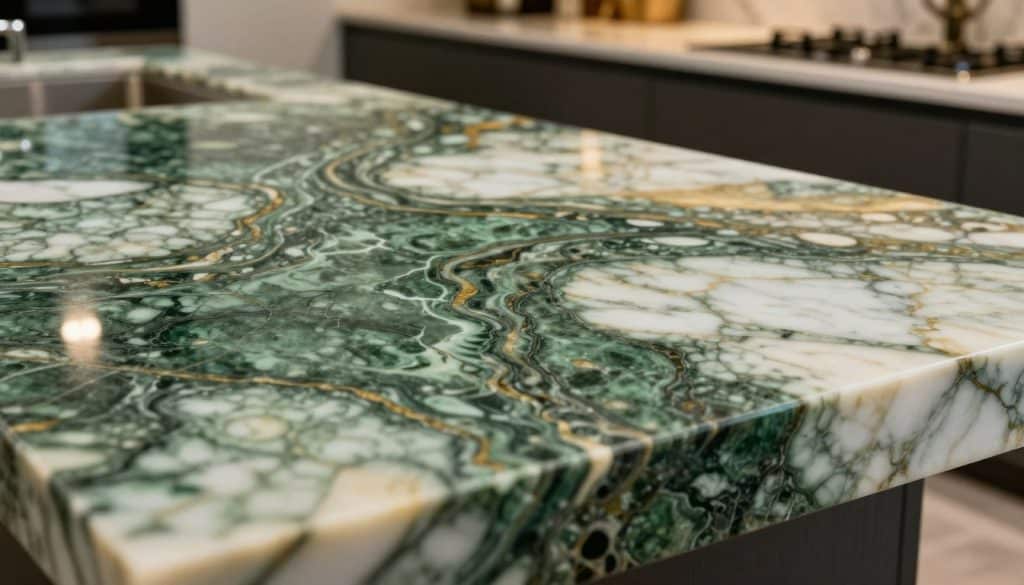
- Carrara: $40–$80 per square foot — classic white-gray that’s the most approachable luxury price point.
- Statuario: $50–$100 per square foot — brighter white and stronger contrast veining; price rises with consistency.
- Calacatta: $180+ per square foot — rare, bold patterns and high demand make this a statement slab.
- Emperador: $70–$150 per square foot — richer browns for darker kitchens; uniform color often costs more.
- Makrana: $12–$25 per square foot — budget-friendly; good for secondary baths or small surfaces.
Veining and background color change prices inside each category. Big, dramatic patterns mean careful seam planning and higher waste. Cleaner, uniform slabs often command a premium for color consistency and quality.
At the slab yard, inspect for fissures versus structural cracks and check color match across slabs. Slab price is only one part of the total cost — fabrication choices and job complexity finish the story.
What drives marble countertop installation costs beyond the slab
Pricing goes beyond the slab — several hidden line items shape the final bill. We break down the main factors so you know what to expect on a real quote.
Templating and measuring fees
Professional templating typically runs between $150 and $300. A good template saves time, prevents poor seams, and reduces rework.
Fabrication, polishing, and workmanship
Workmanship affects edge crispness, seam tightness, and the final surface look. Skilled fabricating and polishing cost more up front but cut long-term repairs and visible flaws.
Delivery, access, and jobsite constraints
Delivery often ranges $100–$500+ depending on distance and access. Stairs, narrow halls, or winter delays increase labor and install time.
Old countertop removal and disposal
Removal and disposal vary by material: expect $100–$800. Heavy stone or stubborn tile needs more crew and adds to the overall cost.
- Practical tips: Clear paths, protect floors, and lock in sink and plumbing plans before install day to avoid last-minute changes and potential damage.
- Value: Experienced fabricators save you money long-term by preventing cracks, poor seams, and rushed installations.
Edge profiles, thickness, and finish choices that impact cost
The right edge, slab thickness, and surface finish balance beauty with long-term performance. Small design choices change both the per square foot installed and visual result. We’ll walk you through the key tradeoffs so you get value that fits your life.
Standard vs. decorative edge pricing per linear foot
Standard edges are the most budget-friendly at about $10–$12 per linear foot. Decorative or ornate profiles add labor and cost. Expect roughly $30–$40 per linear foot for complex edges.
2 cm vs. 3 cm slabs and typical differences
Moving from 2 cm to 3 cm typically raises the slab price by about 20–30%. Thicker slabs add heft and presence. They also reduce the need for visible support on islands and lower long-term repair risks.
Honed vs. polished finishes and maintenance impact
A honed finish softens the look and hides light wear but can show oils more. Polished surfaces reflect light and make veining pop, yet etches stand out more. Both surfaces need thoughtful maintenance.
- Buyer tip: match edge and thickness to cabinet strength and daily use, not just showroom appeal.
- We help: we guide material and finish choices so your final price and look match real life.
Cutouts and add-ons that change your quote
Small details like sink and cooktop openings add real labor and precision to a job. They’re not minor tweaks. Cutouts require templates, special tooling, and careful polishing around edges.
Sink cutouts, faucet holes, and undermount installation
Sink cutouts typically add $100–$200. Undermount installs need reinforcement and neat polish where stone meets hardware. Faucet holes and multiple sink bowls raise both labor and risk of chip or crack.
Cooktop cutouts and specialty appliance openings
Cooktop cutouts often add $200–$400. Appliance openings demand tight tolerances, correct corner radii, and heat clearance. Specialty mounts or gas inserts increase fabrication time and the final price.
Backsplashes and full-height upgrades
Backsplash installation usually runs $10–$25 per square foot. Matching the same slab for a full-height run raises material needs and per square installed price. Veining continuity and extra slab waste add time and costs.
- Plan early: confirm appliance specs so you avoid rework.
- Expect precision: cutouts add hours and expert skill.
- Material choice: matching stone elevates the look but increases square footage and price.
We’ll map your scope clearly so the quote matches your vision and there’s no surprise add-on creep mid-project.
Marble vs. quartz vs. granite cost in Minneapolis
Prices vary by material and use — here’s a straight comparison for Minneapolis installs. We give clear installed ranges so you can weigh appearance against upkeep and long-term value.
Typical installed ranges: quartz, granite, and marble
Quartz usually lands between $65–$110 per square foot installed. It often sits below granite and marble on initial price.
Granite commonly runs about $90–$150 per square foot installed. It’s a solid mid-to-premium natural stone choice.
Marble generally starts near $125 per square foot installed and rises for rarer slabs and detailed work.
When quartz is the cost-effective alternative for the marble look
Quartz gives the marble look with more consistent patterns and a non-porous surface. That means lower maintenance and fewer sealing costs over time.
Where granite may win on heat resistance and durability
Granite shines in busy kitchens. It handles heat and wear better than marble and often outperforms for long-term durability.
- Quick guide: pick quartz for low upkeep and marble-like style.
- Pick granite for heat resistance and long-term hard use.
- Pick marble when natural veining and unique slabs matter most.
Is marble right for your kitchen or bath?
We help you match the right slab to your lifestyle so the finish works for years. Choice is personal. We walk you through the trade-offs and options.
Best uses in kitchens, islands, and baths
Best spots: bathroom vanities, baking zones, and statement islands with lower daily wear. These areas show the look and add real value to your home.
Real-world durability and common damage
Marble is softer and more porous than some stone. Expect possible scratching, chipping, etching from acids, and occasional staining if spills sit.
Most marks are cosmetic. Many are preventable with simple habits and proper sealing.
Veining, color, and perceived wear
Busy veining hides small marks. Clean white fields show etches faster. Pick veining and color to match your tolerance for patina and daily use.
- Practical guards: cutting boards, trivets, quick wipes, and approved cleaners.
- Choose wisely: slab selection and seam planning affect final quality and satisfaction.
- We’ll help: select the right marble countertop for your look and lifestyle so you avoid regret later.
Maintenance and sealing costs over time
A simple maintenance plan protects your investment and keeps surfaces ready for daily life. We’ll walk you through typical sealing fees, cleaning basics, and what to expect compared with quartz and granite.
Sealing frequency and cost per square foot
Sealing commonly runs about $3–$7 per square foot. Factors that change the cost include surface condition, total square foot, and heavy‑use areas that need earlier resealing.
For many homes we recommend sealing once a year. High‑traffic kitchens or baking zones may need resealing every 6–9 months. Test by dropping water — if it soaks in, it’s time to reseal.
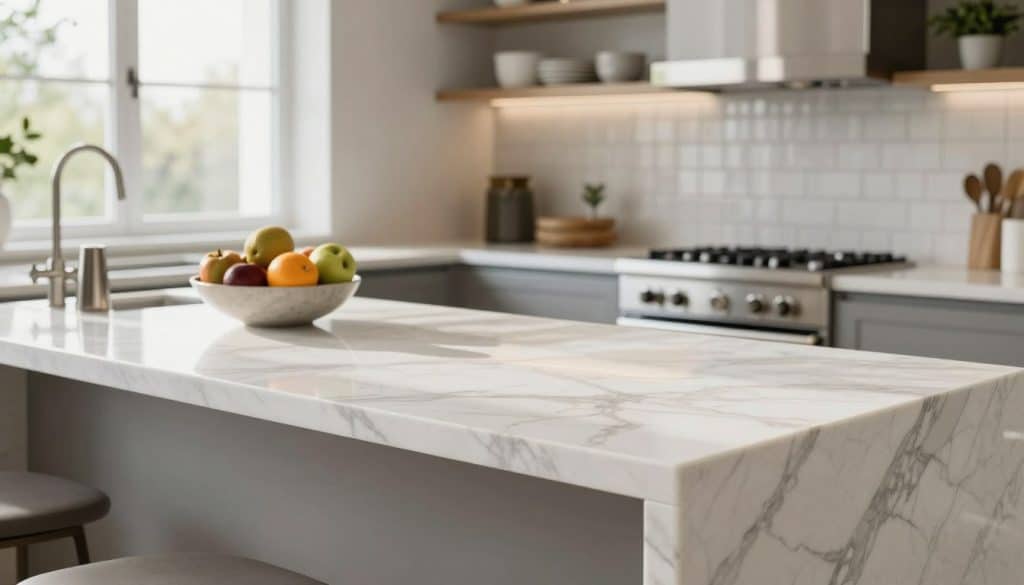
Cleaning do’s and don’ts for natural stone
- Use pH‑neutral cleaners and soft cloths.
- Wipe spills quickly to avoid stains and etches.
- Avoid acidic or abrasive products and rough pads.
Maintenance vs. quartz and granite
Quartz is the lowest‑maintenance — it usually doesn’t need sealing. Granite often needs periodic sealing like marble but is tougher against heat and staining. Marble requires the most attention but rewards you with unmatched natural beauty.
How long marble countertops last and what affects lifespan
A well-cared-for stone surface can serve your home for decades with the right habits. Lifespan depends on use, fabricating quality, and simple maintenance. We want you to expect longevity—not surprises.
Expected lifespan ranges and usage patterns
With regular maintenance and light use, many installations last 30–50 years or more. Heavy daily prep, constant acidic spills, or rough treatment will show wear much sooner.
Tip: baking zones and low-traffic islands age better than busy cooktops or prep islands used every day.
Preventing damage from acids, heat, and impact
Acids etch the finish quickly. Wipe citrus, vinegar, and wine immediately. Use coasters and cutting boards to reduce staining and scratches.
Marble handles heat fairly well, but thermal shock or dropped pans can chip edges or cause cracks at weak points. Use trivets and avoid sliding heavy pots across the top.
- Quality matters: solid support, proper overhangs, and precise cutouts reduce future damage.
- Simple habits: quick wipes, sealing on schedule, and protective pads lower repair costs over time.
- Long-term value: good fabrication plus steady maintenance extends durability and preserves quality.
Long-term value and resale impact of marble countertops
A great stone surface can lift your home’s perceived value at listing and in photos. Buyers notice natural movement, crisp edges, and a cohesive palette. Those details often translate to stronger offers in competitive Minneapolis neighborhoods.
When a premium surface raises perceived quality
Luxury cues like statement islands, matched backsplashes, and consistent veining signal craftsmanship. These features work best in higher-end kitchens and master baths where buyers expect premium finishes.
Total cost of ownership vs other materials
Consider purchase plus upkeep. Marble has an upfront premium and periodic sealing and care. Quartz typically costs less over time thanks to low maintenance. Granite sits between the two — durable with occasional sealing.
- Value tip: pick timeless colors and moderate veining to avoid visible wear that can turn buyers off.
- Options to protect value: honed finishes, discreet edge profiles, and routine sealing reduce visible etch marks.
- Look per dollar: quartz can mimic the look for lower ongoing costs, while real stone delivers unmatched authenticity.
In short, choose finishes that fit your lifestyle and the market. We help you balance aesthetics and long-term costs so your upgrade pays off at sale time.
What to expect from the marble countertop process in Minneapolis
A clear process turns a big decision into a smooth project from slab pick to final reveal. We walk you through each step so you know what’s happening and when.
Selection at the yard and matching patterns
At the slab yard we inspect veining, color, and movement. We discuss bookmatching and seam placement so patterns flow across joins.
Tip: choose slabs with consistent movement if you want a seamless look. Big veining may need special seam planning.
Measure, template, fabrication, and install timeline
Templating comes before fabrication. Accurate templates save time and reduce rework.
Typical install work for many kitchens is about 8–12 labor hours. Fabrication includes cutting, edging, polishing, and cutouts for sinks and appliances.
Scheduling impacts and avoiding delays
Common factors that slow projects include late appliance specs, cabinet changes, and special-order slabs. These add time and rescheduling.
- Lock selections early: finalize sink and faucet specs before templating.
- Confirm access: clear paths and protect floors to speed install day.
- Stay in touch: quick answers prevent hold-ups and keep the schedule steady.
We manage these factors so your countertop installation moves smoothly. With clear choices and timely info, the process is fast and predictable—your vision, installed right and on time.
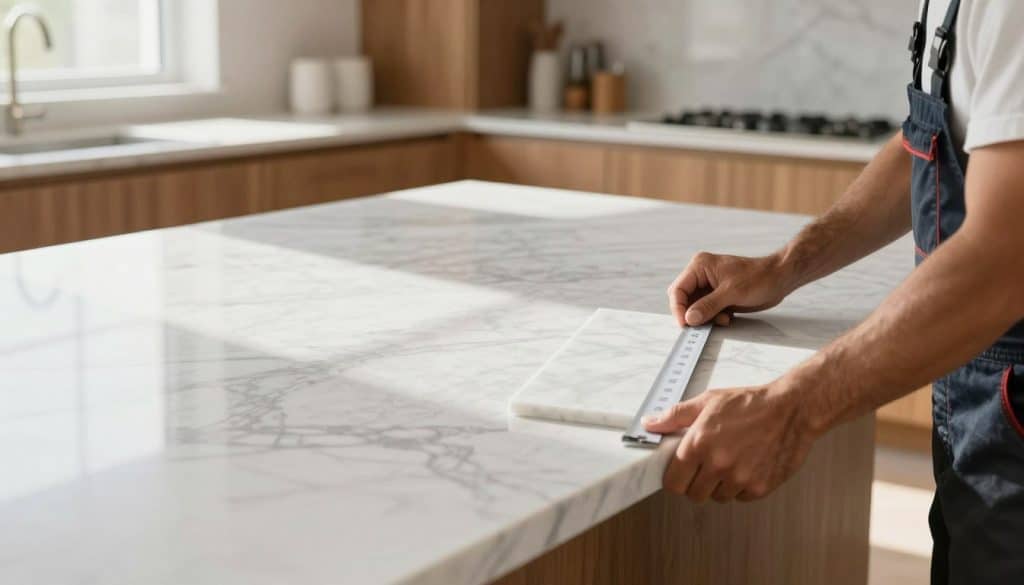
Why Minneapolis homeowners choose Rock Solid Tops for marble and stone
When deadlines matter, experience and speed make all the difference. We combine practical skill with design guidance so your project finishes on time and looks like the photos.
Over 30 years of fabrication and installation experience
Rock Solid Tops has fabricated and installed granite, quartz, marble, and other stone for 30+ years. Our team handles both residential and commercial work—single kitchens, multi‑unit apartments, senior living, restaurants, and full commercial buildouts.
Our Craftmanship, Your Vision — on-site design guidance
We come to your home or jobsite to review layouts, edge profiles, thickness, and material choices. That on-site help puts practical options side-by-side so you pick the best materials for use and look.
Fast, professional installation
Get your new countertops installed in as little as one week after measuring. We keep teams tight, schedules clear, and labor efficient so remodels move forward without delays.
Service area and free estimate
We serve Minneapolis, St. Paul, and locations within an hour of the Twin Cities. Call or email for a free estimate and a straightforward price and plan.
- Prompt & professional: clear timelines and reliable crews.
- True partnership: we compare materials and options based on real use, not showroom flash.
- Commercial-ready: experienced with larger installs and tight schedules.
Schedule your free estimate: (612) 270-4239 | info@rocksolidtops.com — we’ll give you a clear price per square foot and a plan that fits your timeline.
Conclusion
The best outcome pairs the right slab with clear scope and reliable installation timing.
Marble is a premium choice that rewards careful selection. Typical projects in Minneapolis run $2,000–$5,000 with many near $3,000, and installed work often starts around $125 per square foot.
Your final cost depends on slab choice, fabrication detail, edges, cutouts, and backsplash scope. Maintenance and sealing are part of ownership — expect sealing near $3–$7 per square foot and routine care to keep the surface looking great.
We make the process simple. We guide material picks, plan seams, and deliver fast installs. Our Craftmanship, Your Vision — and GET YOUR NEW COUNTERTOPS INSTALLED IN AS LITTLE AS ONE WEEK AFTER MEASURING.
Ready for a tailored quote? Call (612) 270-4239 or email info@rocksolidtops.com for a free estimate across Minneapolis, St. Paul, and within an hour of the Twin Cities.