
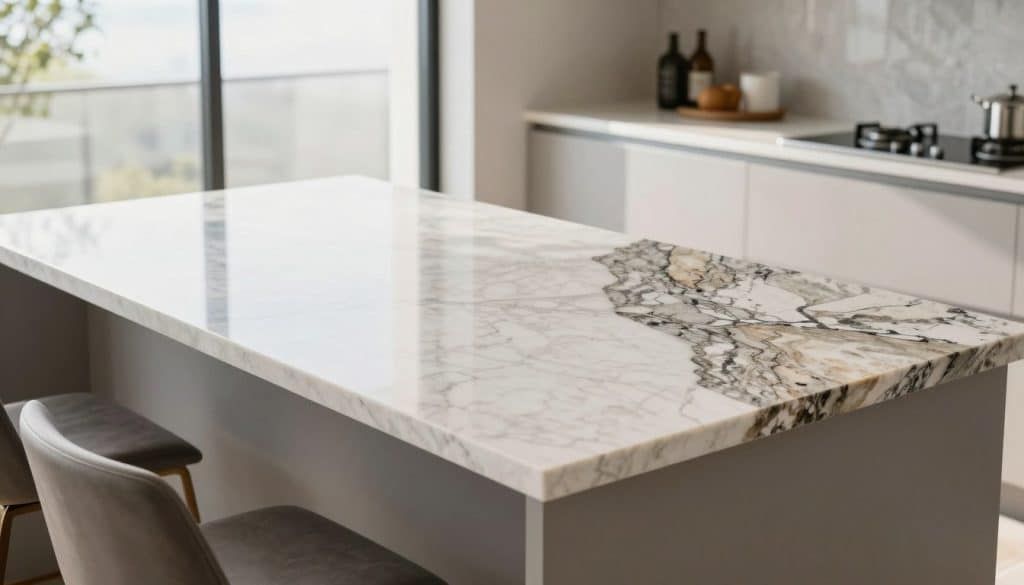
Which surface will handle Minneapolis winters, toddler spills, and your busiest cooking nights without drama?
We open by saying what you’re really comparing when you search quartz countertops vs quartzite. One is engineered and nonporous, made from crushed mineral plus resins. The other is a natural, metamorphic stone formed over millions of years and often needs sealing.
In a busy kitchen, you care about maintenance, stain resistance, heat performance, and the look. We lay out the key differences so you can decide fast and avoid costly mistakes.
At Rock Solid Tops, we fabricate and install stone and engineered surfaces. With 30+ years of experience, we deliver prompt, professional service and a free estimate in Minneapolis, MN and surrounding areas. Our Craftsmanship, Your Vision—we’ll match performance to design and guide what works best for cooking, kids, pets, rentals, or a showpiece island.
Key Takeaways
- Engineered surfaces are nonporous and low maintenance.
- Natural stone often needs sealing but offers unique beauty.
- Choose based on heat tolerance, stain risk, and daily use.
- Rock Solid Tops brings 30+ years of fabrication and installation.
- Get a free estimate and local guidance in Minneapolis, MN.
Why these two names get mixed up (and why it matters for your kitchen)
It’s easy to assume they’re the same—until a hot pan or spilled wine proves otherwise. The names sound alike, but you’re choosing very different products for daily life. Make the right pick and your kitchen performs. Pick the wrong one and you’ll learn the hard way.
Engineered means man-made: ground mineral mixed with resins for a predictable, nonporous surface. That predictability helps busy households, renters, and parents who want low-maintenance finishes.
Natural stone is cut from the earth in unique slabs. Those slabs can deliver dramatic movement and a one-of-a-kind look. They may need sealing and a bit more care to avoid stains or etching.
- You’re choosing between consistent design and one-of-a-kind variation.
- Confusing the names can lead to heat damage or staining if you expect the wrong care.
- We guide you to the best material for your routine—no pressure, just experience.
Quartz countertops vs quartzite: the quick side-by-side overview
Let’s cut the guessing: which surface fits your kitchen life best? We give a fast snapshot so you can pick in under a minute. Below are clear, practical points to help homeowners and managers decide.
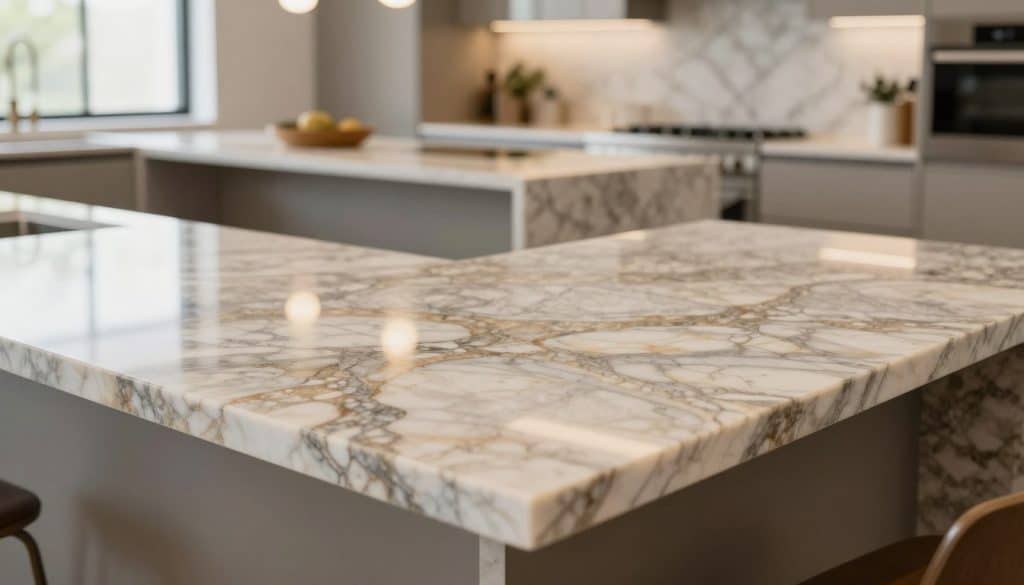
Best for low-maintenance homes and busy kitchens
Quartz countertops win when you want minimal upkeep. They are nonporous and resist stains and water, so daily cleaning is simple. If your routine is hectic, this option trims maintenance chores.
Best for heat-heavy cooking and natural slab beauty
Quartzite countertops are tougher with direct heat and show unique natural color and movement. Regular sealing (often once or twice a year) keeps them looking great, but spills need quicker attention to avoid stains.
Key differences at a glance
- Porosity & sealing: one is nonporous; the other usually needs resealing.
- Heat: natural stone handles hot pans better; engineered surfaces still need trivets.
- Color & range: engineered slabs offer broader, consistent options; natural slabs vary and are one-of-a-kind.
- Fabrication & cost: natural stone can raise complexity and installation cost due to density and breakage risk.
Takeaway: match the material to your cooking, cleaning, and water use. We’ll help you choose the right option for performance and style in your space.
What engineered slabs are made of (engineered stone basics)
Engineered surfaces pack lab‑level control into every slab, so what you pick in the showroom behaves the same at home. We’ll keep this simple and useful for your project.
Composition: Most slabs are about 90–95% crushed quartz blended with polymer resins and pigments. The polymer binds the stone, while pigments create consistent color and veining. That mix gives you a dense, uniform surface that feels solid underfoot and at the sink.
Manufacturing: Factory-controlled manufacturing compresses and cures the blend. That process produces predictable slabs with reliable thickness and repeatable patterns. For large islands or run lengths, this uniformity means fewer surprises at install.
Why it matters for daily life
The nonporous finish boosts stain resistance. Spills don’t soak in like they can on many natural materials. That means easier cleaning and less sealing work over time.
- Consistent look: matching slabs across a kitchen is easier.
- Low upkeep: great stain resistance for busy homes.
- Reasonable limits: avoid direct hot pans—resin binders can soften.
We help you pick the right engineered slab and handle precise fabrication and install. With 30+ years of craftsmanship, we make performance meet your design and lifestyle—fast and reliable.
What quartzite is (quartzite natural stone explained)
If you want a surface with real geological history, this material tells that story in every slab. It starts as quartz-rich sandstone that, over millions of years, endures heat and high pressure and transforms into a dense, glassy metamorphic rock.
Formed by nature: sandstone, heat, and pressure over years
This process compresses grains until the stone becomes very hard. Many formations take millions of years, so the result is a stable natural stone with a unique mineral make-up.
What makes slabs unique in appearance and movement
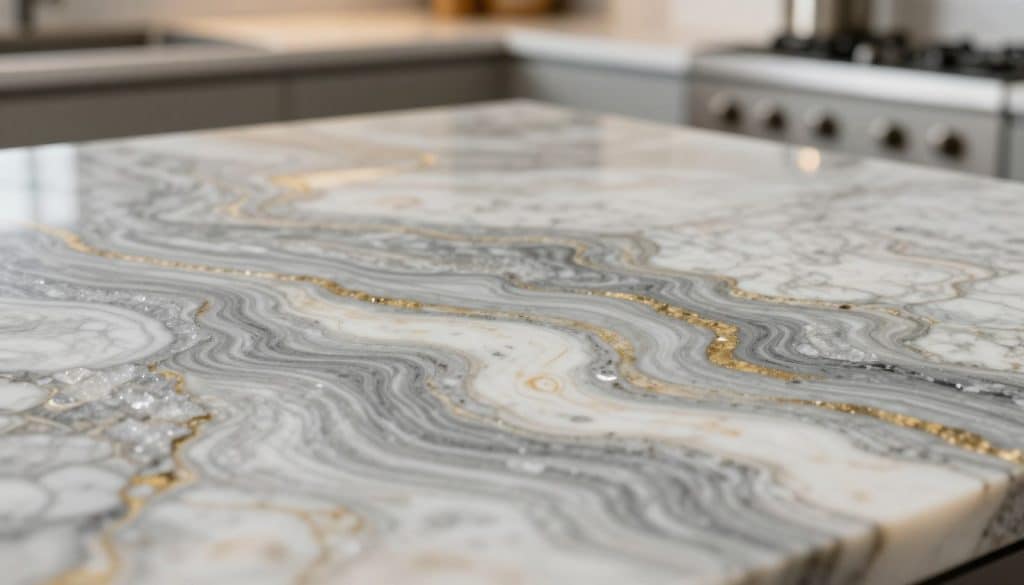
Each quarried slab shows natural veins, depth, and variation you won’t find in factory-made surfaces. That dramatic beauty and look make slab selection important—especially for large islands or bookmatched designs.
Porosity reality: why sealing matters
Many pieces are porous and can absorb water or spills if left unsealed. Regular sealing helps repel liquids and protect the surface from stains.
- Natural origin: a true quarried slab, not manufactured.
- Distinctive beauty: marble-like veining and depth you can’t replicate.
- Care note: sealing is a small commitment that keeps the surface performing.
We’ll walk you through slab viewing, edge choices, and what to expect from your specific quartzite natural stone. If you love the look and can handle light upkeep, this natural stone can be an incredible long-term choice!
Durability and daily wear: scratches, chips, and cracks
Durability plays out in real life — a dropped pan, a bumped corner, or a heavy mixer sliding across the run. We break down what those moments mean for your stone and your long-term investment.
Mohs hardness and what it means in real kitchens
Hardness measures scratch resistance, not toughness. A typical rating is around 7 for quartz and roughly 7–8 for quartzite. That means both resist knife marks and daily abrasion when you use a cutting board.
Granite sits in a similar range, so all three materials perform well against normal wear. Still, avoid cutting directly on the surface to keep it pristine.
Edge impacts: where quartzite can chip and quartz can flex
Edge damage is the common failure point. Natural stone can be very hard, yet a sharp impact on an exposed edge may chip it. During handling and fabrication, dense slabs can crack if stressed.
Engineered slabs include resin binders that give slight flex. That flexibility can reduce edge-chipping risk under impact, though heat and heavy blows still matter.
- Choose rounded or eased edges to cut visible chip risk.
- Support overhangs with brackets or corbels for long runs.
- Place seams where they carry less load and hide traffic zones.
Both materials offer strong resistance for everyday kitchen use when fabricated and installed by experienced pros. We measure carefully, recommend edge profiles, and plan layouts to minimize weak points. That’s how Rock Solid Tops protects your investment for years.
Heat, UV, and where each surface performs best
Before you set a sizzling pan down, know what your surface can tolerate. Heat and sun affect performance in different ways. We’ll give calm, clear do/don’ts so you cook with confidence.
Why natural stone handles hot pans better
Natural stone formed under pressure tolerates high temperatures. That means you can place a warm pan briefly with less worry. For fireplaces, grill islands, and heavy searing, this option offers stronger heat resistance.
Engineered surfaces and why trivets matter
The mineral in engineered slabs is tough, but the resin binders can soften near 300°F. Use trivets, hot pads, or a metal trivet under baking sheets and slow cookers.
Outdoor and sunlight considerations
Many quartz countertops are not ideal for direct sun. UV can fade or change color over time unless the slab is UV-stable. For patios and sunny kitchens, we often recommend natural stone as the better option.
- Do: use trivets and avoid letting heat sit in one spot.
- Don’t: set red‑hot pans or baking trays directly on engineered slabs.
- Choose: natural stone for outdoor kitchens or near fireplaces when heat and sun are constant.
We’ll ask how you cook and where the countertop will live before you pick. That helps us match the right option to your kitchen and lifestyle—fast, practical, and dependable.
Stains, water, and sealing: the maintenance commitment
Keep spills, splatters, and everyday messes from turning into stress—here’s how simple care keeps your new surface looking great.
Quartz countertops maintenance made easy
Wipe-and-go: For engineered slabs, daily cleaning is simple. Use mild soap and warm water with a soft cloth. No sealing required. Quick cleanups stop most stains before they start.
Quartzite countertops: reseal and respond fast
Natural stone often needs periodic sealing. Expect to reseal about once or twice a year, depending on slab density and use. Wipe spills right away—oils and wine can darken a surface if left too long.
Cleaner do’s and don’ts
- Do use mild soap, water, and a soft cloth for regular cleaning.
- Don’t use abrasive pads or harsh chemicals on any stone.
- Don’t place acidic cleaners on natural slabs—they can dull the finish.
- Do use coasters and trivets to lower stain and heat risk.
How to tell it’s time to reseal
Try the water-beading test: drop a few drops on the surface. If the water beads, the seal is fine. If the droplets sink in or darken the slab, it’s time to reseal.
Maintenance is manageable with short routines. We’ll advise you on expected care during selection and after install—so your maintenance plan matches your lifestyle. Call us anytime for guidance!
Appearance, color, and design options
Color and finish shape how your kitchen feels the moment you walk in. We help you picture outcomes for islands, baths, and commercial reception areas so design choices match real life.
Design range: colors, veining, and marble or granite looks
Engineered slabs offer a broad color range and controlled veining. That means you can choose a consistent appearance across long runs and large islands. Want a marble look without the variation? This is the practical option for uniform style.
Natural slab look: marble-like beauty and variation
Natural stone delivers one-of-a-kind veining and depth. Each slab has its own movement and shifts in color, so an island becomes the room’s centerpiece. View the exact slab when possible—no two are identical.
Finishes that change the vibe
Polished, honed, and leathered finishes alter reflectivity and the day-to-day feel. Polished feels glossy and formal. Honed is softer and more forgiving. Leathered reduces glare and hides fingerprints.
- We guide you by look, maintenance comfort, and intended use.
- Design choices adapt for modern minimal, warm transitional, spa-like, or upscale commercial spaces.
- We align finish, color, and layout so the final install looks intentional and clean.
Cost and installation factors that change the final price
Budgeting for a new surface means looking past the sticker price to the real costs that show up on install day. Material price per square foot is only the start.
Typical price ranges
Material often sits in a similar band—commonly $60–$100+ per square foot for many slabs. That quoted number usually covers the slab itself. It rarely includes fabrication, cutouts, edges, delivery, or install labor.
Why some installs cost more
Dense natural stone can slow cutting and raise breakage risk. That makes quartzite installs pricier than many engineered options. Extra time and specialized tooling add to fabrication fees.
Project details that drive your total
- Waterfall edges and mitered joins increase fabrication time and cost.
- Multiple sink or cooktop cutouts add labor and tool wear.
- Choosing a specific slab or bookmatched slabs can raise the price due to yield and waste.
Smart layout and yield planning save money without sacrificing the look. We’ll price your project with clear line items so you can plan confidently. Get a free estimate from Rock Solid Tops to see true installed cost for your countertops and options.

Choosing the right countertop material for your space in Minneapolis, MN
Start with how you live, and the material choice becomes obvious. We base recommendations on real use: family meals, condo living, or heavy-duty commercial service.
Best options by project type
- Kitchen & bathrooms: low-maintenance engineered slabs shine in busy indoor rooms for stain resistance and uniform design.
- Statement islands & heat zones: natural stone offers dramatic look and better heat tolerance for serious cooks and open-fire areas.
- Restaurants & commercial buildouts: choose durable surfaces that tolerate high traffic, fast cleaning, and quick turnaround.
How Rock Solid Tops helps
We listen to how you cook, clean, and entertain. Then we match materials and design options to performance needs—no guesswork. Our team has 30+ years fabricating and installing stone and engineered surfaces.
Speed and service you can count on
GET YOUR NEW COUNTERTOPS INSTALLED IN AS LITTLE AS ONE WEEK AFTER MEASURING. We serve Minneapolis, St Paul, and anywhere within an hour of the Twin Cities.
Free estimate and contact
Schedule a free estimate and let us lay out your options, budget, and timeline. Our Craftmanship, Your Vision.
Rock Solid Tops — (612) 270-4239 | info@rocksolidtops.com
Conclusion
Choose the surface that fits how you cook, clean, and live — it’s the smartest design move you can make. If you want low fuss and easy daily care, quartz often wins for simple maintenance. If you crave natural stone beauty and higher heat tolerance, quartzite rewards you with that look but asks for sealing.
Two deal‑breakers to keep front of mind: the sealing commitment for natural slabs and your heat habits at the stove. Match those to your routine and the choice becomes clear.
Think about how fast spills get wiped, whether you want uniform or unique finishes, and how you cook. Both materials make stunning countertops when selection and fabrication align.
Lean on our experience. Schedule a free estimate with Rock Solid Tops in Minneapolis, MN and surrounding areas. We’ll match material, layout, and finish to your life. Our Craftmanship, Your Vision. (612) 270-4239 | info@rocksolidtops.com