
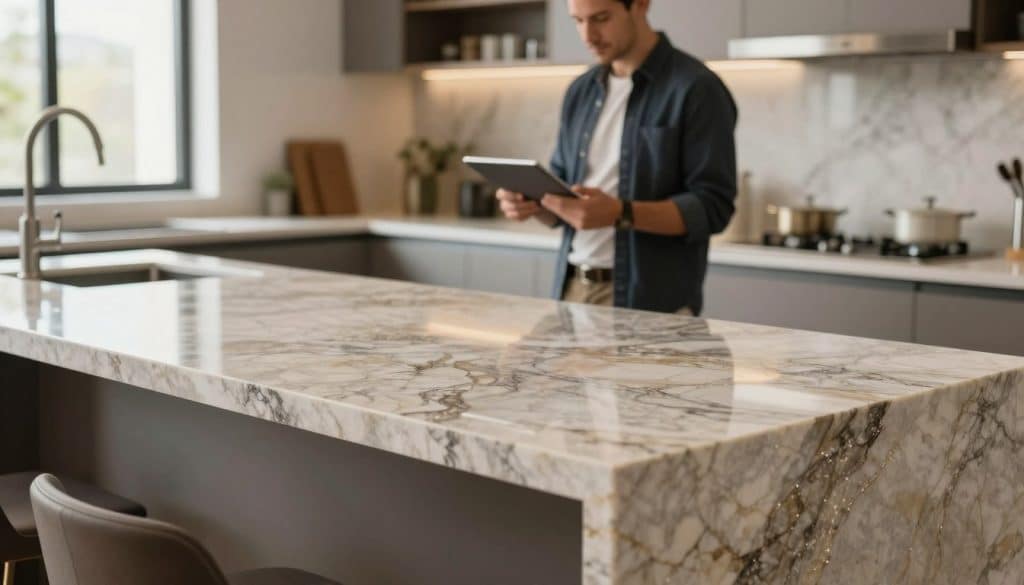
We get it. Picking new countertops can feel cluttered with marketing claims. Our goal is simple: help you choose without the jargon.
At Rock Solid Tops, Our Craftmanship, Your Vision guides every project. We blend 30+ years of fabricating experience with fast, local service in Minneapolis, MN and surrounding areas.
This comparison focuses on real-life performance: design, durability, cleaning, heat resistance, price, and what you’ll notice after years of use. We’ll explain the core difference that Silestone is a brand-made version of engineered slabs and how that can affect colors, finishes, and warranties.
We promise clear, practical guidance and a free estimate to help homeowners move from doubt to decision. Let us show you how seams, sink cutouts, and install workmanship shape the final result as much as the slab you pick.
Key Takeaways
- We compare everyday performance, not just specs.
- Silestone is a branded engineered option with specific colors and warranties.
- Installation quality in Minneapolis-area remodels matters as much as material choice.
- Rock Solid Tops offers expertise, fast service, and a free estimate.
- Your daily use and lifestyle should guide the final selection.
What You’re Really Comparing: Quartz Countertops vs a Quartz Brand
When you shop for a new surface, you’re choosing between a general engineered option and a brand-made line with unique colors and warranties. We want you to see the real differences, not just marketing phrases.
Silestone is a quartz brand made by Cosentino. That means its slabs are manufactured with a high percentage of quartz minerals plus resins and pigments. The brand offers a set palette, finishes, and a warranty that can matter to your long-term plans.
Engineered stone vs natural stone
Engineered stone is made from mineral particles bound with resins, then pressed into slabs for consistent color and pattern. It gives predictability during design and installation.
Natural stone, like granite and marble, shows unique veining and variation. That beauty can bring extra care: many natural slabs need sealing and closer maintenance than engineered surfaces.
What “non-porous” means for kitchens and bathrooms
- Spill protection: Liquids sit on the top rather than soaking in, making cleanup easier.
- Stain resistance: Coffee, wine, oils, and makeup are less likely to leave marks when wiped promptly.
- Not indestructible: Non-porous helps daily life, but heat and sharp impacts still require care.
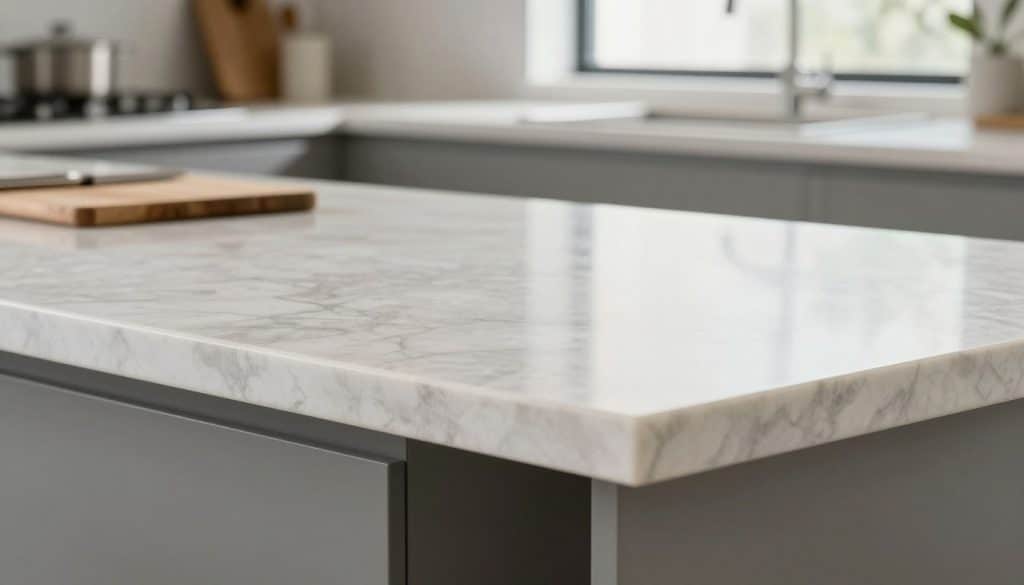
Quartz countertops vs silestone: Key Differences That Actually Matter
We focus on the details that change your day-to-day life. Material family and brand names belong to the same category, but they diverge in design choices, sustainability claims, and how you buy and install them.
Brand-specific design options
Silestone quartz lines often push bold colors and signature finishes. Other engineered lines lean toward classic neutrals and consistent veining. That means your design options range from dramatic to dependable.
Hybriq+® sustainability at a homeowner level
HybriQ+ blends reduced crystalline silica and at least 20% recycled content like glass. That can matter if manufacturing footprint or indoor air quality is a priority. Verify the exact slab series before you buy—claims vary by product.
Where to buy and why installation still wins
- Dealers and big-box stores make shopping easy.
- Local fabricators deliver more pattern matching and precise installation.
- Final performance hinges on measuring, seams, and professional installation.
We at Rock Solid Tops guide you through these options and handle fast, accurate fabrication and installation for Minneapolis-area projects. Design is fun—but performance and fit decide the final result!
Design, Colors, Patterns, and Finishes for Today’s Remodels
Start with the vibe you want—then match materials that deliver that mood and performance. We help you think through color, texture, and edge choices so the final look feels cohesive and intentional.
Color strategy matters: whites and creams brighten a small room. Grays add calm warmth. A bold hue creates a focal island and modern energy.
Popular patterns and where they work
- Veined: dramatic islands and statement backsplashes.
- Fine-grain: subtle texture for classic kitchens.
- Coarse-grain: hides wear in busy family kitchens.
- Plain: minimal, modern, and easy to coordinate.
Finishes and edge profiles
Polished gives glossy shine. Suede creates a soft, low-glare feel that hides fingerprints. Volcanic texture adds tactile interest for design-forward spaces.
Edge choice is a multiplier: a thick eased edge reads modern; an ogee edge reads traditional. Because engineered options offer consistent slabs, you’re less likely to get surprising variation unlike natural stones. We’ll narrow the range fast so you can pick with confidence!
Durability and Daily Wear: Scratches, Chips, and Long-Term Performance
Durability is where material and workmanship meet on the job. We translate lab numbers into what you’ll see in your kitchen after years of use. With a Mohs rating around 7, quartz offers strong scratch resistance compared with softer options like marble.
What “7” means: you’ll get fewer everyday marks from utensils and dishes. But scratch resistant isn’t scratch proof—cut on boards to protect the surface and your knives.
Chips usually happen at edges or corners near sinks and overhangs when heavy items hit just right. Edge marking shows up over time on high-touch areas from hardware and repeated contact, especially on darker finishes.
- Seams matter: placement, adhesive color, and polishing turn visible joins into seamless looks.
- Discoloration risk: is usually an installation or fabrication issue, not a material defect.
- Our promise: with 30+ years fabricating and installing, we plan layouts and seams so your surface performs and looks great for years.
Stain Resistance, Cleaning, and Maintenance Requirements
Simple habits like quick wipe-ups and gentle cleaners protect your finish and peace of mind. Engineered slabs are non-porous, so everyday spills from coffee, wine, oil, and sauces sit on the top instead of soaking in.
Why these surfaces resist stains better
Quartz and Silestone resist staining far better than many natural stone options. That means less worry over common messes and fewer specialty products to buy.
No sealing needed
Unlike natural stone, these slabs do not require sealing. Skip annual sealing appointments and the extra maintenance steps that come with granite or marble.
Best-practice cleaning and water marks
- Use a mild cleaner, soft cloth, or nonabrasive sponge.
- Wipe spills quickly — that’s the golden rule.
- Dry the sink area to prevent water marks; they’re usually temporary.
- Avoid harsh chemicals and abrasive pads to keep the finish new.
Simple maintenance and proper cleaning keep your surface looking great for years. We handle installs that make upkeep easy for Minneapolis homes!
Heat Resistance and Hot Pans: What Homeowners Need to Know
Heat is a daily kitchen factor — and it deserves a clear, simple rule.
We’ll be blunt: these engineered surfaces handle everyday heat, but they are not heat-proof. Placing hot pans directly on the work surface risks damaging the resin binder and leaving marks that won’t wipe away.
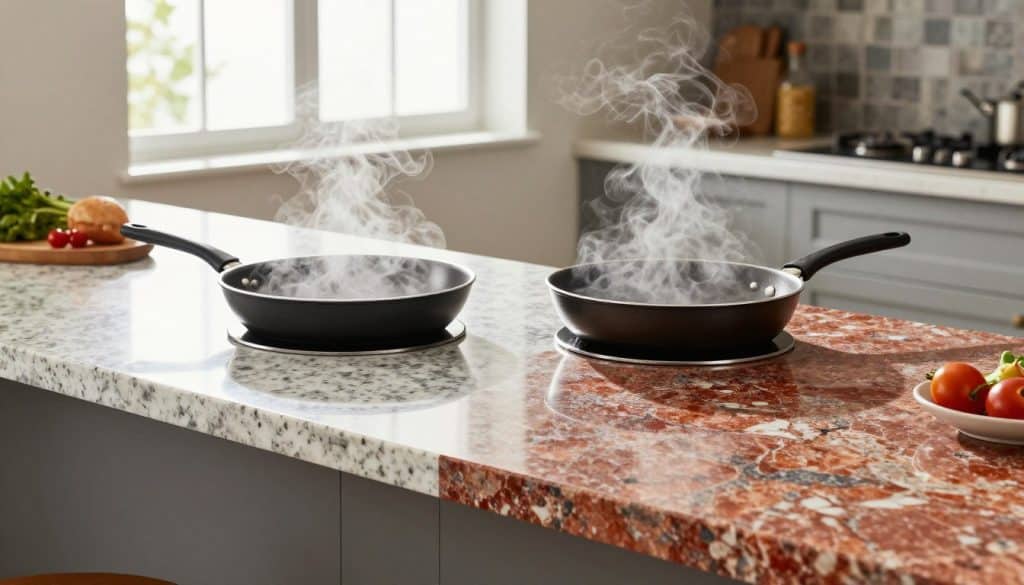
Protect resins with trivets
Use trivets or hot pads every time you set down hot pans, baking sheets, or slow cookers. A small habit prevents scorch marks, dull spots, and color changes.
Scorch marks and thermal shock risks
Extreme heat can discolor the finish and weaken glue at seams. Sudden temperature swings cause thermal shock, which can crack thin areas or around cutouts.
- Straight talk: don’t set hot pans on the surface.
- Why it happens: engineered slabs contain resins that react to high heat.
- Easy prevention: always use a barrier for hot items.
We protect your investment during install and show you simple routines to keep your new surface looking its best. Small steps save big headaches.
Cost and Value in the United States: Price Ranges and What Drives Them
Price matters, but value lasts—here’s how to budget smart for a new surface.
Typical installed pricing for premium engineered slabs often lands between $60 and $140 per square foot. Some estimates fall closer to $50–$100 when buyers source slabs or skip complex installs. That spread reflects what’s included.
What changes the final price
- Slab tier: bold patterns and specialty colors cost more.
- Thickness & edge: thicker material and ornate profiles add labor and expense.
- Fabrication complexity: waterfalls, large islands, multiple cutouts, and custom sinks raise labor hours and seam work.
Comparing value with other materials
Natural stone like granite and marble can be stunning but bring more variability and maintenance. Laminate is far cheaper up front but won’t match durability or resale feel.
Think in lifetime cost. Factor repairs, upkeep, and how the surface fits daily life. Warranties and health claims also affect value—those details follow in the next section.
Warranty, Health, and Performance Claims to Compare Before You Buy
Before you sign, learn what a limited warranty actually protects. Warranties can list generous terms like 10, 15, or 25 years, but coverage has limits. Read who qualifies, whether the warranty is transferable, and what proof of purchase or professional installation is required.

How to read a limited warranty like a pro
- Term length: note the number of years and what starts the clock.
- Who qualifies: some claims need certified installers or registered purchases.
- Proof: keep receipts and photos for future claims.
Common exclusions to watch for
Most warranties exclude damage from misuse: impact chips, scratches from knives, scorch marks, and harm from abrasive or harsh chemicals. These are routine homeowner risks, not manufacturing defects.
Indoor air and long-term ownership
Homeowners ask about radon with granite and other natural stone. Engineered options, including lines that silestone offers, are generally discussed as lower concern for radon. Still, confirm product documents if indoor air is a priority.
At Rock Solid Tops we’ll help you review the exact series you want and explain what a warranty truly covers. Good habits—cutting boards, trivets, and mild cleaners—protect your new surface and your investment for years.
Rock Solid Tops’ Expert Take for Minneapolis Projects
When schedules are tight, dependable local fabrication and clear communication make the difference. We help you pick the right material for your kitchen, bathroom, or commercial space and then execute fast and clean.
Material selection guidance for your kitchen, bathroom, or commercial space
With 30+ years working in granite, quartz, and other stone, we match choices to how you cook, clean, and live. We explain pros and trade-offs so you get a practical, beautiful end result.
Fast turnaround
GET YOUR NEW COUNTERTOPS INSTALLED IN AS LITTLE AS ONE WEEK AFTER MEASURING. Our process is simple: measure → layout and seam planning → fabrication → installation. We communicate each step so you’re never guessing.
Local service area and commercial readiness
- Serving Minneapolis, St. Paul, and anywhere within an hour of the Twin Cities.
- Residential and commercial work — homes, multi-unit, senior living, restaurants.
- Prompt, professional installation that reduces seam issues and long-term fit problems.
Our Craftmanship, Your Vision. You can trust your project is in good hands because we’re Rock Solid. Call (612) 270-4239 or email info@rocksolidtops.com for a free estimate today!
Conclusion
The real difference usually isn’t brand name alone — it’s the specific slab, finish, and who installs it. Pick the right line, color, and pattern, and skilled workmanship makes the final look and long-term performance.
Performance recap: non-porous quartz options give strong durability, stain resistance, and easy cleaning. For care, use mild cleaners, quick wipe-ups, no sealing, and trivets for hot pans to avoid damage.
Budget with value in mind. Price varies by design complexity and fabrication. The best outcome pairs the right material tier with expert installation the first time.
Ready to narrow choices for your home or commercial space? Our Craftmanship, Your Vision. Call (612) 270-4239 or email info@rocksolidtops.com for a free estimate. We serve Minneapolis, St. Paul, and areas within an hour — and can install new countertops in as little as one week after measuring.