
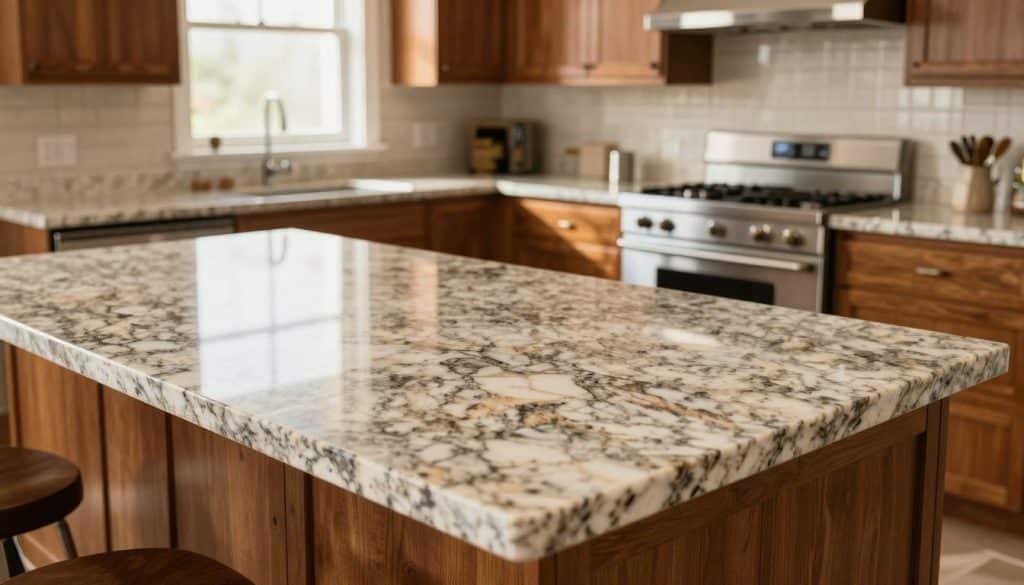
If you’re planning a kitchen upgrade, choosing between granite countertops or quartz can shape the look, durability, and maintenance needs of your entire space. Which surface will handle your busiest days and still look great years from now?
We’ll help you answer that. At Rock Solid Tops, we’ve been fabricating and installing granite, quartz and other stone surfaces for over 30 years in Minneapolis, St Paul, and within an hour of the Twin Cities.
We turn slabs into precise, ready-to-use countertops fast. You’ll get clear comparisons on appearance, durability, maintenance, cost, and installation so you can pick the right material for how you cook, clean, and live.
We also promise quick delivery: GET YOUR NEW COUNTERTOPS INSTALLED IN AS LITTLE AS ONE WEEK AFTER MEASURING. Call (612) 270-4239 or email info@rocksolidtops.com to schedule a free estimate. Let’s match the best stone to your home and your plans.
Key Takeaways
- Both granite and quartz are premium, durable materials for kitchen and bath surfaces.
- We cover look, durability, maintenance, cost, and installation so you can decide with confidence.
- Fabrication and heavy lifting mean professional installation is recommended.
- Rock Solid Tops brings 30+ years of craft and fast turnaround in the Twin Cities area.
- Call (612) 270-4239 or email info@rocksolidtops.com for a free estimate and fast scheduling.
Choosing a Countertop in Minneapolis Today: What Matters Most
Choose a finish that supports how your family actually lives, not just how it looks in a photo. We focus on how kitchens and bathrooms get used every day—meal prep, homework, quick cleanups, and busy mornings.
Performance matters more than trends. Durability is about heat, spills, scratches, and how often you’re willing to do maintenance. We’ll help you match material performance to your routine.
- Real-use durability: How hot pans, wine spills, and kids affect surfaces.
- Design vs. uniformity: Natural variation gives character; engineered surfaces give consistent runs.
- Long-term value: The right choice boosts resale value and saves time across years of ownership.
Budget realistically—material is one piece of the cost. Templating, fabrication, edge work, cutouts, and installation matter. We’ll come to your home or project, review design options, and guide the final choice so the install looks flawless. We also work with property managers and commercial buildouts who need fast timelines and consistent style.
Granite countertops or quartz: What’s the Real Difference?
Start with composition—it’s the single best clue to how a surface will behave in daily life. We’ll define the core difference so you know what to expect when we fabricate and install your new tops.
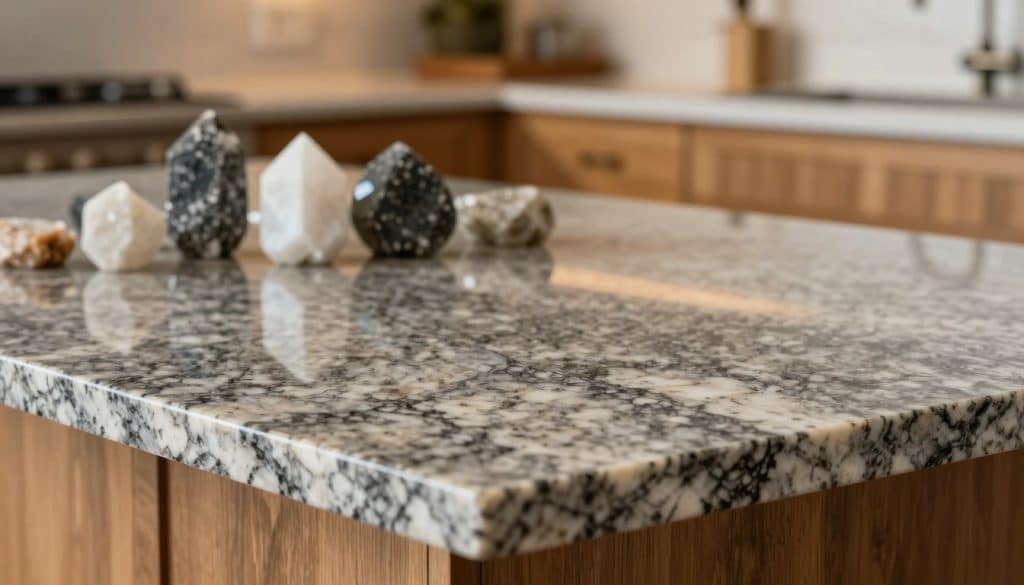
Natural stone vs engineered stone composition
Natural stone comes from the earth as solid blocks that get cut and polished into slabs. Its mineral veins and tiny pores are part of its character.
Engineered stone is manufactured. Ground minerals are blended with resins and pigments, then formed into consistent slabs for predictable color and low porosity.
How slabs become a finished surface
Both paths share the same fabrication steps: selecting a slab, templating, precise cutting, edging, polishing, and installation. We handle each step so your project fits and looks right.
- Slab selection and inspection
- On-site templating and measurements
- Fabrication: cutouts, edge profiles, and finishing
Why composition changes sealing and daily care
Because natural stone has more porosity, sealing is often recommended to protect against stains. Engineered stone’s resins make the surface largely non-porous, so sealing isn’t usually needed.
Both materials are durable, but they react differently to heat, harsh cleaners, and spills. We’ll help you pick the right material based on how you live and clean—so there are no surprises!
Appearance and Design Options: Veining, Patterns, Colors, and Finish
Choosing a full slab limits surprise and helps the finished space match what you imagined. Small samples can hide dramatic mineral movement and scale. We bring slab pictures and on-site guidance so you see how patterns run across islands, sink runs, and waterfall edges.
Natural slabs show one-of-a-kind variation. A granite slab can have dramatic veining and mineral movement that creates a bespoke, high-end feel. No two slabs are identical, and that variability is part of the appeal.
Engineered options offer consistent runs. Quartz delivers controlled patterns and pigment-driven colors that read uniform over long spans. That makes it easy to match style across multiple surfaces and commercial runs.
- We’ll help you picture the end result and how veining scales across the room.
- Polished vs. honed: gloss brightens and shows reflections; honed softens glare and hides fingerprints.
- Select the actual slab when possible to avoid sample shock and ensure pattern flow at seams.
Our Craftmanship, Your Vision. We guide slab selection, seam placement, and finish choice so the design fits your light, traffic, and style—making sure the final surface feels intentional and right in your home.
Durability and Daily Use: Heat, Scratches, Chips, and Cracks
Let’s talk real-life wear: heat from pans, accidental drops, and sudden temperature swings.
Heat resistance: One material handles hot pans better; the other can scorch if a hot pan sits directly on the surface. Use trivets and avoid placing hot appliances on the same spot for long.
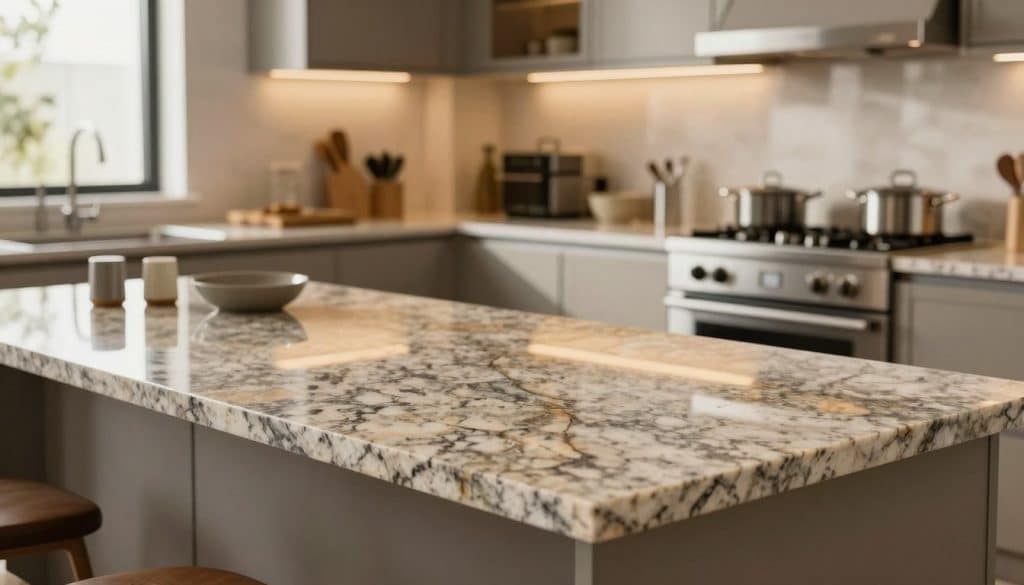
Structural consistency: Engineered slabs are uniform and rarely show hidden weak spots. Natural stone has veins and tiny fissures that are usually stable but can (rarely) contribute to cracking under extreme stress.
Impact risks: Chips happen most often at corners, sink cutouts, and edges—especially in a busy kitchen. The right edge profile and proper overhang support cut risk significantly.
- Thermal shock tip: don’t cool a hot surface with ice or cold water.
- Scratch advice: both materials are tough, but use cutting boards to protect finish and time-worn looks.
- Installation matters: professional fabrication and precise seams cut long-term problems.
We’ll keep it honest: both granite and quartz offer excellent durability, but smart habits and pro installation protect your investment and keep your countertops looking great for years.
Maintenance and Hygiene: Sealing, Stains, Bacteria, and Cleaning
Simple upkeep separates a great installation from a long-term problem. We make maintenance easy so your new surface stays beautiful with little fuss.
Natural stone is porous and needs sealing at install and on a schedule after that. Engineered options use resins and are largely non-porous, so sealing isn’t required. We’ll tell you what to expect for both granite and quartz and set a care plan that fits your life.
Address spills fast. Wipe oil and wine immediately. Don’t let water sit near seams or cooktop edges. Quick action cuts the risk of long-lasting stains and makes daily maintenance simple.
- Sealing: periodic for porous stone; not needed for most engineered slabs.
- Hygiene: non-porous finishes resist bacteria—ideal in the kitchen and bathroom.
- Cleaning do’s and don’ts: mild soap and water for routine care; avoid abrasive pads and harsh chemicals that harm resins and dull shine.
We’ll help you pick a material that matches your priorities. If you want “set it and forget it,” quartz is a strong fit. If you love natural look and don’t mind occasional sealing, granite countertops deliver classic appeal. Call us to get care tips tailored to your project—we’re here for the long run.
Cost Comparison: Price Per Square Foot and What Drives the Range
Budget matters—let’s look at real price ranges so you can plan with confidence. We’ll show typical installed price per square foot and the factors that move numbers up or down.
Typical installed costs for quartz countertops vs. granite countertops
Expect quartz countertops to land around $50–$75 per square foot installed. Premium options can go higher.
Granite ranges wider, roughly $40–$100 per square foot installed depending on rarity and finish. Some pricing models add $10–$30 per square foot for installation labor on quartz installs.
Why edging, slab selection, and patterns affect price
A simple eased edge costs less than ornate profiles. Complex edges add fabrication time and raise the per square price.
Slab choice matters: rare colors, strong movement, and tight patterns can push you up the ladder. Large runs that match patterns across slabs often increase seam work and costs.
Shipping, tariffs, and U.S. market factors
Material sourcing, container shipping tied to petroleum costs, and tariffs all affect final price. Those market shifts can change the per square foot number quickly.
- What per square foot usually covers: templating, standard cutouts, basic edge, and installation.
- What can add cost: custom sinks, cooktop cuts, complex seams, premium slab selection, and fancy edges.
- Market reality: shipping and tariffs can add to material price at the dock.
We keep pricing clear so your budget matches the design. For an exact quote based on your layout, edges, and slab choice, schedule a free estimate with Rock Solid Tops today!
Sustainability and Safety Considerations for Stone Countertops
A smart surface choice balances sourcing, longevity, and indoor health. We’ll keep this calm and evidence-based so Minneapolis homeowners and commercial buyers can decide with confidence.
Quarrying versus engineered production
Natural stone comes straight from the earth and requires quarrying. That means energy for extraction and transport, and one hundred percent natural slabs at the mill.
By contrast, engineered stone can reuse stone byproducts mixed with polymer resins during manufacture. That reduces waste but uses energy in production and binding materials.
Practical sustainability and radon facts
- Longevity matters: a durable surface that lasts decades reduces replacement impacts over the years.
- Repairability and maintenance extend life—small fixes beat full replacement for sustainability.
- Radon concerns have been studied: current research and EPA guidance show little or no measurable radon risk from typical slabs in a normal home.
Focus on ventilation and overall indoor air practices, not fear. Choose materials that match how you live, and rely on expert fabrication and installation to protect performance and safety.
When you work with Rock Solid Tops, you get straight answers and craft you can trust for years!
Installation Reality Check: Why Pro Fabrication Matters
A proper install makes a beautiful surface last—cheap mistakes do the opposite. DIY looks tempting, but heavy slabs and precise cuts demand pro tools and experience.
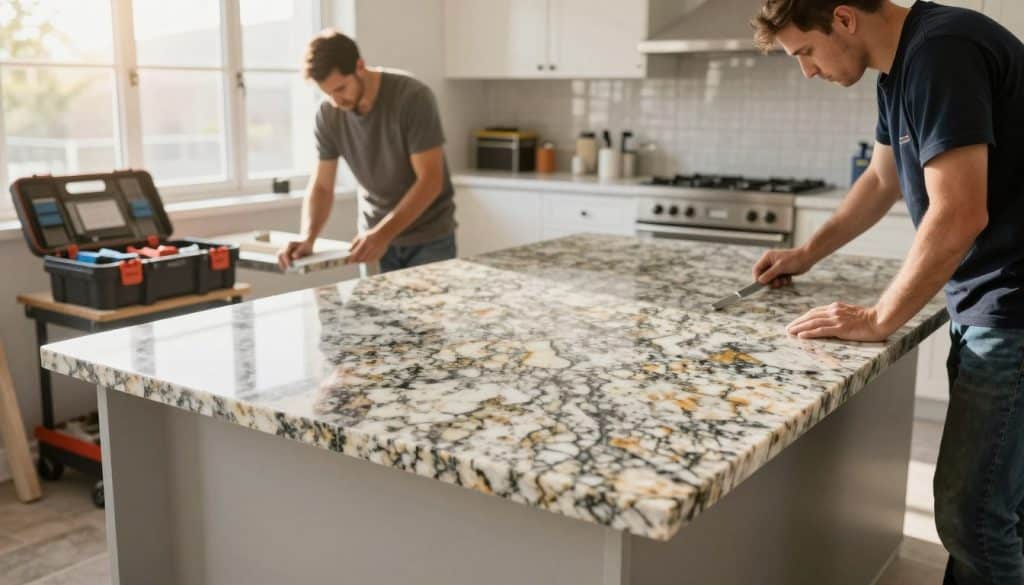
Why DIY is unsuitable for heavy stone work
These slabs are extremely heavy; a short piece can weigh near 100 pounds. Moving and setting them wrong risks injury and damage.
Cutting and drilling need wet saws and diamond tooling. Without them a slab can crack or chip, and fixes get costly fast.
Seams, cutouts, and fit: how pros keep the look clean
Professional installation gives accurate measuring, tight seam placement, and precise sink and cooktop cutouts. That keeps patterns aligned and hides joins.
We plan seam locations based on slab movement, pattern direction, and load points so the final fit looks intentional.
Our process in Minneapolis, St Paul, and nearby
We measure and template on-site, help you lock design choices, fabricate in our shop, then install with care.
Fast turnaround: GET YOUR NEW COUNTERTOPS INSTALLED IN AS LITTLE AS ONE WEEK AFTER MEASURING.
Who we serve
- Homes and remodels
- Multi-unit apartments and senior living
- Restaurants and commercial buildouts
With 30+ years fabricating and installing, we stay prompt and professional from first call to final cleanup. You can trust your project is in good hands because we’re Rock Solid—schedule your free estimate today.
Conclusion
Deciding which surface fits your daily routine comes down to balance: the right choice blends style, value, and how you use your kitchen and bathrooms. We make that decision simple with clear options and expert advice.
For natural character and higher heat tolerance, consider granite countertops. For low fuss and strong stain resistance, quartz countertops are a smart pick. Both sit in similar price bands, so your final choice often rests on look and upkeep.
Maintenance is the split: sealing and occasional care for granite countertops, versus near no-seal convenience for quartz. That difference guides long-term value and daily life.
With 30+ years in Minneapolis, MN (serving St Paul and an hour around the Twin Cities), we promise fast, pro installation and speedy turnaround. Our Craftmanship, Your Vision. Call (612) 270-4239 or email info@rocksolidtops.com to schedule a free estimate — get your new countertops installed in as little as one week after measuring!